

7 Best Cultural Experiences in Kyoto for Solo Travelers: Things to Do Alone in Kyoto
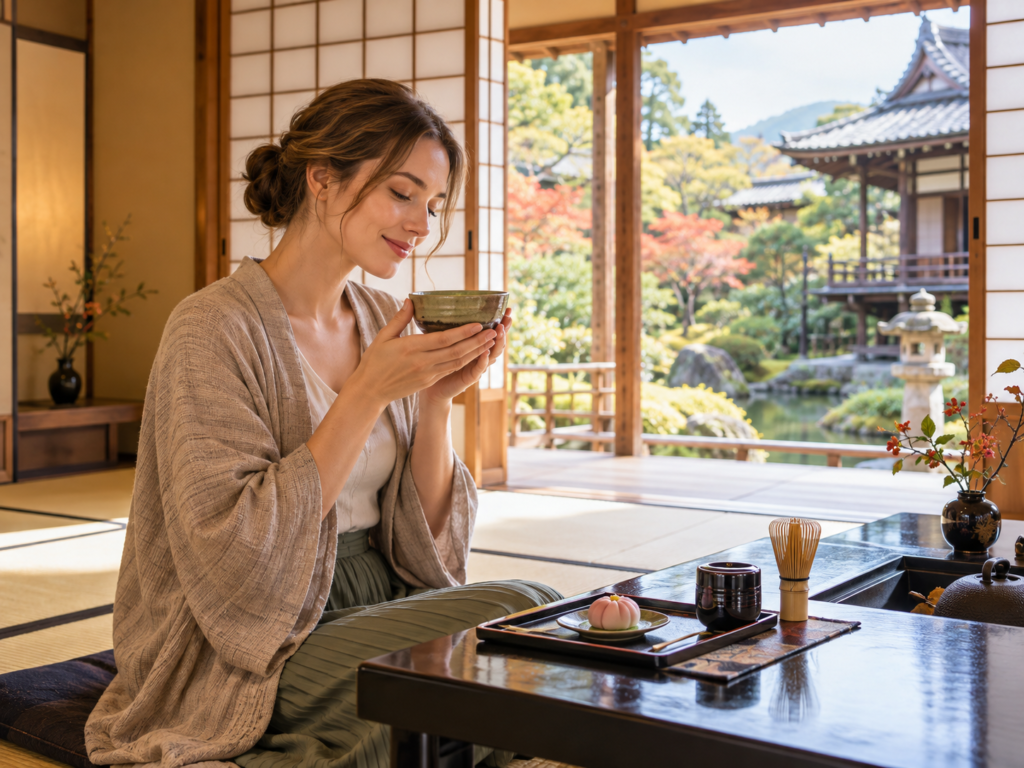
Planning a solo trip to Kyoto?
Kyoto is one of the most rewarding destinations in Japan for travelers who enjoy exploring at their own pace.
With its historic temples, peaceful Japanese gardens, traditional wooden streets, and centuries-old cultural traditions, the city offers countless opportunities for independent discovery.
But visiting Kyoto alone doesn’t mean you have to spend your entire trip sightseeing.
You can also experience traditional Japanese culture for yourself.
Imagine preparing matcha during a Japanese tea ceremony.
Writing your favorite Japanese kanji character using a traditional calligraphy brush.
Making beautiful Japanese sweets inspired by the changing seasons.
Or discovering Kyoto’s fascinating maiko culture.
These experiences allow you to connect with Japan in ways that simply visiting famous attractions cannot.
But as a solo traveler, you might have a few questions.
What are the best things to do alone in Kyoto?
Can you join a Japanese tea ceremony by yourself?
Are cultural workshops available in English?
Do you need to book activities for two or more people?
And which experiences are suitable for first-time visitors to Japan?
In this guide, we introduce seven of the best cultural experiences in Kyoto for solo travelers, along with practical booking tips and a relaxing half-day itinerary in Gion.
Whether you’re visiting Kyoto for the first time or returning to explore its traditions more deeply, these activities can make your solo adventure unforgettable.
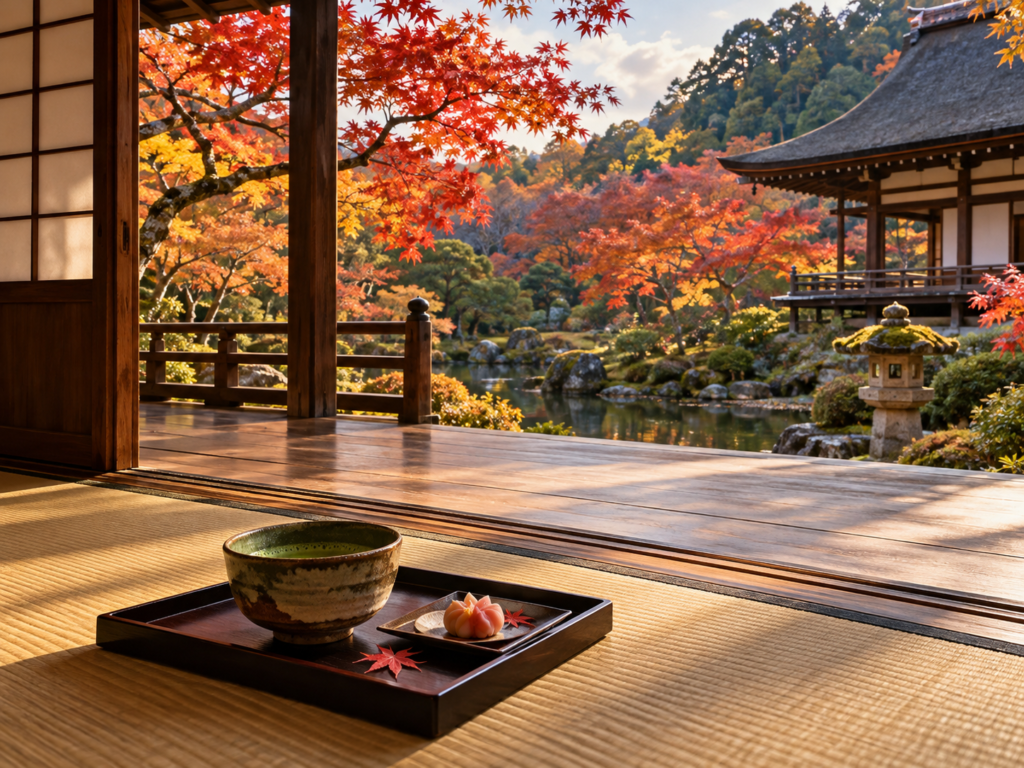
Why Kyoto Is One of the Best Places in Japan for Solo Travel
Kyoto served as Japan’s capital for more than a thousand years.
Today, it remains one of the country’s most important centers of traditional Japanese culture.
Historic temples, beautiful shrines, traditional wooden townhouses, and Japanese gardens can be found throughout the city.
But what makes Kyoto particularly appealing to solo travelers is the freedom to explore these places at your own pace.
You can spend an entire morning appreciating the architecture of a Zen temple.
Take a quiet walk through a historic neighborhood.
Enjoy Japanese food without rushing.
Or participate in a traditional cultural workshop.
There is no need to coordinate your schedule with anyone else.
You can simply follow your interests.
Discover Japanese culture at your own pace
Kyoto is also an excellent place to experience traditions that continue to be practiced today.
Tea ceremony.
Calligraphy.
Kimono.
Traditional crafts.
Japanese sweets.
Maiko and geiko culture.
Many cultural experiences are structured around learning or creating something, making them particularly suitable for independent travelers.
Even when participating in a group workshop, you can focus on your own experience.
And depending on the program, you may have opportunities to interact with instructors or other travelers who share your interests.
Solo travel in Kyoto offers a wonderful balance between peaceful independence and meaningful cultural connections.
7 Best Cultural Experiences in Kyoto for Solo Travelers
Not sure which activity to choose?
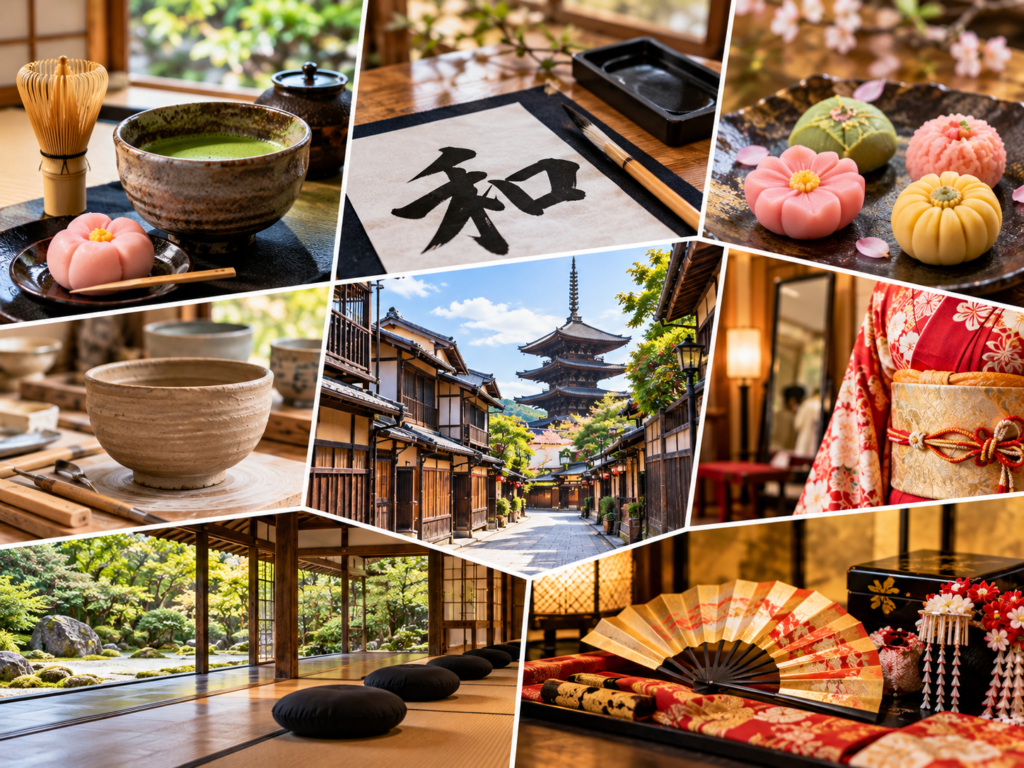
Here is a quick comparison of some of Kyoto’s most interesting traditional experiences.
| Cultural Experience | What You’ll Do | Why It’s Great for Solo Travelers |
| 1. Japanese tea ceremony | Prepare matcha and enjoy wagashi | Experience Japanese hospitality in a peaceful setting |
| 2. Japanese calligraphy | Write kanji with brush and ink | Focus on creating your own artwork |
| 3. Wagashi making | Create traditional Japanese sweets | Enjoy a hands-on creative activity |
| 4. Pottery and traditional crafts | Make ceramics or handmade souvenirs | Create something personal to take home |
| 5. Kimono experience | Wear traditional clothing and explore Kyoto | Enjoy independent sightseeing and photography |
| 6. Zen and meditation | Discover Japanese Zen traditions | Spend time in a calm, reflective environment |
| 7. Maiko cultural experience | Learn about Kyoto’s traditional performers | Explore a unique part of Kyoto’s cultural heritage |
Solo booking availability, minimum participant numbers, and program details vary by venue.
Let’s explore each experience.
1. Japanese Tea Ceremony: Experience Traditional Japanese Hospitality
One of the most memorable things to do alone in Kyoto is participating in a traditional Japanese tea ceremony.
Known as chanoyu or sado, the Japanese tea ceremony is a cultural practice centered on preparing and serving matcha.
However, tea ceremony is much more than simply drinking green tea.
It brings together Japanese hospitality, seasonal aesthetics, traditional architecture, beautiful tea utensils, and carefully considered movements.
What happens during a Japanese tea ceremony?
A beginner-friendly tea ceremony may include:
- Learning about the history and philosophy of Japanese tea culture
- Watching the host demonstrate traditional matcha preparation
- Discovering the meaning of tea utensils
- Enjoying seasonal Japanese sweets called wagashi
- Learning basic tea ceremony etiquette
- Preparing matcha using a bamboo whisk
The exact activities depend on the venue.
Some programs focus on watching the host, while others include hands-on matcha preparation.
Why is a tea ceremony perfect for solo travelers?
Tea ceremony encourages you to appreciate the present moment.
The sound of hot water.
The delicate aroma of matcha.
The texture of a handcrafted ceramic bowl.
The careful movements of the host.
These small details create an experience that feels very different from ordinary sightseeing.
When traveling alone, you can give your full attention to these moments.
You don’t need a travel companion to enjoy the experience.
In fact, the peaceful atmosphere can make a tea ceremony particularly meaningful during a solo trip.
Can you join a Japanese tea ceremony alone?
Some Kyoto tea ceremony venues accept bookings for one person.
Others may require a minimum number of participants or operate shared group sessions.
Before booking, check:
- Whether one-person reservations are accepted
- Whether the experience is private or shared
- Whether a minimum number of participants is required for the session to operate
- Which languages are available
Do you need previous experience?
No.
Beginner-friendly tea ceremony programs are designed for participants who may have never prepared matcha before.
You do not need to memorize complicated etiquette in advance.
The host or instructor will explain the necessary customs during the experience.
Best for: First-time visitors, cultural enthusiasts, and travelers who enjoy peaceful, meaningful activities.
Typical duration: 45–90 minutes, depending on the program.
Explore a Traditional Japanese Tea Ceremony in Gion, Kyoto
2. Japanese Calligraphy: Create Your Own Kanji Artwork
If you enjoy creative activities, a Japanese calligraphy workshop is another excellent choice for solo travelers.
Japanese calligraphy, known as shodo, is the traditional art of writing Japanese characters using a brush and ink.
Unlike ordinary handwriting, calligraphy focuses on artistic expression.
The pressure of the brush changes the thickness of each line.
The speed of your movement affects the appearance of the strokes.
Even the empty space around the characters contributes to the finished artwork.
What happens during a calligraphy workshop?
A beginner-friendly calligraphy experience may introduce you to traditional brushes, black ink, Japanese paper, and basic brush techniques.
After practicing, you can create your own calligraphy artwork.
Many visitors enjoy choosing kanji characters based on their meanings.
Meaningful Japanese kanji for solo travelers
Some popular choices include:
旅 — Journey / Travel
A meaningful choice for someone exploring Japan independently.
夢 — Dream
Represents dreams, goals, and hopes for the future.
心 — Heart / Mind
Associated with the heart and inner feelings.
和 — Harmony
Represents harmony and is also associated with Japan.
幸 — Happiness
A character expressing happiness and good fortune.
Why is calligraphy good for solo travelers?
Calligraphy gives you the opportunity to focus entirely on your own creation.
You can select a character that reflects your personality, interests, or the meaning of your journey.
Every stroke becomes part of a unique artwork.
Depending on the workshop, you may be able to take your finished piece home.
This creates a souvenir with a personal story behind it.
Combine calligraphy with a tea ceremony
Some cultural experiences in Kyoto combine Japanese calligraphy and tea ceremony.
This allows you to explore two different traditions during the same visit.
For solo travelers with limited time in Kyoto, combined experiences can be a convenient way to discover multiple aspects of Japanese culture.
Best for: Creative travelers, art lovers, and visitors looking for meaningful souvenirs.
3. Wagashi Making: Discover Japan’s Traditional Sweet Culture
Japanese sweets, called wagashi, are an important part of Japan’s traditional food culture.
Kyoto is particularly well known for its beautiful seasonal wagashi.
These sweets often reflect the changing seasons through their ingredients, colors, shapes, and names.
For example:
Cherry blossoms in spring.
Fresh greenery in summer.
Autumn leaves.
Snow and winter flowers.
The designs can be delicate works of edible art.
What happens during a wagashi-making workshop?
Depending on the workshop, you may learn how to shape and decorate traditional sweets using special ingredients and tools.
Some experiences focus on nerikiri, a type of Japanese confection known for its beautiful seasonal appearance.
You might learn how to shape flower petals, combine colors, and create delicate patterns.
Why try wagashi making alone?
Wagashi making is a hands-on experience that allows you to work at your own pace.
You can focus on the creative process while discovering Japanese food culture.
Depending on the program, you may also be able to enjoy your completed sweets afterward.
Combine wagashi with matcha
Traditional Japanese sweets are closely connected to tea culture.
In many tea ceremony settings, wagashi are eaten before drinking matcha.
The sweetness of the confection provides a pleasant contrast with the bitterness and umami of the tea.
Experiencing both offers a deeper appreciation of Japanese culinary traditions.
Best for: Food lovers, creative travelers, and visitors interested in Japanese sweets.
4. Japanese Pottery and Traditional Crafts: Make a Personal Kyoto Souvenir
Kyoto has a long history of traditional craftsmanship.
Over the centuries, the city developed important traditions in ceramics, textiles, bamboo crafts, decorative arts, and other handmade objects.
Today, some workshops allow visitors to learn about these traditions through hands-on activities.
Japanese pottery
Kyoto is associated with traditional ceramics such as Kiyomizu-yaki.
Depending on the studio, visitors may be able to create:
Tea cups
Small plates
Rice bowls
Decorative ceramic pieces
Making pottery can be particularly rewarding for solo travelers because it allows you to focus on creating something with your hands.
Traditional textile dyeing
Kyoto is also famous for decorative textile traditions such as Kyo-yuzen.
Some workshops offer beginner-friendly activities involving fabric colors, designs, and patterns.
Japanese fans and other crafts
Depending on availability, visitors may find workshops involving traditional folding fans, Japanese paper, bamboo crafts, or decorative objects.
These experiences offer an introduction to Kyoto’s artistic heritage.
Why traditional crafts are ideal for solo travelers
You can choose your own colors, shapes, and designs without having to coordinate with anyone else.
The finished object may become something you use in everyday life after returning home.
Important tip for international visitors
Certain crafts, especially pottery, require additional production time.
Ceramics may need to be fired in a kiln before they are ready.
If you’re traveling internationally, confirm whether the studio provides overseas shipping or collection options.
Best for: Hands-on learners, creative travelers, and anyone who wants a unique souvenir.
5. Kimono Experience: Explore Kyoto in Traditional Japanese Clothing
Wearing kimono is one of the most recognizable cultural experiences in Japan.
For solo travelers, renting kimono can add an interesting dimension to exploring Kyoto’s historic neighborhoods.
Gion and Higashiyama are especially popular because of their traditional architecture, temples, shrines, and atmospheric streets.
Can you rent kimono alone?
Yes, some Kyoto kimono rental shops offer services for individual visitors.
Depending on the shop, the rental process may include choosing a kimono, receiving assistance with dressing, and selecting accessories.
Some shops also provide hairstyling.
What can you do while wearing kimono?
Explore the historic streets of Gion.
Visit traditional shrines.
Walk through the Higashiyama district.
Enjoy a Japanese tea ceremony.
Take photographs in designated public areas.
Wearing traditional clothing can make your experience of Kyoto feel especially memorable.
How do you take photos when traveling alone?
One challenge of renting kimono as a solo traveler is taking photographs of yourself.
Some rental providers offer photography services or optional photo sessions.
If photographs are important to you, consider choosing a package that includes professional photography.
Tips for first-time kimono wearers
Kimono can feel quite different from everyday clothing.
Walking may be slower, especially when wearing traditional footwear.
Allow plenty of time for dressing, sightseeing, and returning your rental.
Best for: Photography enthusiasts, fashion lovers, and travelers interested in traditional Japanese clothing.
6. Zen and Meditation: Discover a Peaceful Side of Kyoto
Kyoto is closely associated with Zen Buddhism.
Many of the city’s historic temples have played important roles in the development of Japanese religious, philosophical, and artistic traditions.
For travelers interested in mindfulness and quiet reflection, Zen-related cultural experiences can be particularly rewarding.
What is a Zen meditation experience?
Some Kyoto temples offer opportunities to learn about Zen traditions through activities such as zazen, or seated meditation.
Depending on the program, participants may receive guidance on posture, breathing, and the principles behind the practice.
Availability, language support, and reservation requirements vary.
Why is Zen a good activity for solo travelers?
Solo travel offers the freedom to spend time reflecting on your surroundings and experiences.
Visiting a peaceful temple or participating in a meditation program may provide a welcome contrast to Kyoto’s busier sightseeing areas.
You can slow down, observe the architecture, and appreciate the atmosphere.
Even without joining a formal meditation program, spending time in a Japanese garden or Zen temple can be a memorable part of a solo Kyoto itinerary.
Is Zen suitable for beginners?
Some programs welcome first-time participants.
However, the structure and expectations differ by temple.
Check the program details before booking, especially if you need English-language guidance or alternative seating arrangements.
Best for: Travelers interested in Japanese philosophy, meditation, and peaceful cultural experiences.
7. Maiko Cultural Experience: Discover a Tradition Unique to Kyoto
If you want to experience something particularly connected to Kyoto, consider learning about its maiko and geiko culture.
A maiko is an apprentice geiko, a professional entertainer in Kyoto’s traditional entertainment districts.
International visitors may be more familiar with the term geisha.
In Kyoto, however, geiko is the commonly used local term for a fully trained professional, while maiko refers to an apprentice.
Maiko train in traditional performing arts, etiquette, and hospitality.
Their elaborate hairstyles, colorful kimono, and beautiful hair ornaments are among Kyoto’s most recognizable cultural symbols.
What is an authentic maiko cultural experience?
Programs vary, but some allow visitors to learn about maiko culture through performances or organized cultural encounters.
These experiences introduce travelers to traditions that have been passed down through generations.
Can solo travelers meet a real maiko?
Some organized programs may allow individual reservations, while others require a minimum group size.
If you’re traveling alone, check the booking conditions carefully.
Maiko makeover vs. meeting a real maiko
These are two different experiences.
Maiko makeover experience: Visitors wear maiko-inspired clothing and makeup for photographs.
Authentic maiko cultural experience: Visitors encounter a real maiko through an organized cultural program.
If your goal is to learn about Kyoto’s living performing arts traditions, make sure the program involves an actual professional maiko.
Respect maiko and geiko in Gion
You may occasionally see maiko or geiko walking through Gion.
However, they are often traveling to or from professional engagements.
Do not follow them, block their path, touch their clothing, or photograph them where photography is restricted.
Respecting local customs helps preserve Kyoto’s traditional entertainment culture.
Best for: Travelers interested in traditional Japanese performing arts and Kyoto’s unique cultural heritage.
Discover a Maiko Tea Ceremony Experience in Kyoto
How to Choose the Best Kyoto Cultural Experience When Traveling Alone
With so many activities available, choosing the right experience can be challenging.
Here are five practical things to consider before making a reservation.
1. Check whether one-person bookings are allowed
This is one of the most important details for solo travelers.
Some cultural experiences accept individual reservations.
Others require a minimum of two or more participants.
There may also be a difference between the minimum booking size and the minimum number required for a session to operate.
Always confirm the booking conditions.
2. Look for English-language guidance
If you don’t speak Japanese, choosing a workshop with English-language explanations can help you understand the cultural significance of the experience.
Traditional arts such as tea ceremony and calligraphy become more meaningful when you learn why certain movements and customs are important.
Check the available languages before booking.
3. Choose a beginner-friendly program
You don’t need previous experience to participate in many traditional Japanese cultural activities.
However, some workshops are designed for beginners while others require a higher skill level.
Read the program description carefully.
4. Decide whether you prefer a group or private experience
Some solo travelers enjoy meeting new people.
Others prefer a quiet experience with more individual attention.
A shared group workshop may provide opportunities to interact with other participants.
A private or small-group experience may offer a more personal atmosphere.
Choose the format that matches your travel style and budget.
5. Consider the location and travel time
Kyoto’s major attractions are spread across different neighborhoods.
Choosing cultural experiences near your sightseeing destinations can help you make better use of your time.
Gion is particularly convenient for combining traditional cultural activities with historic sightseeing.
A Half-Day Solo Travel Itinerary in Gion, Kyoto
If you’re looking for a relaxing way to experience Kyoto alone, Gion is an excellent neighborhood to explore.
The area combines historic architecture, temples, shrines, traditional streets, and cultural activities.
Here is a suggested half-day itinerary.
10:00 AM — Visit Kennin-ji Temple
Begin your day at Kennin-ji, a historic Zen temple in Gion.
Explore the temple buildings and gardens while learning about Kyoto’s religious and cultural history.
Traveling alone allows you to spend as much time as you like appreciating the surroundings.
11:15 AM — Walk Through Historic Gion
After visiting the temple, explore Gion’s traditional streets.
Notice the wooden buildings, architectural details, and atmosphere of the historic district.
Remember to respect private property and local photography restrictions.
12:00 PM — Enjoy Lunch by Yourself
Stop for lunch in the Gion area.
One of the pleasures of solo travel is choosing exactly what and when you want to eat.
Try a traditional Japanese meal, visit a café, or discover something new.
1:30 PM — Join a Japanese Tea Ceremony
Spend the afternoon experiencing Japanese tea culture.
Watch the host prepare matcha.
Learn about traditional utensils and tea ceremony etiquette.
Enjoy wagashi and, if included in the program, prepare matcha yourself using a bamboo whisk.
If you’re traveling alone, make sure the venue accepts one-person reservations for your preferred session.
3:30 PM — Visit Yasaka Shrine
After your cultural experience, continue to Yasaka Shrine.
Explore the shrine grounds and enjoy another aspect of Kyoto’s traditional culture.
If you have extra time, take a relaxed walk through the surrounding neighborhood.
This is a suggested itinerary. Check opening hours, travel times, and reservation availability before visiting.
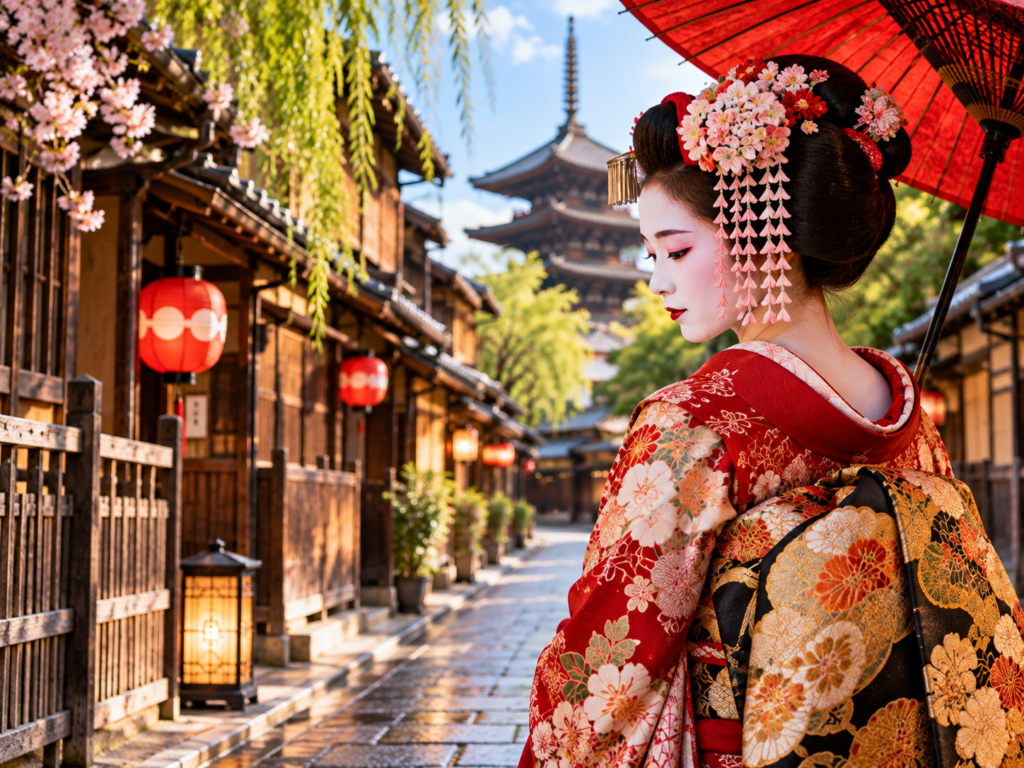
Is Gion Safe and Comfortable for Solo Travelers?
Gion is a popular sightseeing area where many visitors explore on foot.
Its central location makes it convenient for combining cultural attractions and experiences.
However, as in any destination, solo travelers should take normal precautions.
Keep your belongings secure, plan your route, and be aware of your surroundings.
Respect the local neighborhood
Gion is not simply an outdoor museum.
It is a living and working neighborhood.
Some private streets and properties have access or photography restrictions.
Follow local signs and avoid entering restricted areas.
If you encounter working maiko or geiko, respect their privacy and allow them to continue their activities without interruption.
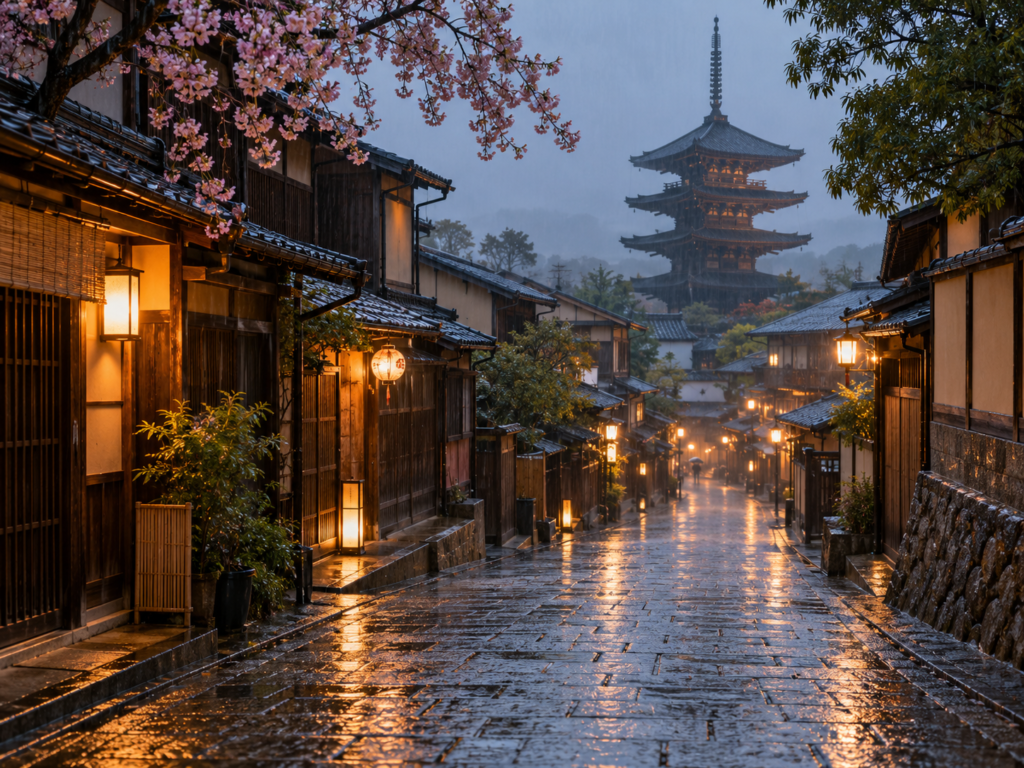
Things to Do Alone in Kyoto on a Rainy Day
Rain doesn’t have to ruin your solo trip to Kyoto.
In fact, many traditional Japanese cultural activities take place indoors.
Consider:
Japanese tea ceremony
Enjoy matcha and traditional hospitality in a peaceful tea room.
Japanese calligraphy
Create your own artwork using brush and ink.
Wagashi making
Learn to shape beautiful Japanese sweets.
Pottery workshops
Discover traditional ceramics through hands-on activities.
Traditional craft workshops
Explore Kyoto’s artistic heritage while creating something yourself.
A simple rainy-day itinerary
A relaxed rainy-day plan could include:
Short walk through Gion → Lunch → Indoor cultural experience → Café break
Instead of rushing between outdoor attractions, you can spend more time learning about Japanese culture.
Experience Traditional Japanese Culture at THE TEA CEREMONY GION Orizuruya
Located in Kyoto’s historic Gion district, THE TEA CEREMONY GION Orizuruya offers experiences for visitors interested in discovering traditional Japanese culture.
The venue is approximately four minutes on foot from Gion-Shijo Station and seven minutes from Kyoto-Kawaramachi Station.
Its central location makes it convenient to combine a cultural experience with sightseeing around Gion.
Traditional Japanese Tea Ceremony
The standard tea ceremony experience introduces visitors to Japanese tea culture.
Participants can learn about traditional tea preparation, observe the host’s movements, enjoy Kyoto wagashi, and prepare matcha using a bamboo whisk.
Duration: Approximately 90 minutes
This is an opportunity to learn about Japanese hospitality and tea culture through observation and participation.
Explore the Japanese Tea Ceremony in Gion
Japanese Calligraphy and Tea Ceremony
Orizuruya also offers a program combining Japanese calligraphy and tea ceremony.
Participants can experience two different traditional arts, learning about Japanese writing and matcha culture during the same visit.
Duration: Approximately 120 minutes
This may be an interesting option for solo travelers who want to experience more than one Japanese tradition in Kyoto.
Maiko Tea Ceremony Experience
For visitors interested in Kyoto’s traditional entertainment culture, Orizuruya offers a program combining a real maiko with Japanese tea ceremony.
This experience introduces visitors to two cultural traditions closely associated with Kyoto.
Discover the Maiko Tea Ceremony Experience
Important information for solo travelers
Before booking, confirm whether your chosen Orizuruya program accepts one-person reservations.
You should also check the minimum number of participants, available session times, language support, and whether the experience is shared or private.
These conditions may differ between programs and dates.
Frequently Asked Questions About Solo Travel in Kyoto
Is Kyoto a good destination for solo travelers?
Yes. Kyoto offers historic temples, traditional neighborhoods, Japanese gardens, and cultural experiences that travelers can enjoy independently and at their own pace.
What are the best things to do alone in Kyoto?
Popular options include visiting temples, exploring Gion, participating in a Japanese tea ceremony, practicing calligraphy, making wagashi, and trying traditional crafts.
Can I join a Japanese tea ceremony alone?
Some tea ceremony venues in Kyoto accept individual reservations. Others may have minimum booking or participation requirements. Check with the venue before booking.
Do I need to speak Japanese to join cultural experiences in Kyoto?
Not necessarily. Some workshops offer English-language guidance or programs designed for international visitors. Check the language options beforehand.
Is Japanese calligraphy suitable for beginners?
Yes. Many introductory calligraphy workshops welcome participants with no previous experience.
Can I rent kimono alone in Kyoto?
Some kimono rental shops accept individual customers. Photography packages may also be available if you want pictures of yourself.
Are traditional Japanese workshops good rainy-day activities?
Yes. Many tea ceremony, calligraphy, pottery, wagashi-making, and craft experiences take place indoors.
Can I meet other travelers during cultural activities?
Possibly. Shared group workshops may provide opportunities to interact with other visitors, although this depends on the program and participants.
Where should I stay in Kyoto for solo sightseeing?
Areas with convenient transportation, such as around Kyoto Station, central Kyoto, or Gion-Shijo, can be practical bases depending on your itinerary and budget.
What is the best area for traditional cultural experiences in Kyoto?
Gion and Higashiyama are excellent areas for travelers interested in historic streets, temples, shrines, and traditional Japanese culture.
Should I book Kyoto cultural experiences in advance?
Advance booking is recommended, particularly during weekends and popular travel seasons. Solo travelers should also confirm one-person booking requirements.
Don’t Just Explore Kyoto Alone. Experience Its Culture.
Traveling alone in Kyoto offers a special kind of freedom.
You can walk wherever you like.
Spend extra time at a beautiful temple.
Discover a quiet street.
Enjoy Japanese cuisine at your own pace.
And most importantly, choose cultural experiences that genuinely interest you.
Your first bowl of handmade matcha.
The kanji artwork you create with a traditional brush.
The wagashi you carefully shape.
The handmade pottery you take home.
The opportunity to learn about Kyoto’s maiko culture.
These experiences offer something beyond ordinary sightseeing.
They allow you to connect with Japan’s traditions in a personal way.
You don’t need to try everything.
Choose one or two experiences that match your interests.
Take your time.
Stay curious.
And let Kyoto introduce you to a different side of Japan.
Solo travel doesn’t mean missing out on meaningful experiences. Sometimes, discovering a new culture on your own makes the journey even more memorable.
Discover Traditional Japanese Tea Ceremony Experiences in Gion, Kyoto