

8 Best Family-Friendly Cultural Experiences in Kyoto: Fun Japanese Activities with Kids
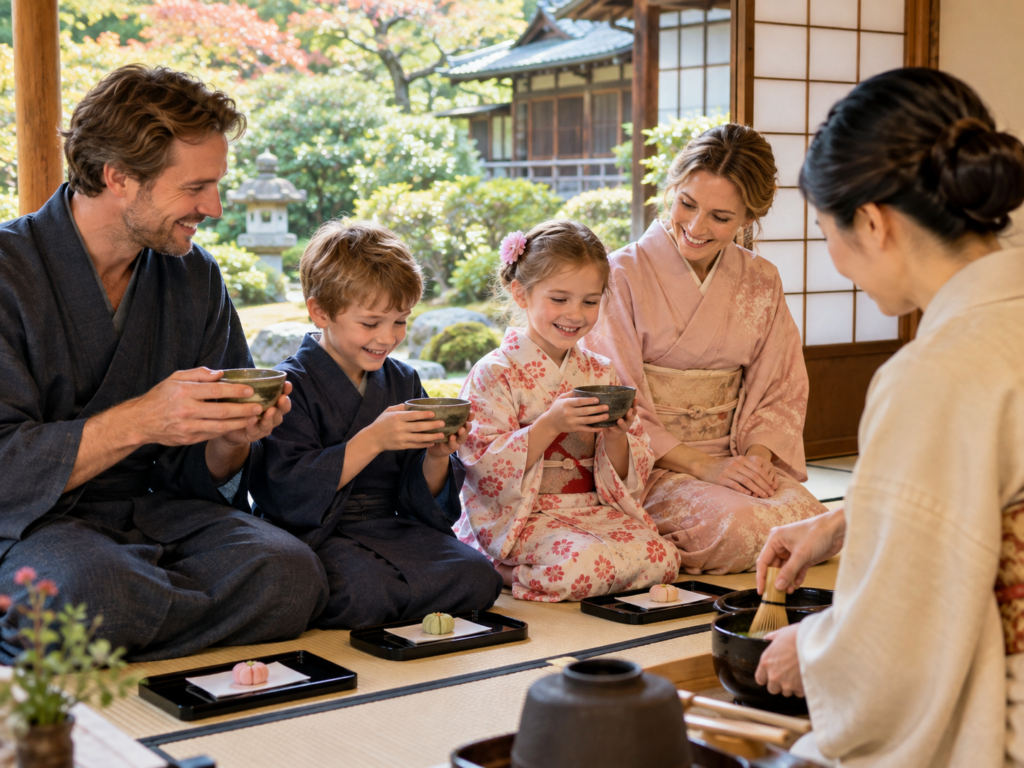
Planning a family trip to Kyoto?
While Kyoto is famous for its beautiful temples, historic shrines, and traditional streets, the city offers much more than sightseeing.
It’s also one of the best places in Japan for families to experience traditional Japanese culture together.
Imagine learning how to prepare matcha during a Japanese tea ceremony.
Writing your first Japanese kanji character with a calligraphy brush.
Making colorful Japanese sweets inspired by the seasons.
Or exploring Kyoto’s historic streets while wearing traditional kimono.
These hands-on activities can turn an ordinary sightseeing day into a memorable family experience.
But when traveling with children, choosing the right activities can sometimes be challenging.
What are the best things to do in Kyoto with kids?
Can children participate in a Japanese tea ceremony?
Are cultural experiences available in English?
Which activities are suitable for younger children?
And how can you plan a family-friendly day without spending too much time traveling between attractions?
In this guide, we introduce eight of the best family-friendly cultural experiences in Kyoto, along with age-based recommendations, practical tips for international families, and a sample half-day itinerary in Gion.
Why Kyoto Is a Great Destination for Families Interested in Japanese Culture
Kyoto served as Japan’s capital for more than a thousand years and remains one of the country’s most important centers of traditional culture.
Historic temples, traditional wooden townhouses, Japanese gardens, and beautiful shrines can be found throughout the city.
But Kyoto’s cultural heritage isn’t limited to buildings and historical sites.
Many Japanese traditions are still practiced today.
Tea ceremony.
Calligraphy.
Kimono.
Wagashi making.
Traditional crafts.
Japanese performing arts.
For children visiting Japan for the first time, these activities can introduce Japanese culture in an engaging and memorable way.
Instead of simply hearing about a tradition, they can experience part of it themselves.
They can learn how to use a bamboo whisk, discover the meaning of Japanese characters, or create something inspired by Japanese craftsmanship.
And for parents, sharing these experiences can be one of the most rewarding parts of traveling together.
The best family memories often come from discovering something new together.
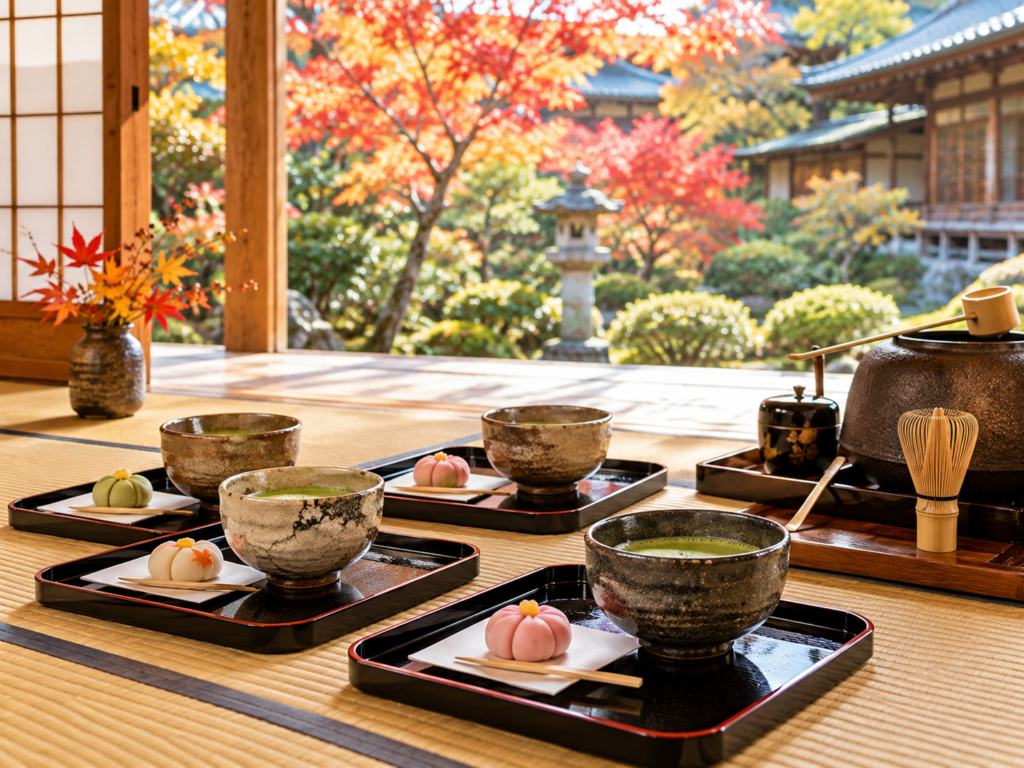
8 Best Japanese Cultural Experiences in Kyoto for Families
Not sure which activity to choose?
Here’s a quick comparison of family-friendly cultural experiences available in Kyoto.
| Experience | What You’ll Do | Why Kids May Enjoy It |
| 1. Japanese tea ceremony | Learn about matcha and traditional tea preparation | Try using a bamboo whisk |
| 2. Japanese calligraphy | Write kanji with brush and ink | Create personalized artwork |
| 3. Wagashi making | Make traditional Japanese sweets | Shape and decorate colorful sweets |
| 4. Kimono experience | Wear traditional Japanese clothing | Dress up and explore Kyoto |
| 5. Pottery workshop | Make ceramic bowls or small objects | Create something with clay |
| 6. Traditional crafts | Try textile dyeing, fans, or other crafts | Make a unique souvenir |
| 7. Japanese food experiences | Discover Japanese cuisine and ingredients | Learn through tasting and cooking |
| 8. Maiko cultural experience | Learn about Kyoto’s traditional performers | Discover costumes, dance, and cultural traditions |
Age requirements, availability, and program content vary by venue. Not every activity is suitable for children of all ages.
Let’s explore each experience in more detail.
1. Japanese Tea Ceremony: Discover Matcha Culture Together
One of the most memorable traditional Japanese activities in Kyoto is a Japanese tea ceremony.
Known as chanoyu or sado, tea ceremony is a cultural practice centered on preparing and serving matcha.
However, it is much more than simply drinking green tea.
It brings together traditional Japanese hospitality, carefully considered movements, seasonal sweets, and beautiful tea utensils.
What happens during a Japanese tea ceremony?
Depending on the venue, a beginner-friendly experience may include:
- Learning about Japanese tea culture
- Watching the host prepare matcha
- Discovering traditional tea utensils
- Enjoying Japanese sweets called wagashi
- Learning basic tea ceremony etiquette
- Preparing matcha using a bamboo whisk
Some experiences focus mainly on observing the host, while others allow participants to make their own matcha.
Why might children enjoy a tea ceremony?
One of the most interesting parts of tea ceremony is the traditional bamboo whisk, called a chasen.
For children who have never seen one before, the unusual shape of the whisk can be fascinating.
During hands-on activities, participants can learn how matcha powder is mixed with hot water.
Watching the tea change texture as it is whisked offers a memorable introduction to Japanese tea culture.
Can young children join a Japanese tea ceremony?
This depends on the venue.
Tea ceremony involves hot water, delicate ceramic bowls, and traditional utensils.
Some activities may have minimum age requirements or require adult supervision.
Parents should check these conditions before booking.
It is also important to remember that matcha contains caffeine.
If you are traveling with young children, ask the provider whether participation is possible without drinking matcha or whether another suitable arrangement is available.
Do not assume that every tea ceremony automatically welcomes children of all ages.
Best for: Families interested in traditional Japanese culture, particularly children who can follow instructions and enjoy a structured activity.
2. Japanese Calligraphy: Create Your Own Kanji Artwork
For children who enjoy drawing or creative activities, Japanese calligraphy is another interesting experience.
Japanese calligraphy, known as shodo, is the traditional art of writing Japanese characters using a brush and ink.
Unlike ordinary handwriting, calligraphy focuses on the movement of the brush, the shape of the strokes, and the overall composition.
What do children do during a calligraphy workshop?
A beginner-friendly calligraphy experience may introduce children to:
Traditional Japanese brushes
Black ink
Calligraphy paper
Basic brush techniques
Japanese characters and their meanings
After practicing, participants can create their own artwork.
Fun Japanese characters for kids
Children may enjoy choosing a character based on its meaning.
For example:
愛 — Love
夢 — Dream
心 — Heart / Mind
和 — Harmony
幸 — Happiness
Each family member can choose a different character.
Parents and children can then compare their finished artwork.
Even when everyone writes the same character, each piece will look slightly different.
Why calligraphy is a great family activity
Calligraphy combines creativity with cultural learning.
Children can discover how Japanese writing works while creating something themselves.
Depending on the workshop, the completed artwork may also be taken home.
This can become a meaningful souvenir from their first trip to Japan.
Best for: School-age children, creative families, and travelers who enjoy art and hands-on activities.
3. Wagashi Making: Create Beautiful Japanese Sweets
If your children enjoy sweets or cooking activities, consider a traditional Japanese sweets workshop.
Japanese sweets are called wagashi.
In Kyoto, wagashi are closely connected to tea culture and the changing seasons.
Traditional sweets may represent cherry blossoms in spring, fresh greenery in summer, autumn leaves, or winter snow.
Their colors and shapes often reflect the beauty of Japanese nature.
What happens during a wagashi-making experience?
Depending on the workshop, participants may learn how to shape traditional sweets using ingredients such as sweet bean paste.
They may roll ingredients into small shapes, add colors, and create decorative designs using special tools.
Some workshops focus on seasonal wagashi such as nerikiri, a traditional confection known for its delicate appearance.
Why children may enjoy wagashi making
The activity combines creativity with food.
Children can use their hands to create something colorful and learn how Japanese sweets represent the seasons.
The finished sweets may look different even when everyone follows the same instructions.
Comparing the results can be part of the fun.
Some workshops also allow participants to taste their creations afterward.
What about food allergies?
Traditional Japanese sweets may contain ingredients such as beans, rice, wheat, soy, or eggs, depending on the recipe.
Parents should confirm ingredients and allergy policies before booking.
Best for: Families who enjoy food, creative workshops, and interactive cultural activities.
4. Kimono Experience: Explore Kyoto in Traditional Japanese Clothing
Wearing kimono is one of the most recognizable cultural experiences in Japan.
Kyoto is a particularly popular place to try this tradition because of its beautiful historic neighborhoods.
Visitors can rent kimono, receive professional dressing assistance, and explore areas such as Gion and Higashiyama.
Can children wear kimono in Kyoto?
Some kimono rental shops offer children’s sizes.
However, available sizes, minimum heights, and age requirements vary between shops.
If you are visiting with young children, confirm that appropriate clothing is available before making a reservation.
Why is kimono rental fun for families?
Wearing kimono allows children to experience traditional Japanese clothing in a memorable way.
Families can choose different colors and patterns, explore Kyoto’s historic streets, and take photographs together.
It can also help children appreciate how traditional clothing differs between cultures.
Tips for families renting kimono
Traditional clothing may be less comfortable for long walks than everyday clothes.
Children may also become tired more quickly when wearing unfamiliar footwear.
Keep your walking route manageable and allow time for breaks.
Check the rental shop’s return time and any additional fees before booking.
Best for: Families interested in Japanese clothing, photography, and exploring historic Kyoto.
5. Japanese Pottery: Make Handmade Family Souvenirs
Japan has a long tradition of ceramics, and Kyoto is particularly associated with pottery such as Kiyomizu-yaki.
Pottery workshops offer families an opportunity to learn about Japanese craftsmanship while creating something with their hands.
Depending on the studio, participants may be able to make small bowls, plates, cups, or decorative objects.
Why children enjoy pottery
Working with clay is a tactile experience.
Children can shape a material with their hands and watch it gradually become an object.
Parents can participate too, creating a shared family activity.
Each family member might make a different piece.
Later, the finished ceramics can become reminders of the trip.
Important information for international families
Pottery usually requires firing in a kiln.
This means that completed pieces may not be available immediately.
If you are visiting Japan from overseas, ask the studio about collection dates and international shipping.
Age restrictions and the availability of child-friendly instruction also vary.
Best for: Families who enjoy creative activities and want handmade souvenirs.
6. Traditional Japanese Crafts: Make a Unique Kyoto Souvenir
Kyoto is famous for its traditional crafts.
Depending on the workshop, visitors may find experiences related to:
Kyo-yuzen textile dyeing
Japanese folding fans
Bamboo crafts
Japanese paper
Traditional decorative arts
These activities introduce children to the craftsmanship that has developed in Japan over many generations.
What can children make?
Some workshops allow participants to decorate small objects, choose colors, paint patterns, or complete simplified versions of traditional craft processes.
For example, children may be able to decorate a folding fan or create patterns on fabric.
The experience is not only about the finished item.
It is also an opportunity to understand how traditional Japanese objects are made.
Check the workshop requirements
Some traditional craft activities use sharp tools, hot equipment, or specialized materials.
Choose a workshop that is appropriate for your child’s age and abilities.
Best for: Creative families and children who enjoy making things.
7. Japanese Food Experiences: Discover Japan Through Food
Food is one of the most enjoyable parts of traveling in Japan.
For families visiting Kyoto, discovering Japanese cuisine can also become a cultural experience.
Kyoto is known for traditional foods such as tofu dishes, seasonal Japanese cuisine, matcha, and wagashi.
Families may also find hands-on food workshops that introduce Japanese ingredients and cooking techniques.
Why food is a great way to learn about Japan
Japanese food culture often places importance on seasonality, presentation, ingredients, and tableware.
Children might notice differences between meals in Japan and those they usually eat at home.
Why are dishes served in small bowls?
Why do some sweets look like flowers?
Why do ingredients change with the seasons?
Questions like these can encourage children to become more interested in Japanese culture.
Make food part of your family itinerary
Instead of rushing through lunch, consider making one meal or food experience part of your day.
Try a traditional Kyoto dish.
Learn about seasonal ingredients.
Enjoy Japanese sweets.
For families with dietary restrictions, confirm ingredients and available alternatives before visiting.
Best for: Families who enjoy discovering new foods and learning about other cultures through cooking and eating.
8. Maiko Cultural Experience: Discover Kyoto’s Traditional Performing Arts
One of Kyoto’s most distinctive cultural traditions is the world of maiko and geiko.
A maiko is an apprentice geiko, a professional entertainer in Kyoto’s traditional entertainment districts.
Maiko train in Japanese dance, music, etiquette, and hospitality.
Their colorful kimono, elaborate hairstyles, beautiful hair ornaments, and traditional makeup have become recognizable symbols of Kyoto.
What can families learn about maiko culture?
An authentic cultural experience may introduce visitors to the traditional arts and customs associated with maiko.
Depending on the program, participants may have opportunities to observe performances or learn about traditional Japanese hospitality.
For children interested in music, dance, costumes, or Japanese history, this can be a fascinating cultural introduction.
Can children participate in a maiko experience?
Participation rules vary between venues.
Some programs involve quiet observation or have formal elements that may be more suitable for older children.
Check the minimum age, duration, and expected behavior before booking.
Maiko makeover vs. authentic maiko experience
These are different activities.
A maiko makeover allows visitors to dress in maiko-inspired clothing and makeup.
An authentic maiko cultural experience involves a real maiko who works within Kyoto’s traditional entertainment culture.
Both can be enjoyable, but they offer different experiences.
Best for: Families interested in Kyoto’s unique history, traditional performance, and cultural heritage.
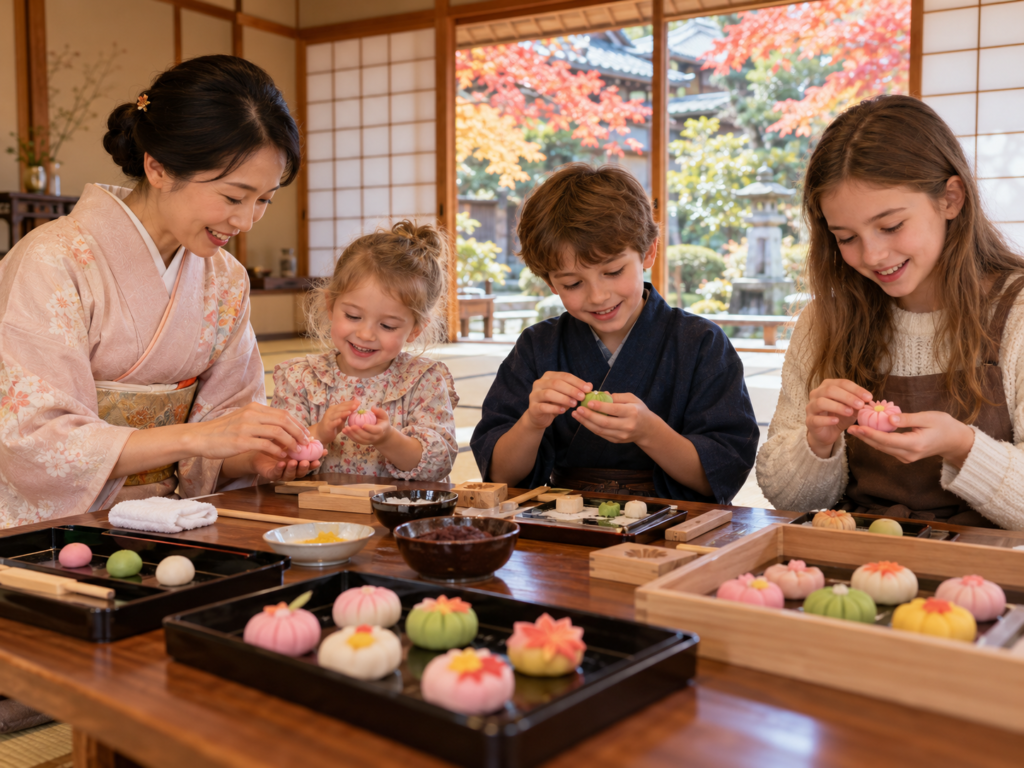
Best Cultural Experiences in Kyoto by Your Child’s Age
One of the most important factors when planning family activities is choosing experiences suited to your children’s interests and abilities.
The following age groups provide general planning guidance, not official admission rules for individual venues.
Ages 3–5: Short, Hands-On Activities
Younger children often enjoy activities that involve colors, shapes, and simple movements.
Potential options include age-appropriate wagashi workshops, simple crafts, and certain kimono experiences.
Choose short activities with clear instructions and parental participation.
Always confirm the minimum age before booking.
Ages 6–9: Creative Learning Experiences
Many elementary-school-age children enjoy activities that combine learning with making something.
Japanese calligraphy, wagashi making, and selected traditional craft workshops may be good options.
A tea ceremony may also be suitable if the venue accepts children of that age and the child can participate comfortably.
Ages 10 and Up: Deeper Cultural Experiences
Older children may be ready for longer activities that include cultural explanations and structured instruction.
Tea ceremony, calligraphy, traditional crafts, and selected maiko cultural experiences can provide opportunities to learn more about Japanese history and customs.
Remember that every child is different.
Choose experiences based on your child’s interests, comfort, and ability to enjoy the activity rather than age alone.
5 Things International Families Should Check Before Booking a Kyoto Cultural Experience
Booking cultural activities in another country can be slightly more complicated when traveling with children.
Here are five important details to check.
1. Is English Guidance Available?
If your family does not speak Japanese, look for programs with English-language guidance.
Understanding the instructions and cultural background can make the experience much more rewarding.
For children, clear explanations are particularly important.
2. What Is the Minimum Age?
Some experiences have age restrictions.
Others may allow younger children only when accompanied by an adult.
If you are traveling with a baby or toddler, check whether nonparticipating children may accompany the family.
3. How Long Does the Experience Last?
A 90-minute activity may feel short to an adult but long to a young child.
Consider whether the experience includes breaks and how much time children are expected to remain seated or attentive.
4. Are There Any Safety or Allergy Concerns?
Tea ceremony involves hot water and fragile utensils.
Craft workshops may use specialized tools.
Food experiences may involve ingredients that cause allergies.
Ask the provider about anything that could affect your child’s participation.
5. Can You Take Photos or Bring Your Creation Home?
Some families want photographs of the experience, while others prefer activities that produce a physical souvenir.
Confirm photography policies and whether finished items can be taken home.
For pottery and certain crafts, international shipping may be necessary.
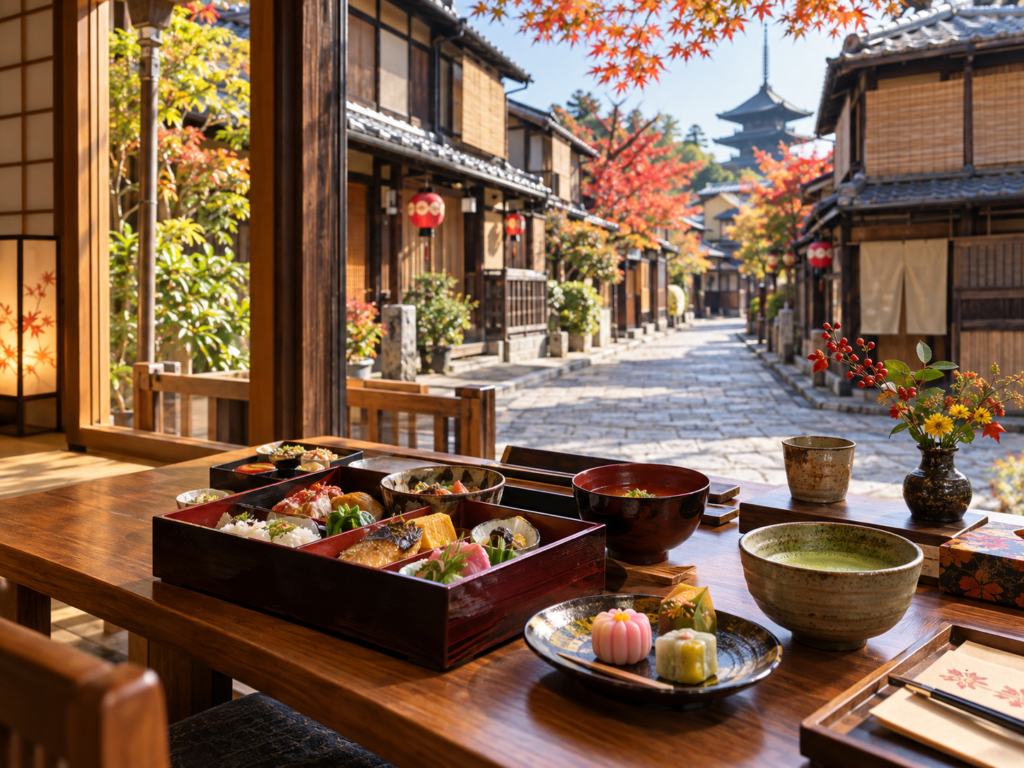
A Family-Friendly Half-Day Itinerary in Gion, Kyoto
Gion is one of Kyoto’s most famous historic neighborhoods.
It is also a convenient area for families who want to combine traditional sightseeing with Japanese cultural experiences.
Here is a sample half-day itinerary.
10:00 AM — Start at Gion-Shijo Station
Begin your day near Gion-Shijo Station.
Explore the nearby historic streets at a relaxed pace.
Look for traditional architecture, wooden buildings, and small details that make the neighborhood distinctive.
10:30 AM — Explore Historic Gion
Spend some time walking through the district.
For younger children, keep the walking route relatively short.
Remember that Gion is a working neighborhood, so follow local signs and photography restrictions.
11:30 AM — Enjoy Lunch Together
Stop for lunch in the Gion area.
If you’re traveling with young children, check menus, seating arrangements, and stroller accessibility before choosing a restaurant.
1:00 PM — Choose a Japanese Cultural Experience
Spend the afternoon enjoying an activity suited to your family’s interests and ages.
For example, eligible participants might enjoy learning how to prepare matcha during a Japanese tea ceremony.
Families who prefer creative activities could choose calligraphy or a traditional craft workshop.
2:30–3:00 PM — Take a Break
After your cultural experience, enjoy a relaxing break.
You might visit a nearby café, try Japanese sweets, or continue exploring if everyone still has energy.
This is a sample itinerary. Adjust the schedule according to your children’s ages, the activity duration, opening hours, and reservation requirements.
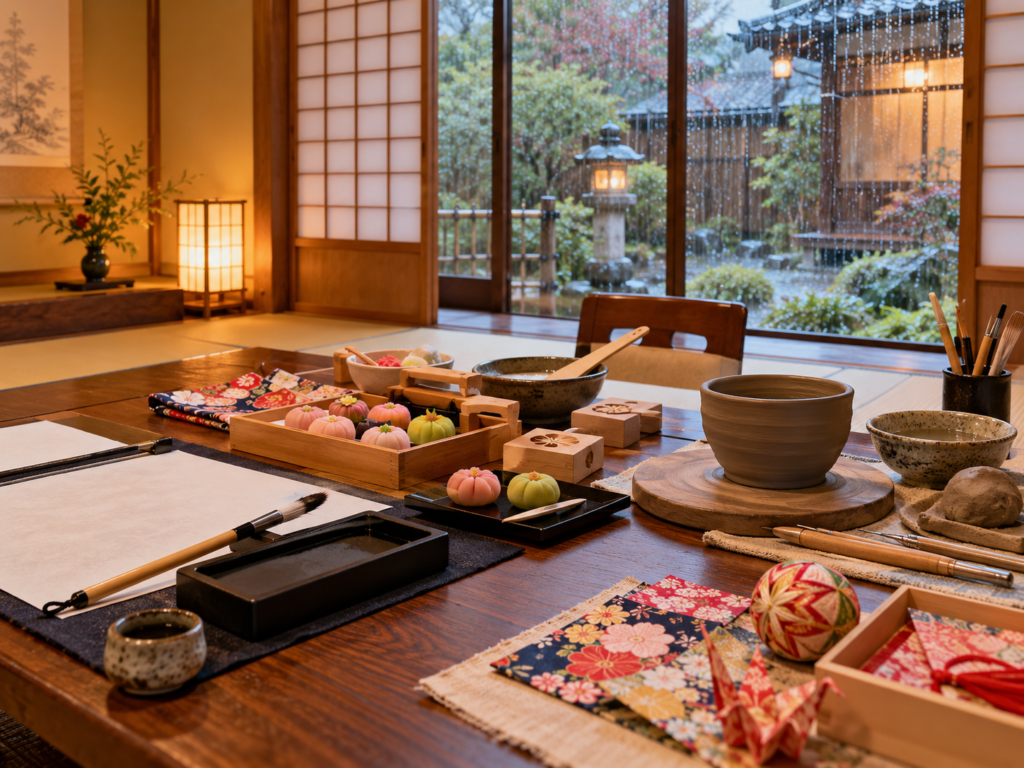
What to Do in Kyoto with Kids on a Rainy Day
Rain doesn’t have to ruin your family trip to Kyoto.
In fact, many Japanese cultural experiences take place indoors.
Possible rainy-day activities include:
Japanese calligraphy
Wagashi making
Tea ceremony
Pottery
Traditional crafts
Museums
Rather than trying to follow a busy outdoor itinerary in the rain, choose one or two age-appropriate indoor activities.
For example:
Short walk in Gion → Lunch → Cultural workshop → Afternoon break
This approach helps reduce time spent walking outdoors while still allowing your family to experience Kyoto.
Can Families Experience a Japanese Tea Ceremony in Gion?
If your family is interested in traditional Japanese culture, a tea ceremony in Gion can be a memorable part of your trip.
Tea ceremony introduces visitors to a number of cultural elements.
Matcha.
Wagashi.
Tatami.
Bamboo utensils.
Traditional ceramics.
Japanese hospitality.
For children who are old enough to participate, learning how matcha is prepared may be particularly interesting.
However, families should always check the minimum age, seating arrangements, and participation rules before making a reservation.
Discover Japanese Culture at THE TEA CEREMONY GION Orizuruya
Located in Kyoto’s historic Gion district, THE TEA CEREMONY GION Orizuruya offers traditional Japanese cultural experiences for visitors interested in learning about tea culture.
The venue is approximately four minutes on foot from Gion-Shijo Station and seven minutes from Kyoto-Kawaramachi Station.
Its location makes it convenient to combine a cultural experience with sightseeing around Gion.
Traditional Japanese Tea Ceremony
During the standard tea ceremony experience, guests can learn about Japanese tea culture, observe the host preparing matcha, enjoy Kyoto wagashi, and prepare their own matcha using a traditional bamboo chasen.
Duration: Approximately 90 minutes
This experience provides an introduction to traditional Japanese hospitality and matcha culture.
Explore the Tea Ceremony Experience in Gion
Japanese Calligraphy and Tea Ceremony
Orizuruya also offers a program combining Japanese calligraphy and tea ceremony.
Participants can explore traditional Japanese writing with brush and ink before experiencing Japanese tea culture.
Duration: Approximately 120 minutes
For families interested in multiple Japanese traditions, this may be an option worth considering if all participants meet the program’s requirements.
Maiko Tea Ceremony Experience
For visitors interested in Kyoto’s traditional entertainment culture, Orizuruya offers a special program involving a real maiko and Japanese tea ceremony.
This experience introduces visitors to a tradition closely associated with Gion.
Discover the Maiko Tea Ceremony Experience
Important Information for Families with Children
Before booking any program at Orizuruya, families should contact the venue to confirm:
- Minimum participation age
- Whether younger siblings or infants may accompany the group
- Whether parents must assist children during hands-on activities
- Seating arrangements
- Matcha consumption options for children
- Dietary restrictions or food allergies
- Available language support
Participation by children should not be assumed until the venue confirms the relevant conditions.
This helps ensure that the experience is comfortable and appropriate for the whole family.
Frequently Asked Questions About Kyoto Cultural Experiences with Kids
What are the best cultural experiences in Kyoto for families?
Popular choices include Japanese tea ceremony, calligraphy, wagashi making, kimono rental, pottery, and traditional craft workshops.
The best activity depends on your children’s ages and interests.
Can children participate in a Japanese tea ceremony in Kyoto?
Some venues may welcome children, but minimum age requirements and participation conditions vary.
Check with the provider before booking, especially for younger children.
Can a 5-year-old join a tea ceremony?
It depends on the venue.
Some programs may not accept preschool-age children, while others may offer appropriate arrangements.
Always confirm directly with the provider.
Is matcha suitable for young children?
Matcha contains caffeine.
Parents should take this into account and ask the venue whether children can participate without drinking matcha or whether an appropriate alternative is available.
Are Kyoto cultural activities available in English?
Some cultural experiences in Kyoto provide English-language guidance for international visitors.
Check the language options before booking.
What can kids make in Kyoto?
Depending on their ages, children may be able to try Japanese calligraphy, traditional sweets making, pottery, textile dyeing, or other craft activities.
Some workshops allow participants to take their creations home.
What are the best indoor activities in Kyoto for kids?
Japanese calligraphy, wagashi making, selected craft workshops, museums, and age-appropriate tea ceremony experiences are possible indoor activities.
How long should a cultural experience last for children?
It depends on their age and interests.
Younger children may prefer shorter activities, while older children may enjoy programs lasting one or two hours.
Where is the best place in Kyoto for family cultural experiences?
Gion and the surrounding Higashiyama area are convenient for families interested in traditional streets, Japanese culture, and sightseeing within a relatively compact area.
Do family cultural experiences need to be booked in advance?
Advance booking is recommended, especially during weekends and popular travel seasons.
It also gives parents time to confirm age requirements and other important details.
Make Your Family Trip to Kyoto a Cultural Adventure
Kyoto is filled with beautiful places to explore.
Historic temples.
Traditional shrines.
Wooden townhouses.
Japanese gardens.
But for families visiting Japan, some of the most meaningful moments may come from participating in Japanese culture together.
Your child’s first attempt at using a bamboo whisk.
The kanji artwork they create with a calligraphy brush.
The wagashi they shape with their own hands.
The traditional clothing they try on.
The craftsmanship they discover.
These moments can turn a sightseeing trip into a shared cultural experience.
You don’t need to fit every activity into your itinerary.
Choose one or two experiences that suit your family’s interests and your children’s ages.
Leave time for breaks.
Ask questions.
And enjoy discovering Japanese culture together.
When visiting Kyoto with your family, don’t just show your children Japan. Give them the opportunity to experience its traditions.
Explore Traditional Japanese Tea Ceremony Experiences in Gion, Kyoto