

Wagashi and Tea Ceremony in Kyoto: Why Japanese Sweets Are Served with Matcha
Wagashi and Tea Ceremony in Kyoto: Why Japanese Sweets Are Served with Matcha
When you join a Japanese tea ceremony in Kyoto, you may notice something beautiful sitting beside your bowl of matcha:
A small Japanese sweet.
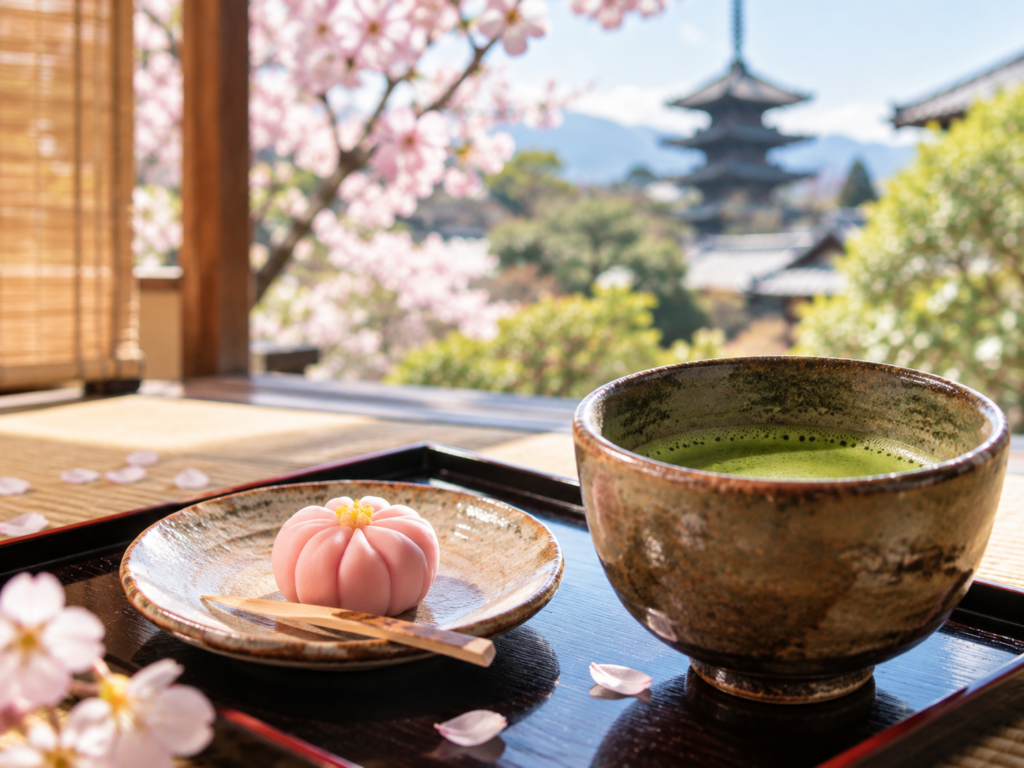
Perhaps it looks like a cherry blossom.
A maple leaf.
A flower covered in morning dew.
Or even a tiny piece of snow.
These traditional Japanese sweets are called wagashi, and they are much more than a dessert served with tea.
Wagashi can balance the bitterness of matcha, express the changing seasons, reflect Japanese aesthetics, and become part of the hospitality offered by the tea ceremony host.
This is why the combination of wagashi and matcha has become such an important part of Japanese tea culture.
For international visitors joining a tea ceremony for the first time, one question is especially common:
Why do you eat the sweet before drinking matcha?
In this guide, we explain why wagashi are served during Japanese tea ceremony, how to eat them, what different types you may encounter, and why Kyoto is one of the best places to experience this tradition.
What Is Wagashi?
Wagashi is the general term for traditional Japanese sweets.
Unlike many Western desserts based heavily on butter, cream, or chocolate, traditional wagashi often use ingredients such as:
- Sweet bean paste
- Rice flour
- Mochi
- Agar
- Sugar
- Chestnuts
- Seasonal fruits
There are many different varieties.
Some are simple and rustic.
Others are incredibly detailed, almost resembling miniature works of art.
In tea ceremony, wagashi are selected not only for their taste but also for their relationship with the tea, season, and atmosphere of the gathering.
Why Are Japanese Sweets Served With Matcha?
The simplest answer is:
Sweet wagashi and slightly bitter matcha complement each other.
Traditional matcha has a distinctive combination of bitterness, umami, aroma, and subtle sweetness.
Instead of adding sugar directly to the tea, Japanese tea culture traditionally pairs matcha with something sweet.
The usual sequence is:
Eat the wagashi
↓
Enjoy its sweetness
↓
Drink the matcha
↓
Experience the contrast between sweet and bitter
The sweetness remaining in your mouth softens the bitterness of the matcha and allows different flavors to become more noticeable.
But taste is only the beginning.
Wagashi also plays an important cultural role in tea ceremony.
1. Wagashi Makes Matcha Taste Different
For many first-time visitors to Japan, traditional matcha tastes stronger than expected.
This is especially true if they are accustomed to sweetened matcha lattes or matcha desserts.
Tea ceremony matcha is normally enjoyed without adding sugar to the bowl.
Instead, sweetness comes from the wagashi served before it.
Try paying attention to the difference.
Taste the sweet.
Pause.
Then drink the matcha.
The bitterness may suddenly feel softer and more pleasant.
This relationship between the two flavors is one reason matcha and wagashi have become such a natural combination.
2. Wagashi Expresses the Japanese Seasons
One of the most fascinating aspects of Japanese tea culture is its attention to seasonality.
The season can influence many elements of a tea gathering:
Flowers.
Hanging scrolls.
Tea bowls.
Utensils.
And wagashi.
Traditional Japanese sweets can visually represent a particular moment in the year.
Spring Wagashi
Spring sweets may use pale pinks and greens or designs inspired by cherry blossoms and plum blossoms.
For travelers visiting Kyoto during cherry blossom season, enjoying a sakura-inspired wagashi with matcha can make the season feel even more memorable.
Summer Wagashi
Kyoto summers can be hot and humid.
Traditional sweets may therefore use translucent ingredients or designs inspired by water, rivers, or morning dew to create a visual feeling of coolness.
The sweet itself becomes a way of experiencing the season.
Autumn Wagashi
Autumn brings maple leaves, chrysanthemums, chestnuts, and warmer colors.
Red, orange, yellow, and brown may appear in seasonal sweets.
Winter Wagashi
Winter sweets may suggest snow, camellias, or early plum blossoms.
Japanese seasonal culture sometimes looks slightly ahead, anticipating the next change in nature rather than simply representing what is happening at that exact moment.
This means wagashi is not just something you taste.
It is something you observe.
3. Wagashi Is Part of Japanese Omotenashi
Another important concept in tea ceremony is omotenashi, often translated as Japanese hospitality.
A tea host carefully prepares the gathering for the guests.
Which tea bowl should be used?
Which flowers should be displayed?
Which hanging scroll is appropriate?
Which utensils suit the season?
Which wagashi should accompany the tea?
These choices help create the atmosphere of the gathering.
The sweet placed in front of you was not necessarily chosen at random.
Its color, shape, name, or ingredients may have a connection with the season or theme of the tea gathering.
When participating in a tea ceremony, take a moment to look at your wagashi before eating it.
Ask yourself:
What does the shape remind me of?
What season does the color suggest?
What might the design represent?
This small moment of observation is part of the experience.
4. What Types of Wagashi Are Served During Tea Ceremony?
There are many kinds of Japanese sweets, and the type served depends on the style of tea gathering, season, and tea being prepared.
Two broad categories visitors may encounter are omogashi and higashi.
Omogashi
Omogashi are moist sweets, often including types of namagashi, or fresh Japanese confectionery.
One of the most visually recognizable forms is nerikiri.
Nerikiri can be shaped and colored into delicate seasonal designs such as flowers, leaves, or other elements of nature.
Other sweets such as manju or yokan may also be used depending on the occasion.
Higashi
Higashi are dry Japanese sweets with relatively little moisture.
One famous example is rakugan, traditionally made using sugar and starch or flour pressed into decorative molds.
These sweets can also feature delicate seasonal shapes.
The exact type of sweet served varies according to the tea setting and tradition.
5. Do You Eat Wagashi Before or After Matcha?
For first-time visitors, this is probably the most useful piece of tea ceremony etiquette to remember:
Generally, eat the wagashi before drinking the matcha.
This allows the sweetness to remain in your mouth before you taste the tea.
If you are participating in a beginner-friendly tea ceremony, however, you do not need to memorize complicated rules.
Your host will guide you through the experience.
Follow the instructions, observe what happens, and enjoy the moment.
6. How Do You Eat Wagashi During a Tea Ceremony?
The method depends on the type of sweet.
Soft wagashi may be eaten using a small utensil called a kuromoji, traditionally made from aromatic wood.
You can cut the sweet into smaller pieces and eat it gradually.
Dry sweets may sometimes be eaten by hand.
Different tea schools and situations may follow different procedures, so international visitors should not worry about memorizing every detail beforehand.
Tea ceremony is not an exam.
Respect, curiosity, and attention to your host are much more important than trying to perform every movement perfectly on your first attempt.
7. Why Is Kyoto Famous for Wagashi?
Kyoto has one of Japan’s richest confectionery traditions.
For centuries, the city was Japan’s imperial capital and an important center of religion, art, craftsmanship, and aristocratic culture.
Tea culture also developed strongly in and around Kyoto.
As tea ceremony became more refined, the sweets accompanying tea developed alongside it.
Appearance mattered.
Season mattered.
Ingredients mattered.
The relationship with matcha mattered.
Kyoto became home to highly skilled confectioners, and many traditional wagashi businesses continue operating in the city today.
This makes Kyoto particularly interesting for travelers who want to understand Japanese sweets as culture rather than simply dessert.
8. Wagashi Can Have Poetic Names
Another beautiful aspect of wagashi is something international visitors may not immediately notice.
Some traditional sweets have names inspired by:
Nature.
Seasons.
Classical poetry.
Literature.
Historical imagery.
A pink sweet might not simply be called “cherry blossom.”
Its name may suggest a particular scene in spring or reference a poetic image.
This reflects a broader characteristic of Japanese aesthetics.
Meaning does not always need to be expressed directly.
Sometimes the viewer is invited to imagine the rest.
A tiny piece of wagashi can therefore contain far more cultural meaning than its size suggests.
9. Experience Matcha and Wagashi With All Five Senses
Tea ceremony is not only about taste.
Look at the wagashi.
Notice its shape and color.
Imagine the season it represents.
Taste the sweetness.
Listen to the sound of the bamboo whisk moving through the tea.
Smell the matcha.
Feel the tea bowl in your hands.
Take a sip.
Notice how the bitterness tastes after the sweet.
Tea ceremony encourages attention to small details that are easy to overlook in everyday life.
For travelers rushing between temples, shrines, restaurants, and sightseeing spots, this slower pace can become one of the most memorable parts of visiting Kyoto.
10. You Do Not Need Perfect Tea Ceremony Etiquette
International visitors sometimes worry about making mistakes.
“Do I eat the sweet first?”
“How many times do I turn the tea bowl?”
“Do I need to sit in seiza?”
“What happens if I do something wrong?”
Tea ceremony certainly has traditions and etiquette.
But beginner experiences are designed for people who have never studied tea before.
Your host can explain what you need to do.
Rather than focusing entirely on whether every movement is correct, try to understand why the movement exists.
Why is the sweet eaten before the tea?
Why is the bowl handled carefully?
Why has this particular wagashi been chosen?
Curiosity makes the experience much more interesting.
Matcha Café or Tea Ceremony: Which Should You Choose in Kyoto?
Kyoto is full of wonderful places to enjoy matcha.
You can find:
Matcha parfaits.
Matcha ice cream.
Matcha cakes.
Matcha lattes.
Traditional sweets.
These are all enjoyable parts of visiting Kyoto.
But if you want to understand why matcha matters in Japanese culture, a tea ceremony offers a different experience.
Instead of simply ordering matcha from a menu, you can enter a tea room, observe the preparation, learn about the tradition, enjoy wagashi, and sometimes whisk your own bowl of matcha.
The difference is participation.
A café lets you taste matcha.
A tea ceremony helps you experience the culture surrounding it.
Experience Wagashi and Tea Ceremony in Gion, Kyoto
Gion is one of Kyoto’s most famous historic districts and an ideal place to experience traditional Japanese culture.
Historic streets.
Temples.
Shrines.
Kimono.
Maiko and geiko culture.
And tea ceremony.
Combining a tea ceremony with a day exploring Gion allows visitors to experience Kyoto rather than simply photograph it.
After walking through the historic neighborhood, stepping inside a tatami tea room creates a completely different atmosphere.
The city outside becomes quieter.
The focus becomes smaller.
One sweet.
One tea bowl.
One moment.
Matcha and Wagashi at THE TEA CEREMONY GION Orizuruya
Located in Gion, THE TEA CEREMONY GION Orizuruya offers tea ceremony experiences suitable for international visitors and first-time participants.
Orizuruya is approximately 4 minutes on foot from Gion-Shijo Station and 7 minutes from Kyoto-Kawaramachi Station, making it convenient to combine with sightseeing around Gion.
During the experience, guests can learn about Japanese tea culture, observe the preparation of matcha, and use a traditional bamboo chasen whisk to prepare tea themselves.
Matcha can also be enjoyed together with Kyoto wagashi.
For first-time visitors, tasting the sweet before drinking the matcha provides a simple but memorable introduction to the relationship between Japanese confectionery and tea culture.
Rather than treating wagashi and matcha as two separate foods, the experience allows you to understand how they work together.
Sweetness and bitterness.
Season and hospitality.
Food and aesthetics.
These contrasts are part of what makes Japanese tea culture so distinctive.
Frequently Asked Questions About Wagashi and Matcha
Why do Japanese people eat sweets before matcha?
The sweetness of wagashi complements the distinctive bitterness of matcha.
Eating the sweet first creates a pleasant contrast when the tea is served.
Do you eat wagashi before drinking matcha?
Generally, yes.
During tea ceremony, wagashi is normally enjoyed before the matcha.
Is sugar added to traditional matcha?
Traditional tea ceremony matcha is generally prepared without adding sugar directly to the tea.
Sweetness instead comes from the wagashi served alongside it.
What is the pink Japanese sweet served with matcha?
There is no single answer.
Many types of wagashi can be pink, particularly seasonal sweets inspired by cherry blossoms or spring.
Nerikiri is one type of traditional confectionery that can be shaped into beautiful seasonal designs.
What is wagashi made from?
Ingredients vary widely but may include sweet bean paste, rice flour, mochi, agar, sugar, chestnuts, and seasonal ingredients.
Can foreigners eat wagashi during a tea ceremony in Kyoto?
Absolutely.
Beginner-friendly tea ceremonies in Kyoto welcome international visitors and usually explain how and when to eat the sweet.
Where can I experience wagashi and matcha in Kyoto?
Tea ceremony experiences throughout Kyoto offer opportunities to enjoy traditional Japanese sweets with matcha.
Gion is particularly convenient for travelers who want to combine tea ceremony with historic sightseeing and other Japanese cultural experiences.
Discover Japanese Culture Through One Sweet and One Bowl of Matcha
Why is wagashi served during Japanese tea ceremony?
The answer is much deeper than simply:
“Because matcha is bitter.”
Wagashi complements the tea.
It expresses the season.
It reflects the host’s hospitality.
It connects food with Japanese aesthetics.
And it encourages the guest to slow down and notice small details.
A bowl of green matcha and a tiny Japanese sweet may appear simple.
But together they reveal centuries of Japanese culture.
When you visit Kyoto, do not just photograph the beautiful wagashi.
Look at it.
Think about the season.
Taste it slowly.
Then pick up the tea bowl and drink the matcha.
That contrast between sweetness and bitterness may become one of the simplest—and most memorable—cultural experiences of your trip to Japan.
Experience matcha, wagashi, and Japanese tea culture at THE TEA CEREMONY GION Orizuruya.