

How Old Are Maiko? Age Limits, Training, and Becoming a Geisha in Kyoto
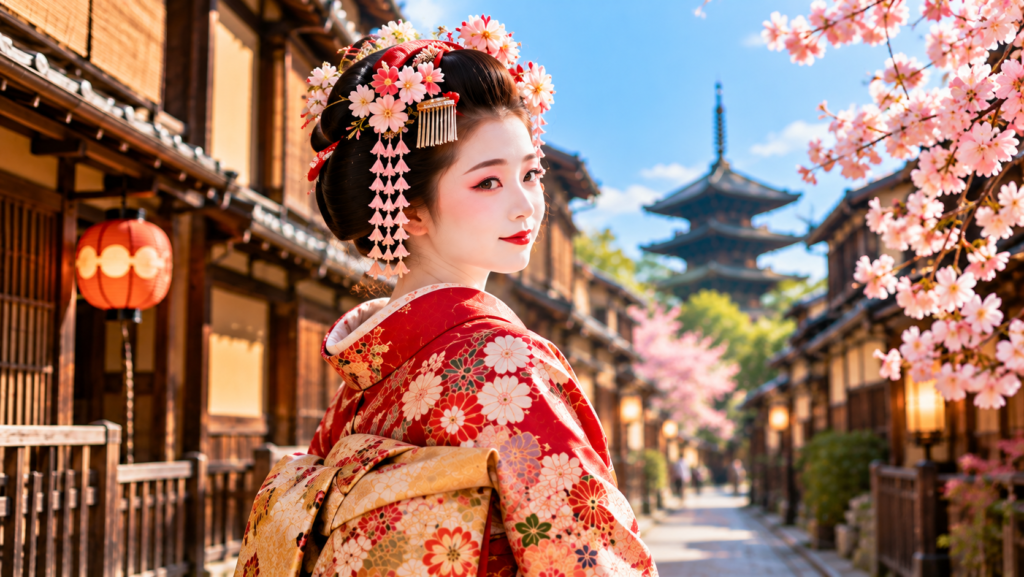
When you visit Kyoto’s historic Gion district, you may see photographs of young women wearing elaborate kimono, beautiful hair ornaments, and traditional white makeup.
These women are known as maiko, one of the most recognizable symbols of Kyoto’s traditional culture.
But who exactly are maiko?
How old are they?
At what age can someone become a maiko?
And when does a maiko become a geisha?
Many international visitors assume that maiko are simply younger geisha.
While age is part of the distinction, the real difference is more interesting.
A maiko is an apprentice geiko who is training in Kyoto’s traditional performing arts and hospitality culture.
Becoming a maiko requires years of dedication, discipline, and practice.
In this guide, we explain the typical ages of maiko, how their training works, what happens when they become geiko, and how visitors can respectfully experience authentic maiko culture in Kyoto.
How Old Are Maiko in Kyoto?
Maiko are generally in their late teens to around 20 years old.
Many begin their training after completing compulsory education, often around age 15.
However, they do not immediately become maiko.
They must first complete an initial period of preparation and training.
After officially debuting, they continue developing their skills until they are ready to become geiko.
Is there an official age limit for maiko?
There is no single nationwide legal rule requiring every maiko to stop working at exactly age 20.
The timing of the transition from maiko to geiko depends on individual circumstances, training progress, and the customs of the particular Kyoto entertainment district.
Some maiko continue their apprenticeship beyond age 20.
Therefore, age 20 is a useful general reference, not an absolute deadline.
Maiko vs. Geiko: Age Comparison
| Category | Maiko | Geiko |
| Professional status | Apprentice entertainer | Fully trained professional entertainer |
| Typical age | Late teens to around 20 | Often early twenties and older |
| Age limit | No universal fixed age | No universal retirement age |
| Training | Learning and developing professional skills | Continuing to refine established skills |
| Appearance | Colorful kimono and elaborate hair ornaments | Generally more mature and understated styling |
| Role | Performing and entertaining while training | Professional performance and hospitality |
The most important difference is not simply age.
It is the stage of professional training.
At What Age Can Someone Become a Maiko?
In Kyoto, aspiring maiko commonly begin their journey after graduating from junior high school.
In Japan, compulsory education normally ends at approximately age 15.
At this stage, a young woman interested in becoming a maiko may enter an okiya, a traditional establishment that supports and manages maiko and geiko.
What is an okiya?
An okiya is a house or establishment associated with the professional lives of maiko and geiko.
Traditionally, it provides a base for training, daily life, and professional arrangements.
The okiya plays an important role in introducing aspiring performers to the customs and expectations of Kyoto’s entertainment districts.
For newcomers, this means learning much more than dancing or wearing a kimono.
They must understand the traditions, manners, and professional responsibilities of the community.
Can someone become a maiko immediately?
No.
Before formally debuting, aspiring maiko usually complete a preparation period.
They learn the foundations of traditional performance, etiquette, communication, and daily life within the entertainment district.
Only after progressing through the necessary stages can they officially debut as maiko.
How Do You Become a Maiko? The Traditional Training Process
Becoming a maiko is a gradual process.
Although details vary among Kyoto’s entertainment districts, the traditional path generally includes several stages.
Step 1: Enter an Okiya
The first step is joining an okiya.
This introduces the aspiring maiko to the daily routines, expectations, and customs of Kyoto’s traditional entertainment culture.
She begins learning how the community operates and what is expected of its members.
Step 2: Begin Shikomi Training
The initial training period is known as shikomi.
During this stage, aspiring maiko learn essential skills and customs.
These may include:
- Traditional manners and etiquette
- Appropriate greetings and communication
- Kyoto entertainment-district customs
- Japanese dance
- Music and other performing arts
- Daily responsibilities and professional discipline
This stage helps prepare trainees for the demands of professional life.
It is a period of learning rather than public performance as an established maiko.
Step 3: Become a Minarai
In some Kyoto traditions, a trainee enters a stage called minarai, meaning learning through observation.
During this period, she gains experience by observing senior performers and becoming familiar with the atmosphere of traditional gatherings.
She learns how experienced maiko and geiko interact with guests and conduct themselves professionally.
This stage helps connect formal lessons with practical experience.
Step 4: Official Debut — Misedashi
A maiko’s formal debut is called misedashi.
This is an important milestone.
After misedashi, she begins working publicly as a maiko while continuing her artistic and professional training.
Her education does not end with her debut.
In many ways, it is the beginning of a new stage of learning.
What Do Maiko Learn During Their Training?
One of the biggest misconceptions about maiko is that their role is primarily about wearing beautiful kimono.
In reality, their appearance is only one part of a demanding traditional profession.
Maiko train in performing arts, etiquette, and hospitality.
1. Traditional Japanese Dance
Japanese dance is an important part of maiko training.
Performers learn how to communicate expression and meaning through controlled movements.
Training may involve:
Body posture
Hand movements
The use of fans
Timing and rhythm
Eye movements
Traditional choreography
Even small gestures can carry artistic meaning.
The elegant movements seen during a performance are the result of extensive practice.
2. Traditional Music
Depending on their training and professional specialization, maiko and geiko may study traditional musical arts.
These can include singing, shamisen, and other forms of musical performance.
The shamisen is a traditional Japanese three-stringed instrument.
Music and dance are closely connected within Kyoto’s performing arts culture.
3. Etiquette and Hospitality
Maiko also learn how to interact with guests in traditional settings.
This requires attentiveness, good communication, and an understanding of social customs.
They develop skills such as:
Polite greetings
Conversation
Appropriate behavior
Awareness of guests
Professional presentation
The ability to create a welcoming atmosphere
These skills are developed through instruction and experience.
4. Kyoto’s Traditional Language and Customs
Kyoto’s entertainment districts preserve distinctive customs and forms of speech.
Aspiring maiko learn how to communicate appropriately within this cultural environment.
These traditions form part of the identity of Kyoto’s historic entertainment communities.
Do Maiko Automatically Become Geisha at Age 20?
No.
A maiko does not automatically become a geiko on her twentieth birthday.
The transition depends on professional development, individual circumstances, and the customs of her entertainment district.
What is Erikae?
The transition from maiko to geiko is called erikae.
The term is often translated as “changing the collar.”
It refers to an important professional milestone in which an apprentice becomes a fully trained geiko.
The name reflects a visible change in traditional clothing.
What changes after Erikae?
The transition brings changes in professional status and appearance.
Maiko are known for colorful clothing, elaborate hair ornaments, and distinctive hairstyles.
Geiko generally adopt a more mature and understated appearance.
Their clothing, hairstyles, and accessories reflect their status as professional entertainers.
However, becoming a geiko does not mean that training is finished.
Geiko continue practicing and refining their artistic skills throughout their careers.
Maiko vs. Geisha: What’s the Difference?
International visitors often use the word geisha when referring to Kyoto’s traditional female entertainers.
In Kyoto, the local term for a fully trained professional is geiko.
A maiko is an apprentice geiko.
This distinction is important because the two roles represent different stages of professional development.
Differences in hairstyle
Maiko are traditionally known for hairstyles created using their own hair.
These elaborate styles are part of their distinctive appearance.
Geiko commonly wear traditional wigs for formal professional appearances.
Differences in hair ornaments
Maiko often wear colorful kanzashi, or traditional hair ornaments.
These ornaments may reflect seasonal flowers and other natural motifs.
Geiko generally wear more restrained accessories.
Differences in kimono
Maiko are associated with brightly colored kimono featuring long sleeves.
One of their most recognizable accessories is the darari obi, a long sash that hangs down the back.
Geiko typically wear more understated kimono and obi styles.
Differences in makeup
Both maiko and geiko may wear traditional white makeup during professional appearances.
However, makeup conventions and styling can vary according to experience, role, and occasion.
Is a maiko simply a young geisha?
Not exactly.
Age is often associated with the distinction, but a maiko is defined by her apprenticeship, not only by being young.
Likewise, a geiko’s status reflects professional training and experience rather than a particular birthday.
How Long Does Maiko Training Last?
There is no single training period that applies to every maiko.
The journey includes preparation before debut and continued artistic development afterward.
The length of each stage can depend on:
The individual trainee
The okiya
The entertainment district
Training progress
Professional circumstances
A maiko may spend several years developing her skills before transitioning to geiko.
It is also important to understand that professional development continues after erikae.
Traditional performing arts require ongoing practice.
Is There a Retirement Age for Geiko?
Unlike the common perception that traditional entertainers must retire when they are young, geiko do not have one universal retirement age.
Some continue working for many years.
Experience can be an important part of their professional value.
An established geiko may have spent decades refining her artistic skills, communication, and understanding of traditional hospitality.
This makes geiko culture different from professions where youth is considered the primary attraction.
Artistic maturity, experience, and mastery are deeply valued.
Where Do Maiko Work in Kyoto?
Kyoto is home to five traditional entertainment districts, collectively known as the Gokagai, or Five Kagai.
They are:
Gion Kobu
One of Kyoto’s best-known entertainment districts, associated with historic streets, traditional tea houses, and performing arts.
Miyagawacho
A traditional entertainment district with its own history and performing arts traditions.
Pontocho
Known for its narrow streets and atmospheric setting near the Kamo River.
Kamishichiken
Located in northwest Kyoto, Kamishichiken is known as Kyoto’s oldest traditional entertainment district.
Gion Higashi
Another historic entertainment district preserving Kyoto’s geiko and maiko traditions.
Each district has its own identity, history, and customs.
Together, they represent an important part of Kyoto’s living cultural heritage.
Can Tourists See Real Maiko in Gion?
Yes, but seeing a maiko while walking through Gion is never guaranteed.
Many tourists visit Gion hoping to encounter a real maiko or geiko.
However, it is important to remember that maiko and geiko are working professionals.
When they are walking through the neighborhood, they may be traveling to or from professional engagements.
They are not necessarily available for photographs or conversations.
How to behave if you see a maiko
If you encounter a maiko or geiko in Kyoto:
- Do not block her path.
- Do not chase or follow her.
- Do not touch her clothing or accessories.
- Respect photography restrictions.
- Avoid interrupting her work or travel.
The best way to appreciate Kyoto’s traditional entertainment culture is to respect the people who preserve it.
How Can You Meet a Real Maiko in Kyoto?
If meeting a real maiko is one of your priorities, relying on a chance encounter in Gion may not be the best approach.
Instead, consider an organized cultural experience.
Depending on the program, visitors may have opportunities to:
Watch traditional performances
Learn about maiko culture
Experience traditional Japanese hospitality
Participate in a cultural activity involving a real maiko
These experiences allow visitors to encounter the tradition in an appropriate setting.
Is a Maiko Makeover the Same as Meeting a Real Maiko?
No.
This is an important distinction for international travelers.
A maiko makeover experience generally involves wearing maiko-inspired clothing, makeup, and accessories for photography.
It is a costume and photography experience.
An authentic maiko cultural experience involves a real maiko who is professionally active within Kyoto’s traditional entertainment culture.
Both can be enjoyable, but they offer very different experiences.
Before booking, check exactly what the program includes.
What Is the Connection Between Maiko and Japanese Tea Ceremony?
Maiko culture and Japanese tea ceremony are two distinct traditions.
Maiko are primarily associated with Kyoto’s traditional performing arts and hospitality.
Tea ceremony, also called chanoyu or sado, centers on the preparation and serving of matcha.
Although their histories and practices are different, both place importance on:
Respect
Careful movements
Hospitality
Traditional aesthetics
Attention to detail
Cultural continuity
For visitors interested in experiencing multiple aspects of Japanese culture, combining these traditions can be particularly meaningful.
Why combine maiko culture with tea ceremony?
A combined experience offers an opportunity to explore Kyoto’s traditional entertainment culture alongside the art of preparing and enjoying matcha.
Instead of only seeing historic buildings, visitors can participate in traditions that remain part of Kyoto’s cultural identity.
Experience Authentic Maiko Culture in Gion, Kyoto
Located in Kyoto’s historic Gion district, THE TEA CEREMONY GION Orizuruya offers Japanese cultural experiences for visitors interested in traditional tea culture and Kyoto’s unique heritage.
The venue is approximately four minutes on foot from Gion-Shijo Station and seven minutes from Kyoto-Kawaramachi Station.
Its location makes it convenient to combine a cultural experience with sightseeing around Gion.
Maiko Tea Ceremony Experience
Orizuruya offers a cultural program combining a real maiko with Japanese tea ceremony.
This experience is designed for visitors who want to discover Kyoto’s traditional culture beyond ordinary sightseeing.
It is particularly suitable for travelers who are interested in maiko and geiko culture and want to experience an aspect of that tradition in an organized setting.
Explore the Maiko Tea Ceremony Experience in Kyoto
Traditional Japanese Tea Ceremony
For visitors who want to learn more about Japanese tea culture, Orizuruya also offers a traditional tea ceremony experience.
Guests can learn about tea culture, observe the host preparing matcha, enjoy Kyoto wagashi, and prepare their own matcha using a bamboo whisk.
Discover the Japanese Tea Ceremony Experience
Frequently Asked Questions About Maiko Age and Training
How old are maiko in Japan?
Maiko in Kyoto are generally in their late teens to around age 20. However, ages vary, and some continue their apprenticeship beyond 20.
What is the youngest age to become a maiko?
Aspiring maiko commonly begin training after completing compulsory education, usually around age 15. They must undergo preparation before officially debuting.
Do maiko have to retire at 20?
No. There is no universal rule requiring every maiko to retire or become a geiko at exactly age 20.
When does a maiko become a geisha?
A maiko transitions to geiko when she is ready to move from apprenticeship to fully trained professional status. The timing depends on her training and circumstances.
What is the difference between a maiko and a geisha?
A maiko is an apprentice geiko, while a geiko is a fully trained professional entertainer in Kyoto. The distinction involves professional status, training, clothing, hairstyle, and responsibilities.
What does Erikae mean?
Erikae means “changing the collar.” It refers to the transition from maiko to geiko and marks an important professional milestone.
How many years does it take to become a geiko?
There is no fixed number of years. Training varies according to the individual, her progress, and the customs of the entertainment district.
Can someone become a maiko at age 25?
Traditional maiko training generally begins in the mid-teenage years, and maiko are usually younger than 25. Entry requirements vary, and the traditional apprenticeship system is not typically designed for people beginning at that age.
How old can geiko be?
There is no universal upper age limit. Some geiko continue their careers for many years, developing their artistic skills and experience over time.
Can tourists meet real maiko in Kyoto?
Yes. Visitors may be able to experience authentic maiko culture through organized cultural programs or traditional performances. Seeing a maiko while walking through Gion is not guaranteed.
Are maiko and geisha the same thing?
Not exactly. Maiko are apprentices, while geiko are fully trained professionals. In Kyoto, geiko is the local term commonly used for what international visitors often call geisha.
Where can I experience maiko culture in Kyoto?
Kyoto’s traditional entertainment districts, including Gion, preserve maiko and geiko culture. Organized cultural experiences and performances can offer visitors opportunities to learn about these traditions.
Understanding Maiko Makes Kyoto Even More Fascinating
Maiko are among the most recognizable symbols of Kyoto.
Their colorful kimono, elaborate hairstyles, and beautiful accessories attract attention from visitors around the world.
But their appearance tells only part of the story.
Behind the elegant clothing is a demanding journey of training, discipline, and artistic development.
Many begin preparing for this profession in their teenage years.
They study traditional dance, music, etiquette, and hospitality.
They develop their skills through years of practice.
And eventually, some transition from maiko to geiko, continuing their careers as professional entertainers.
Understanding this journey changes the way you see Kyoto’s traditional culture.
A maiko is not simply someone wearing beautiful traditional clothing.
She is part of a living artistic tradition that has been passed down through generations.
When visiting Kyoto, take time to appreciate not only the beauty of maiko culture but also the dedication and skill behind it.
And if you want to experience this tradition more deeply, consider participating in an authentic cultural program in Gion.
The more you learn about maiko, the more meaningful your experience of Kyoto becomes.