

Tea Ceremony vs. Matcha Cafe in Kyoto: Which Japanese Tea Experience Should You Choose?
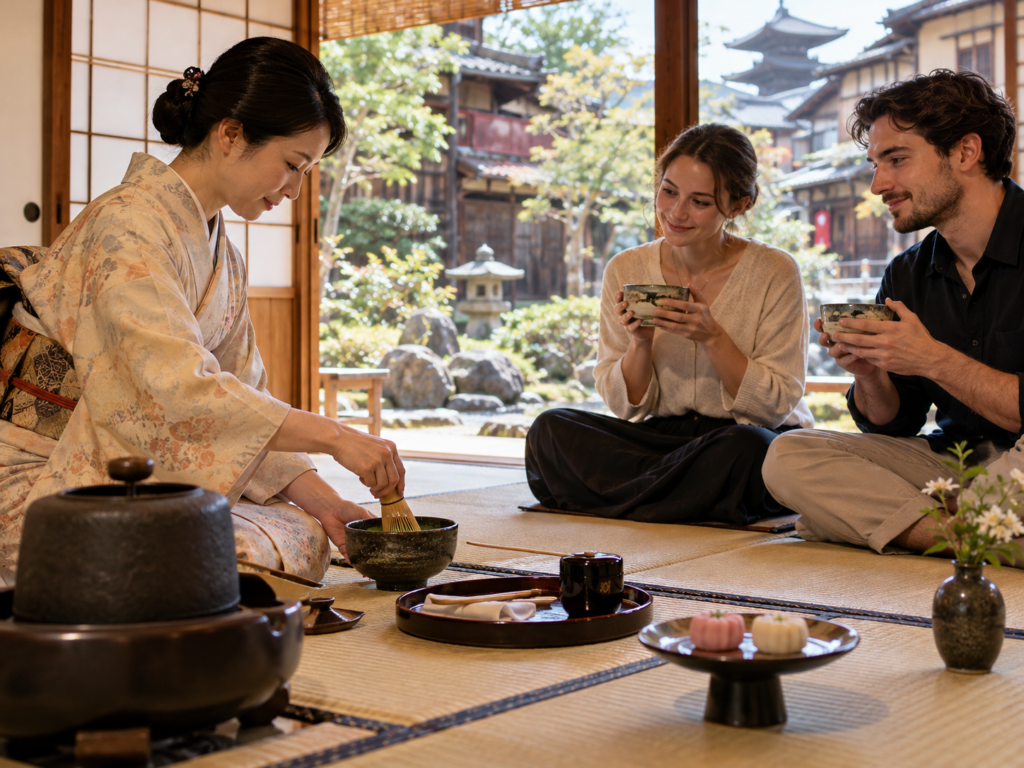
Planning to enjoy matcha during your trip to Kyoto?
Kyoto is one of Japan’s most famous destinations for traditional tea culture.
From beautiful Japanese tea rooms to modern matcha cafés, the city offers many ways to discover the distinctive flavor and cultural significance of Japanese green tea.
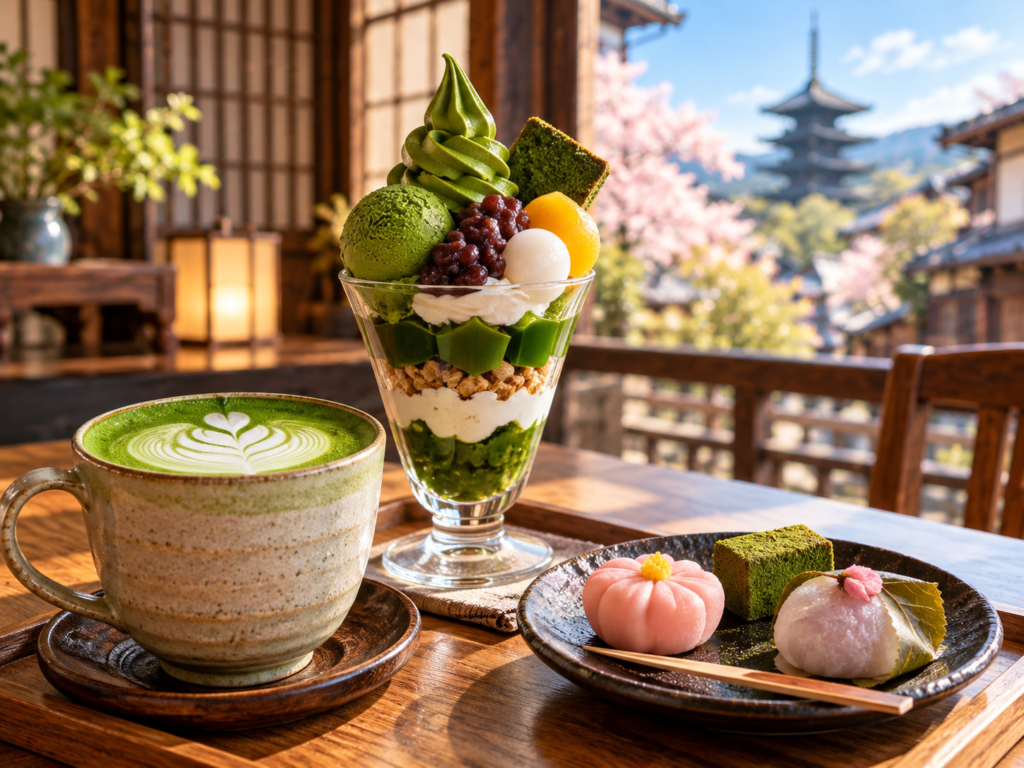
You can relax with a creamy matcha latte.
Enjoy traditional Japanese sweets alongside a bowl of matcha.
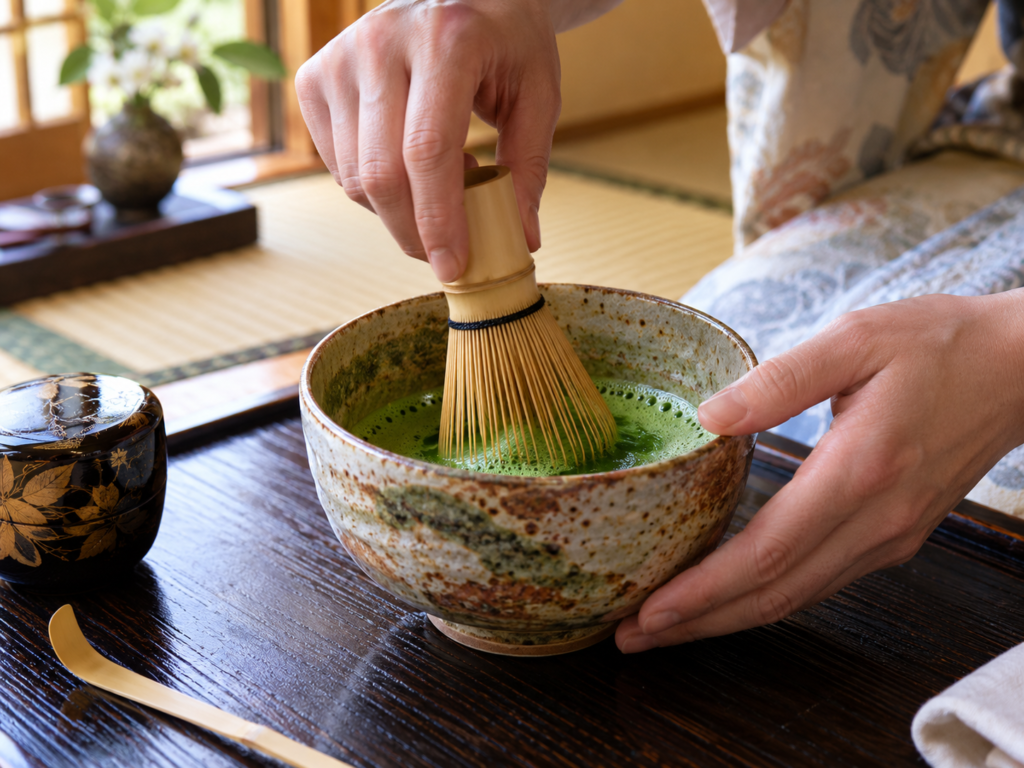
Learn to prepare matcha yourself using a bamboo whisk.
Or participate in a traditional Japanese tea ceremony while wearing kimono.
All of these can be memorable Kyoto experiences.
However, visiting a matcha café and participating in a Japanese tea ceremony are not the same thing.
A matcha café is generally focused on enjoying drinks and desserts.
A traditional tea ceremony offers an opportunity to learn about Japanese hospitality, etiquette, seasonal aesthetics, and the cultural traditions surrounding matcha.
For first-time visitors to Japan, the differences aren’t always obvious.
You might be wondering:
- What’s the difference between a tea ceremony and a matcha café in Kyoto?
- Can you prepare your own matcha during a Japanese tea ceremony?
- Do you need to wear kimono or sit on tatami?
- Is a traditional tea ceremony suitable for foreigners?
- How much time should you allow for each experience?
- Which option is better for couples, families, or solo travelers?
In this guide, we’ll explain the differences between a Japanese tea ceremony, a matcha café, and a hands-on matcha-making workshop.
We’ll also share practical tips for choosing the right experience and a suggested half-day itinerary in Kyoto’s historic Gion district.
Whether you’re a matcha lover or a traveler curious about Japanese traditions, this guide will help you discover the tea experience that suits your trip.
Tea Ceremony vs. Matcha Cafe in Kyoto: What’s the Difference?
Before choosing your experience, it’s helpful to understand what each type of activity usually includes.
Although they all involve matcha, they offer different ways to enjoy Japanese tea culture.
| Comparison | Japanese Tea Ceremony | Matcha Cafe | Matcha-Making Workshop |
| Main purpose | Learn about traditional Japanese tea culture | Enjoy matcha drinks and desserts | Learn how to prepare matcha |
| Drinking matcha | Usually included | Depends on your order | Depends on the program |
| Preparing your own matcha | Available in some programs | Usually not included | Often the main activity |
| Learning tea etiquette | Often included | Usually not the focus | May include a brief introduction |
| Japanese sweets | Often included | Available depending on the menu | Depends on the workshop |
| Wearing kimono | Included or optional at some venues | Not required | Depends on the program |
| Duration | From short introductory sessions to 90 minutes or longer | Flexible, depending on the café | Varies by workshop |
| Reservations | Often recommended or required | Depends on the café | Often required |
| Best for | Cultural learning and traditional experiences | Food, drinks, and sightseeing breaks | Hands-on matcha preparation |
These are general differences. The exact activities, prices, and services vary by venue.
Choose a Matcha Cafe If You Want to Enjoy the Flavor
If your main goal is to try matcha lattes, matcha parfaits, or other Japanese green tea desserts, a matcha café may be the best choice.
You can enjoy your favorite drinks and sweets while taking a break from sightseeing.
Choose a Tea Ceremony If You Want to Understand Japanese Culture
If you want to learn about traditional Japanese etiquette, hospitality, and the meaning behind matcha preparation, a tea ceremony is a better option.
A tea ceremony allows you to appreciate not only the tea itself but also the cultural traditions associated with serving it.
Choose a Matcha-Making Workshop If You Want Hands-On Practice
If you’re especially interested in using a bamboo whisk to prepare matcha, look for a hands-on workshop.
Some traditional tea ceremony programs also include this activity.
The most important thing is to check what you’ll actually do during the experience, rather than relying on the name alone.
1. What Is a Japanese Tea Ceremony?
A Japanese tea ceremony is a traditional cultural practice centered on preparing and serving matcha.
It is known in Japanese as chanoyu or sado.
In English, it is commonly called a “Japanese Tea Ceremony.”
However, tea ceremony is much more than the process of preparing a bowl of green tea.
It brings together several important aspects of Japanese culture.
Traditional hospitality.
Carefully considered movements.
Beautiful tea utensils.
Seasonal decorations.
Japanese sweets.
And an appreciation for the present moment.
What Is Omotenashi in Japanese Tea Culture?
One of the important ideas associated with Japanese hospitality is omotenashi.
This concept involves thoughtful attention to guests and a sincere desire to make them feel welcome.
In a tea ceremony, hospitality may be expressed through small details.
The host carefully prepares the tea room.
Utensils are selected with attention to their appearance and purpose.
Flowers and decorations may reflect the season.
The host prepares tea through a series of deliberate movements.
These details create an experience that goes beyond simply serving a drink.
For international visitors, participating in a tea ceremony can offer a deeper understanding of traditional Japanese hospitality.
What Happens During a Japanese Tea Ceremony?
A beginner-friendly tea ceremony in Kyoto may include:
- Learning about the history of Japanese tea culture
- Watching the host demonstrate traditional tea preparation
- Discovering the meaning of tea utensils
- Learning basic tea ceremony etiquette
- Enjoying traditional Japanese sweets called wagashi
- Preparing your own matcha with a bamboo whisk
The exact program varies by venue.
Some experiences focus mainly on watching the host perform the ceremony.
Others include opportunities for guests to prepare matcha themselves.
What Is a Chasen?
A chasen is a traditional bamboo whisk used to prepare matcha.
It is made from bamboo and has many delicate prongs.
During matcha preparation, powdered green tea is combined with hot water and whisked.
The whisk helps blend the powder and water, creating a smooth drink.
For travelers who have only tried matcha lattes, using a traditional bamboo whisk can be an interesting new experience.
What Makes Tea Ceremony Different from Drinking Matcha?
At a café, the main focus is usually the drink or dessert you order.
During a tea ceremony, the preparation and presentation of tea are also important.
The host’s movements, the atmosphere of the room, the utensils, and the interaction between host and guest all contribute to the experience.
This is why tea ceremony is considered a traditional Japanese cultural art rather than simply another way to serve green tea.
Can Foreigners Join a Japanese Tea Ceremony?
Yes.
Kyoto offers tea ceremony experiences designed for international visitors and complete beginners.
You don’t need to be familiar with Japanese etiquette before joining an introductory program.
However, language support varies between venues.
If you don’t speak Japanese, look for a program that offers explanations in English or another language you understand.
Best for: First-time visitors, couples, solo travelers, history enthusiasts, and anyone interested in traditional Japanese culture.
2. What Is a Matcha Cafe in Kyoto?
A matcha café is generally a place where visitors can enjoy matcha-based drinks, desserts, and sometimes traditional Japanese sweets.
Matcha is powdered Japanese green tea.
In traditional tea ceremony, the powder is prepared with hot water using a bamboo whisk.
In modern cafés, matcha is also used in many creative recipes.
Kyoto has a rich history of tea culture, and matcha has become a familiar part of the city’s food and tourism scene.
What Can You Try at a Kyoto Matcha Cafe?
Depending on the café, you may find the following.
Matcha Latte
A drink combining matcha with dairy milk or plant-based milk.
Some cafés serve it hot or iced.
The sweetness and matcha intensity vary.
Matcha Parfait
A layered dessert that may include matcha ice cream, jelly, whipped cream, sweet bean paste, or other ingredients.
Matcha Ice Cream
A popular dessert known for its distinctive green tea flavor.
Matcha with Traditional Japanese Sweets
Some cafés offer a bowl of matcha together with wagashi.
This can be a convenient way to enjoy a traditional tea-and-sweets pairing.
Matcha Cakes and Pastries
Modern cafés may incorporate matcha into cakes, cookies, and other Western-style desserts.
Why Visit a Matcha Cafe in Kyoto?
One of the biggest advantages of a matcha café is convenience.
You can visit during a sightseeing break.
Enjoy drinks with friends.
Try Japanese desserts with your family.
Or relax after exploring temples and historic streets.
For travelers who aren’t interested in formal cultural activities, a matcha café can still provide an enjoyable introduction to Japanese green tea.
Are Matcha Cafes Suitable for People Who Don’t Like Bitter Tea?
Possibly.
Traditional matcha has a distinctive combination of bitterness, sweetness, and umami.
Some visitors enjoy this flavor immediately, while others prefer sweeter drinks.
Matcha lattes and desserts may be more approachable for people who aren’t accustomed to traditional matcha.
However, sweetness varies by menu.
If you prefer a particular flavor, ask about the ingredients and sugar content before ordering.
Can You Learn About Japanese Tea Culture at a Cafe?
Sometimes.
Certain cafés provide information about tea leaves, production methods, or the origins of their matcha.
Some also feature traditional Japanese interiors.
However, most matcha cafés focus primarily on food and drinks.
They don’t necessarily teach the etiquette or cultural philosophy of traditional Japanese tea ceremony.
Enjoying matcha and learning the art of tea ceremony are related experiences, but they aren’t interchangeable.
Best for: Matcha lovers, food enthusiasts, families, and travelers who want a flexible sightseeing break.
3. What Is a Matcha-Making Workshop?
A matcha-making workshop is a hands-on activity focused on learning how to prepare matcha.
These workshops share certain features with Japanese tea ceremony.
However, the emphasis can be different.
What Happens During a Matcha-Making Workshop?
A typical introductory workshop may involve the following steps.
Step 1 — Learn About Matcha
The instructor introduces powdered green tea and traditional preparation tools.
Step 2 — Prepare the Tea Bowl
Participants learn how matcha is measured and placed in a tea bowl.
Step 3 — Add Hot Water
A suitable amount of hot water is added to the matcha.
Step 4 — Use a Bamboo Whisk
Participants use a chasen to blend the matcha and water.
Step 5 — Taste Your Matcha
Finally, you enjoy the tea you’ve prepared yourself.
The exact process depends on the workshop.
How Is It Different from a Tea Ceremony?
A matcha-making workshop may focus primarily on preparation techniques.
A tea ceremony can include a broader introduction to Japanese hospitality, formal movements, seasonal aesthetics, and traditional etiquette.
However, there is no universally standardized distinction between tourist activities labeled “matcha making” and “tea ceremony.”
Some programs combine both.
For example, a tea ceremony experience may include an explanation of Japanese customs, a host demonstration, and hands-on matcha preparation.
For that reason, the program description matters more than its title.
Which Experience Should You Choose?
If your priority is simply learning how to whisk matcha, a short matcha-making workshop may be sufficient.
If you want to understand the cultural meaning behind preparing and serving tea, consider a traditional tea ceremony that includes explanations and a demonstration.
4. Seven Things to Consider When Choosing Between a Tea Ceremony and a Matcha Cafe
Not sure which experience is right for your Kyoto trip?
These seven factors can help you decide.
1. Consider What You Want to Experience
Start by thinking about your main travel interests.
Do you want to try delicious matcha desserts?
Are you curious about traditional Japanese customs?
Would you like to learn how to prepare matcha yourself?
Or are you looking for a special cultural activity to remember your trip?
A matcha café is ideal for enjoying food and drinks.
A tea ceremony may be more appropriate if cultural learning is your priority.
Neither option is automatically better.
They simply offer different experiences.
2. Check Whether You Can Prepare Your Own Matcha
Not every tea ceremony experience includes hands-on participation.
Some programs are demonstrations in which visitors watch the host prepare tea.
Others invite participants to use a bamboo whisk themselves.
If preparing matcha is important to you, look for descriptions such as:
“Hands-on Matcha Making”
“Prepare Your Own Matcha”
“Traditional Tea Ceremony with Matcha Preparation”
Confirm that the activity is actually included.
3. Compare the Time Required
Matcha cafés often allow greater flexibility.
Depending on the café and crowd levels, you can decide how long to stay.
Tea ceremony experiences usually have a scheduled start time.
Some programs are relatively short, while others last 90 minutes or longer.
If you’re planning a busy sightseeing day, consider how much time you can comfortably dedicate to each activity.
4. Look at What’s Included in the Price
Tea ceremony prices vary depending on the venue and program.
An experience may include:
- Cultural explanations
- A traditional tea demonstration
- Hands-on matcha preparation
- Japanese sweets
- Kimono dressing
- Other cultural activities
A matcha café usually charges according to the food and drinks ordered, although some offer set menus or experiences.
Rather than comparing prices alone, check what you’re receiving.
5. Decide Whether You Want to Wear Kimono
Some tea ceremony experiences include traditional kimono dressing.
Others allow visitors to participate in everyday clothes.
If you’d like to experience Japanese clothing as well as tea culture, look for a program that includes kimono dressing.
Before booking, confirm whether it’s included in the price, how much time it takes, and whether appropriate sizes are available.
6. Check the Seating Arrangements
Traditional Japanese tea rooms may have tatami flooring.
In some tea ceremonies, guests sit in seiza, a formal kneeling position.
However, not every tea ceremony requires this.
Some venues offer chairs or other seating arrangements.
If sitting on the floor is uncomfortable or difficult for you, contact the venue before booking.
This is especially important for visitors with mobility concerns.
7. Confirm Language Support and Reservations
If you’re an international visitor, understanding the instructor’s explanations can make a significant difference.
Check whether the venue offers English-language guidance.
Also confirm:
- Whether advance booking is required
- The available start times
- The cancellation policy
- Age restrictions
- Photography rules
- Accessibility arrangements
These practical details can help you choose an experience that fits your travel needs.
Tea Ceremony or Matcha Cafe: Which Is Best for Your Travel Style?
The right choice often depends on who you’re traveling with and what you want from your Kyoto experience.
First-Time Visitors to Japan
If you’re visiting Japan for the first time and want to understand traditional culture, consider a tea ceremony.
It provides an introduction to Japanese etiquette, hospitality, and seasonal aesthetics.
However, if you’re mainly interested in Japanese food and casual sightseeing, a matcha café may suit you better.
Couples and Honeymooners
For couples, a traditional tea ceremony can be a memorable shared activity.
Learning about matcha preparation together creates a different experience from ordinary sightseeing.
Some programs also include kimono dressing, adding another traditional element to the visit.
Alternatively, enjoying matcha desserts together in a Kyoto café can be a relaxing part of a romantic afternoon.
Solo Travelers
Solo travel offers the freedom to explore your own interests.
If you enjoy quiet cultural experiences, a tea ceremony may be a good choice.
If you prefer a flexible schedule, visiting a matcha café can be easier to fit around sightseeing.
For organized cultural experiences, check whether solo reservations are accepted.
Families with Children
Families may enjoy either type of experience, depending on the children’s ages and interests.
A café can offer a flexible setting for a break.
A tea ceremony may be suitable for children who are interested in learning and participating in a traditional activity.
However, tea ceremony involves hot water and delicate utensils.
Some programs have minimum age requirements or require parental supervision.
Also, matcha contains caffeine.
Check drink ingredients and consider whether matcha is appropriate for your children.
Travelers Interested in Traditional Japanese Arts
If you want to learn more about Japanese culture, tea ceremony offers opportunities to explore etiquette, traditional objects, and hospitality.
Some Kyoto programs also combine tea ceremony with calligraphy or authentic maiko cultural experiences.
These can be good options for visitors hoping to discover several Japanese traditions during one trip.
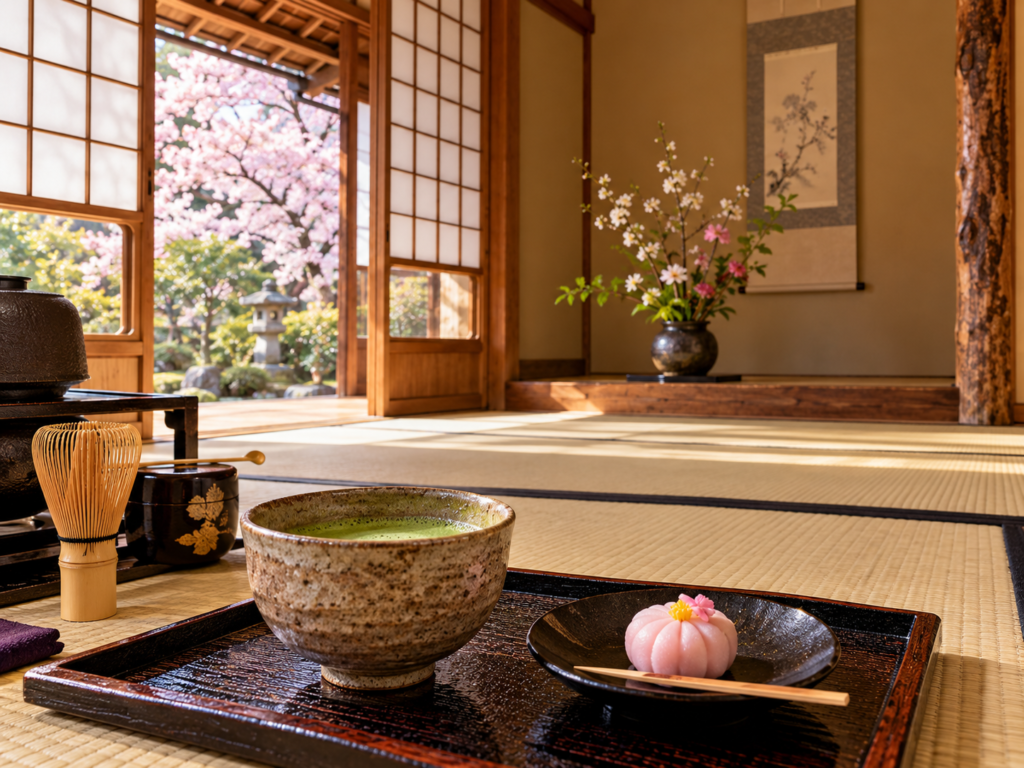
Why Gion Is a Great Area for a Japanese Tea Ceremony in Kyoto
Kyoto has many tea ceremony venues, but Gion is a particularly convenient area for combining cultural activities with sightseeing.
Gion is one of Kyoto’s best-known historic districts.
It is famous for its traditional wooden buildings, atmospheric streets, and connection to maiko and geiko culture.
The area also offers access to shrines, restaurants, traditional shops, and cultural experiences.
What Can You Do Around Gion?
Explore Historic Streets
Admire traditional Kyoto townhouses and the atmosphere of the old district.
Visit Yasaka Shrine
Discover one of Kyoto’s best-known Shinto shrines and learn about Japanese religious traditions.
Participate in a Japanese Tea Ceremony
Learn about matcha preparation and traditional Japanese hospitality at a cultural experience venue.
Enjoy Matcha and Wagashi
Take a break at a café or traditional sweets shop.
This combination makes Gion a convenient neighborhood for travelers with limited time in Kyoto.
Important Gion Sightseeing Etiquette
Gion is a living and working neighborhood.
It isn’t simply a tourist attraction.
Some private streets and properties have restrictions on entry and photography.
Visitors should respect local rules and avoid disturbing residents or businesses.
If you see maiko or geiko walking through the neighborhood, never follow them, obstruct their work, or take photographs where photography is prohibited.
Respecting local culture is an important part of enjoying Kyoto responsibly.
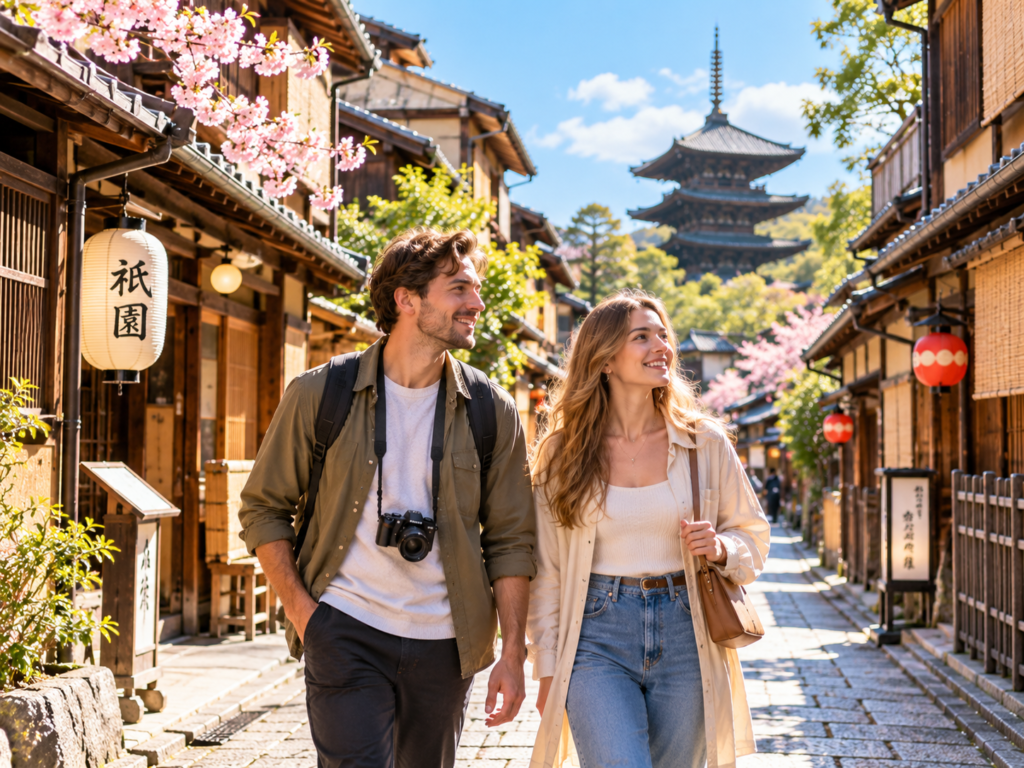
A Half-Day Gion Itinerary: Enjoy Both a Matcha Cafe and a Tea Ceremony
You don’t necessarily have to choose between a matcha café and a Japanese tea ceremony.
If you have enough time, you can enjoy both on the same day.
Here’s a sample half-day itinerary for international visitors exploring Gion.
10:00 AM — Start at Gion-Shijo Station
Begin your sightseeing at Gion-Shijo Station on the Keihan Railway.
Explore the surrounding streets and admire traditional Kyoto architecture.
Take your time walking through the neighborhood.
10:30 AM — Visit a Matcha Cafe
Stop at a café or traditional Japanese sweets shop in Gion.
Depending on the menu, you might try a matcha latte, matcha parfait, or a bowl of traditional matcha served with wagashi.
This is a good opportunity to experience Japanese tea culture through food and drinks.
Check the café’s opening hours before visiting.
11:30 AM — Explore the Yasaka Shrine Area
After your café visit, take a short walk toward Yasaka Shrine.
Admire the architecture and learn about Japanese shrine traditions.
Remember to follow local etiquette and respect worshippers.
12:00 PM — Enjoy Lunch in Gion
Choose a restaurant around Gion for lunch.
You could try traditional Japanese cuisine or another restaurant that suits your interests.
Allow enough time to reach your afternoon cultural experience.
1:30 PM — Participate in a Japanese Tea Ceremony
Spend the afternoon discovering the traditions behind matcha.
Learn about Japanese tea ceremony history and etiquette.
Watch the host prepare matcha.
Discover traditional tea utensils.
And, if included, prepare your own matcha using a bamboo whisk.
This provides an interesting contrast to your earlier café visit.
At the café, you enjoyed matcha as a drink or dessert.
During the tea ceremony, you learn about the preparation, presentation, and cultural meaning of tea.
Experiencing both can help you appreciate matcha from two different perspectives.
The 1:30 PM start is an example only. Confirm that a suitable booking slot is available.
3:00–3:30 PM — Relax and Explore More of Gion
After your tea ceremony, take a break or enjoy a short walk through Gion.
You can reflect on what you’ve learned about Japanese tea culture before continuing your Kyoto sightseeing.
This itinerary is a planning example. Adjust the times according to reservations, opening hours, and travel conditions.
What to Check Before Booking a Japanese Tea Ceremony in Kyoto
If you’ve decided that a traditional tea ceremony is right for you, consider these practical questions before making a reservation.
Is English Guidance Available?
Japanese tea ceremony includes traditions that may be unfamiliar to overseas visitors.
Explanations in English can help you understand the meaning of the host’s movements, the utensils, and the etiquette.
Can You Whisk Matcha Yourself?
Some experiences involve observing the host.
Others include hands-on participation.
If you’d like to prepare your own matcha, confirm that it is part of the program.
Is Kimono Dressing Included?
Some venues include kimono dressing in the experience.
Others may offer it separately or not at all.
Check the included services and any additional costs.
Do You Have to Sit in Seiza?
Some traditional tea rooms use floor seating.
If you have difficulty kneeling or sitting on tatami, ask whether alternative arrangements are possible.
Can You Take Photos?
Photography policies vary between venues.
Some may allow photographs during certain parts of the experience while restricting photography during the formal demonstration.
Always follow the host’s instructions.
Are Japanese Sweets Included?
Many tea ceremony programs include wagashi.
However, the type of sweets and ingredients vary.
If you have food allergies, contact the venue before booking.
What Happens If You’re Late?
Tea ceremony experiences often begin at a scheduled time.
Arriving late may disrupt the program or prevent you from participating.
Allow enough travel time, particularly during busy sightseeing seasons.
Experience an Authentic Japanese Tea Ceremony at THE TEA CEREMONY GION Orizuruya
Located in Kyoto’s historic Gion district, THE TEA CEREMONY GION Orizuruya offers traditional Japanese cultural experiences for visitors interested in more than simply drinking matcha.
At Orizuruya, guests can learn about Japanese tea culture, observe traditional matcha preparation, and prepare their own matcha using a bamboo whisk.
The venue also offers experiences combining tea ceremony with calligraphy or authentic maiko culture.
Traditional Japanese Tea Ceremony Experience
The standard Tea Ceremony Experience introduces visitors to Japanese hospitality and matcha culture.
The program includes kimono dressing and an explanation of tea ceremony history and basic etiquette.
Guests watch the host demonstrate traditional tea preparation.
Afterward, participants have an opportunity to prepare their own matcha with a bamboo chasen.
Traditional Japanese sweets from Kyoto are also served.
Duration: Approximately 90 minutes
Listed price: ¥7,700 per person
Explore the Traditional Japanese Tea Ceremony
Calligraphy and Tea Ceremony Experience
For visitors who want to discover more than one Japanese tradition, Orizuruya also offers a combined calligraphy and tea ceremony program.
Participants can explore Japanese brush writing and traditional matcha preparation during the same visit.
This can be a memorable choice for travelers interested in Japanese art and culture.
Duration: Approximately 120 minutes
Listed price: ¥13,200 per person
Discover the Calligraphy and Tea Ceremony Experience
Authentic Maiko Tea Ceremony Experience
For a distinctive cultural experience in Gion, Orizuruya offers a special tea ceremony involving a real maiko.
A maiko is an apprentice geiko, a professional entertainer in Kyoto’s traditional entertainment districts.
During this program, guests can observe a professionally active maiko preparing tea.
Visitors also learn about traditional tea ceremony etiquette and have an opportunity to prepare their own matcha.
This experience combines Japanese tea culture with an introduction to Kyoto’s traditional performing arts and hospitality.
Duration: Approximately 90 minutes
Listed price: ¥16,500 per person, including tax
Explore the Authentic Maiko Tea Ceremony
How Is Orizuruya Different from a Matcha Cafe?
At a typical matcha café, visitors order drinks or desserts and enjoy them at their own pace.
At Orizuruya, the standard tea ceremony experience includes cultural explanations, a traditional demonstration, kimono dressing, and hands-on matcha preparation.
This makes it suitable for travelers who want to understand the traditions behind matcha rather than simply enjoy its flavor.
Location and Access
THE TEA CEREMONY GION Orizuruya is located at:
572-7 Gionmachi Minamigawa, Higashiyama Ward, Kyoto, Japan.
It is approximately four minutes on foot from Gion-Shijo Station and seven minutes from Kyoto-Kawaramachi Station.
Its location makes it convenient to combine a tea ceremony with sightseeing around Gion.
Program details and prices reflect official information checked in October 2026 and may change. Confirm the current booking conditions, available times, language support, and participation requirements before reserving.
Frequently Asked Questions: Tea Ceremony vs. Matcha Cafe in Kyoto
Is a Japanese tea ceremony the same as visiting a matcha cafe?
No. A matcha café generally focuses on serving drinks and desserts, while a Japanese tea ceremony introduces visitors to traditional tea preparation, etiquette, and hospitality.
Can I experience Japanese culture by simply drinking matcha?
Yes. Matcha is part of Japanese food and tea culture. However, participating in a traditional tea ceremony allows you to learn more about the customs and ideas behind preparing and serving it.
Can I prepare my own matcha during a tea ceremony?
It depends on the program. Some tea ceremonies include hands-on matcha preparation, while others focus on observing the host.
Can foreigners participate in a tea ceremony in Kyoto?
Yes. Kyoto has beginner-friendly tea ceremony experiences designed for international visitors. Check available languages before booking.
Do I need to wear kimono for a tea ceremony?
Not necessarily. Some experiences allow everyday clothing, while others include kimono dressing. Follow the venue’s dress requirements.
Do I have to sit on my knees during a Japanese tea ceremony?
Not always. Some tea ceremonies use tatami seating, while others offer chairs or alternative arrangements. Contact the venue if you have mobility concerns.
Do matcha cafes in Kyoto require reservations?
It depends on the café. Some accept walk-in customers, while others may require reservations for particular menus or services.
How long does a Japanese tea ceremony take?
The duration varies. Some introductory experiences are short, while others last 90 minutes or more. Orizuruya’s standard experience is listed as approximately 90 minutes.
Is matcha bitter?
Matcha has a distinctive flavor that may include bitterness, sweetness, and umami. Traditional Japanese sweets are often served with matcha to complement its taste.
Does matcha contain caffeine?
Yes. Matcha contains caffeine. People who need to limit caffeine intake should consider the amount consumed and any relevant medical guidance.
Can children participate in a tea ceremony?
Some programs welcome children, but minimum ages and supervision requirements vary. Because tea ceremony involves hot water and delicate utensils, check the participation conditions in advance.
Is a matcha cafe better for families?
A café may be more flexible for families who want a short break. However, some tea ceremony programs also welcome children and provide age-appropriate participation.
Can I visit both a matcha cafe and a tea ceremony in one day?
Yes. If your schedule allows, visiting both can be a wonderful way to experience matcha as a modern food and a traditional cultural practice.
Where is a good place to experience Japanese tea ceremony in Kyoto?
Gion is one convenient option because it combines historic streets, shrines, restaurants, and traditional cultural experiences within the same area.
Which is better for first-time visitors: a tea ceremony or a matcha cafe?
Choose a tea ceremony if you’re interested in Japanese culture and traditional hospitality. Choose a matcha café if your priority is enjoying drinks, desserts, or a flexible sightseeing break.
Final Thoughts: Discover Both Sides of Kyoto’s Matcha Culture
Kyoto offers many different ways to enjoy matcha.
You can order a refreshing matcha latte at a modern café.
Taste traditional Japanese sweets alongside green tea.
Learn to prepare your own matcha using a bamboo whisk.
Or participate in a Japanese tea ceremony and discover the traditions of hospitality, etiquette, and seasonal aesthetics.
Each experience offers something different.
A matcha café is a great choice for travelers who want to enjoy drinks and desserts.
A matcha-making workshop can help you learn the basics of preparing matcha.
And a Japanese tea ceremony offers an opportunity to explore the cultural meaning behind the tea.
For international travelers visiting Kyoto, understanding these differences can make it easier to choose an activity that matches their interests.
You don’t have to choose just one.
If you have enough time, enjoy a matcha café during your sightseeing and experience traditional tea ceremony later in the day.
The combination can help you appreciate both the modern and traditional sides of Japanese tea culture.
On your next trip to Kyoto, discover not only the taste of matcha but also the traditions that make Japanese tea ceremony special.
Experience an Authentic Japanese Tea Ceremony in Gion, Kyoto