

Maiko vs. Geiko in Kyoto: What’s the Difference? A Complete Guide to Gion’s Traditional Culture
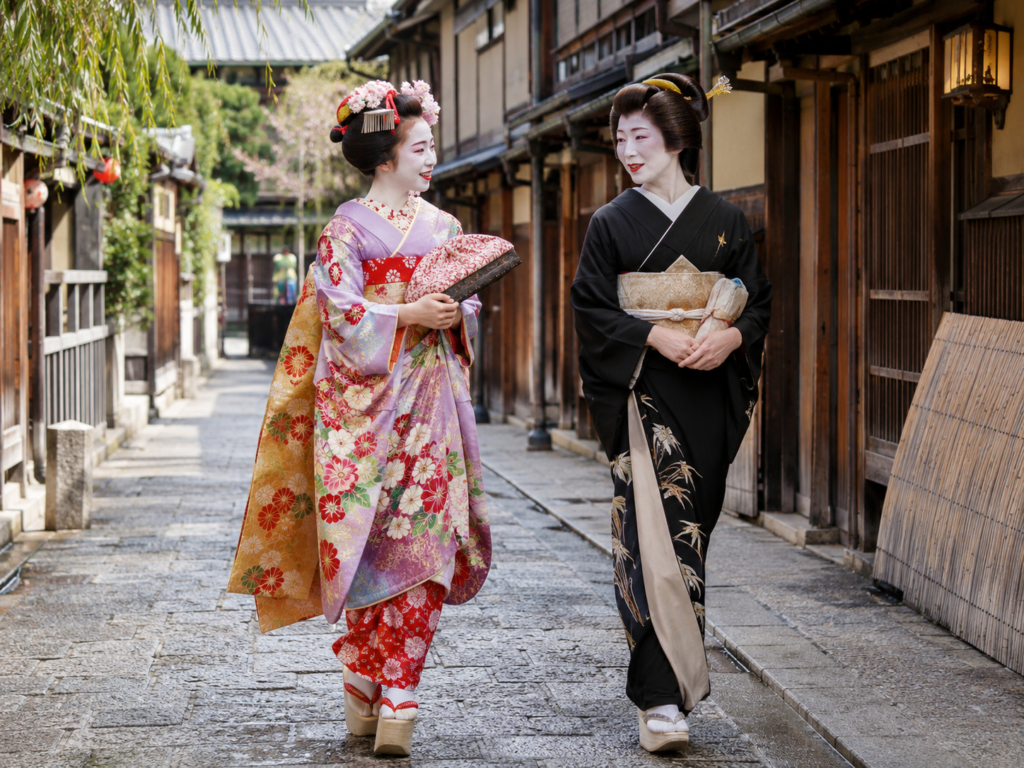
When you think of Kyoto, Japan, you might imagine an elegant woman wearing a beautiful kimono, traditional white makeup, and colorful hair ornaments.
These iconic images are closely associated with Kyoto’s historic Gion district.
But have you ever wondered whether the woman you’re picturing is a maiko, a geiko, or a geisha?
Although these terms are often used interchangeably by international travelers, they don’t mean exactly the same thing.
The most important difference is that a maiko is an apprentice training to become a geiko, while a geiko is a fully trained professional traditional performing artist.
Their differences go far beyond appearance.
Traditional clothing, hairstyles, hair ornaments, etiquette, and years of artistic training all reflect Kyoto’s unique cultural heritage.
If you’re visiting Kyoto for the first time, you may have questions such as:
- What is the difference between a maiko and a geiko?
- Are maiko and geisha the same?
- Why do maiko wear colorful kimono and elaborate hairstyles?
- What do geiko actually do?
- How does a maiko become a geiko?
- Where can tourists see authentic maiko and geiko in Kyoto?
- Is it acceptable to photograph a maiko in Gion?
In this guide, we’ll explain the key differences between maiko and geiko, introduce Kyoto’s traditional entertainment districts, and share respectful ways for international visitors to discover this fascinating culture.
You’ll also find practical travel tips and a suggested cultural itinerary in Gion.
Maiko vs. Geiko: What’s the Difference?
Maiko and geiko are both part of Kyoto’s traditional performing arts culture.
However, their professional status, clothing, hairstyles, and accessories are different.
Here’s a quick comparison.
| Feature | Maiko | Geiko |
| Professional status | Apprentice in training | Fully trained professional |
| Main activities | Training while performing traditional arts | Performing traditional arts and providing hospitality |
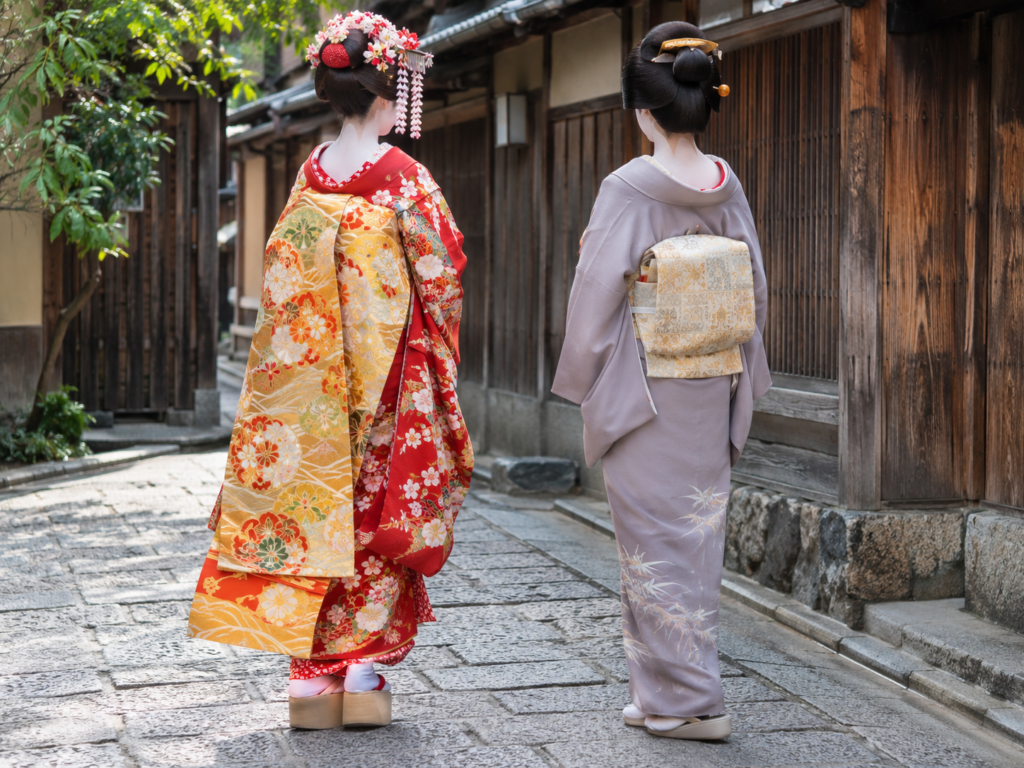
| Kimono | Often colorful, with long sleeves | Generally more understated and mature in style |
| Obi sash | Long, hanging darari obi | Typically a more compact style of obi |
| Hairstyle | Traditionally styled using her own hair | Often wears a traditional wig |
| Hair ornaments | Elaborate seasonal kanzashi | Usually simpler ornaments |
| Collar | Traditionally features red, changing with training stage | Characteristic white collar |
| Footwear | Often wears tall wooden okobo | Commonly wears zori sandals |
| English terminology | Maiko | Geiko / Geisha |
These are general characteristics. Clothing and hairstyles may vary according to the entertainment district, career stage, occasion, and performance.
The Biggest Difference: Apprentice vs. Professional
A maiko is learning the skills required to become a geiko.
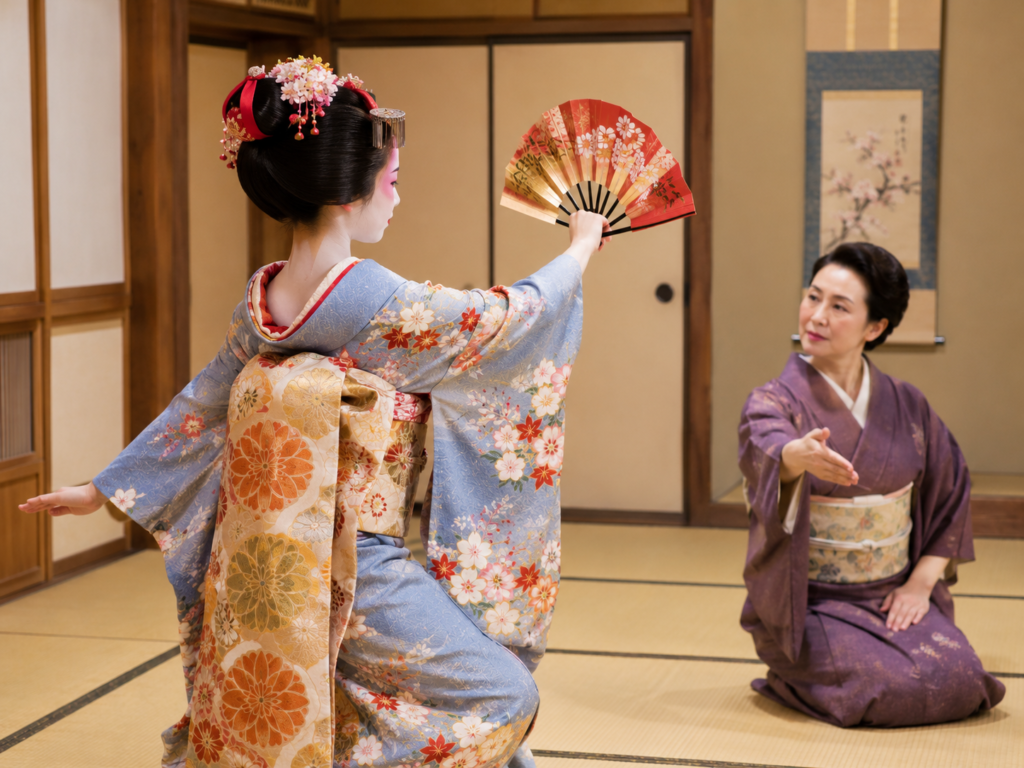
She studies traditional dance, music, etiquette, and hospitality while gaining practical experience.
A geiko has completed the apprentice stage and works as a professional traditional performing artist.
The difference is therefore not simply about age or clothing.
It reflects a person’s position within Kyoto’s traditional performing arts profession.
1. What Is a Maiko?
A maiko is an apprentice geiko in Kyoto’s traditional entertainment districts.
The word is written as 舞妓 in Japanese.
Maiko are particularly recognizable for their colorful kimono, elaborate hairstyles, and decorative floral hair ornaments.
However, their role involves much more than wearing traditional clothing.
Maiko undertake extensive training to learn the performing arts and hospitality customs associated with Kyoto’s historic entertainment culture.
What Does a Maiko Learn?
Depending on her district and training, a maiko may study:
- Traditional Japanese dance, including Kyomai
- Shamisen and other traditional Japanese music
- Traditional singing
- Formal etiquette and graceful movements
- The distinctive language and expressions used in Kyoto’s entertainment districts
- Hospitality and conversation
- Traditional Japanese arts, including tea-related customs
These skills require continuous practice.
Maiko attend lessons while also gaining experience in professional settings.
Does a Maiko Only Perform Traditional Dance?
No.
Although dance is an important part of a maiko’s training, her work may also involve traditional music, conversation, and hospitality.
Maiko perform at private gatherings called ozashiki and at public cultural performances.
They learn how to interact respectfully with guests while developing their artistic skills.
This combination of performance and hospitality is an important part of Kyoto’s living cultural heritage.
Why Do Maiko Wear Such Colorful Kimono?
Maiko are known for their elaborate appearance.
Their clothing often features bright colors, intricate patterns, and long sleeves.
One of their most distinctive accessories is the darari obi, a long sash that hangs down the back.
These details reflect traditional conventions associated with their apprentice status.
Their outfits are not simply decorative costumes.
They form part of a cultural tradition passed down through generations.
2. What Is a Geiko?
A geiko is a fully trained professional traditional performing artist in Kyoto.
The Japanese word is written as 芸妓.
Outside Kyoto, the word geisha is more widely recognized.
In Kyoto’s traditional entertainment districts, however, the local term geiko is used.
What Does a Geiko Do?
Geiko specialize in traditional Japanese performing arts and hospitality.
Their work may include:
Japanese Traditional Dance
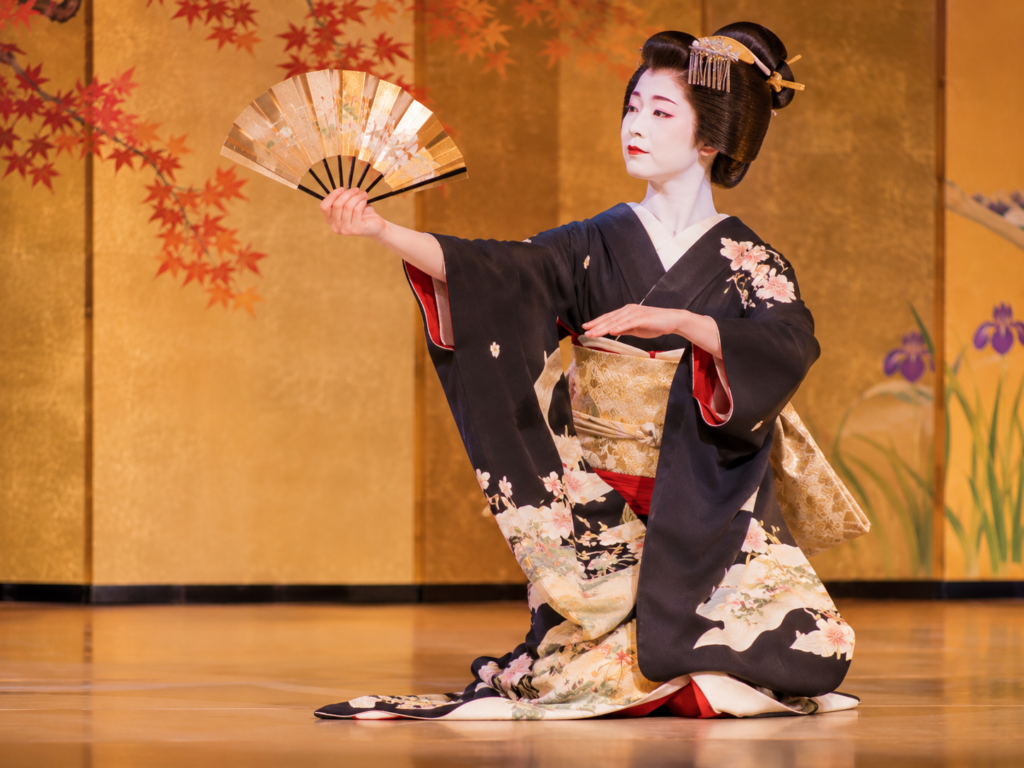
Geiko perform highly disciplined forms of Japanese dance, expressing emotion and storytelling through carefully controlled movements.
Shamisen Music
The shamisen is a traditional Japanese stringed instrument used in various forms of music and theatrical performance.
Singing and Musical Accompaniment
Traditional songs and instrumental music are important parts of Kyoto’s entertainment culture.
Ozashiki Hospitality
At traditional gatherings, geiko may perform, converse with guests, and help create a refined atmosphere.
Are There Different Types of Geiko?
Within Kyoto’s performing arts traditions, artists may specialize in different roles.
Tachikata
Performers whose specialty is traditional dance.
Jikata
Musicians specializing in singing, shamisen, and other forms of musical accompaniment.
These roles demonstrate the range of artistic skills involved in the profession.
Do Geiko Continue Training?
Yes.
Becoming a geiko doesn’t mean that artistic development is complete.
Geiko continue practicing and refining their skills throughout their careers.
Dance, music, and hospitality require years of dedication.
For this reason, a geiko should be understood as a professional artist, not simply an older maiko.
Is a Geiko the Same as a Geisha?
The terms are closely related.
Geisha is the more widely recognized Japanese term for a traditional performing artist.
In Kyoto, these professionals are generally called geiko.
A maiko is an apprentice training to become a geiko.
An easy way to remember the difference is:
Maiko = Apprentice Geiko
Geiko = Fully Trained Traditional Performing Artist in Kyoto
3. How to Tell a Maiko and a Geiko Apart: Six Visual Differences
One of the most interesting aspects of Kyoto’s entertainment culture is how traditional clothing can reflect professional status.
Although maiko and geiko both wear beautiful kimono, their appearance often differs in recognizable ways.
Here are six features to look for.
1. Kimono: Colorful vs. Understated
Maiko are often associated with brightly colored kimono featuring elaborate patterns.
Their kimono typically have long sleeves, creating a youthful and decorative appearance.
Geiko generally wear more restrained styles with an emphasis on refined elegance.
However, clothing varies depending on the occasion.
Special performances and formal events may involve different costumes.
It’s therefore not possible to identify someone reliably based on kimono color alone.
2. Obi: Long Hanging Sash vs. Compact Knot
One of the clearest visual differences is the obi sash.
A maiko traditionally wears a long darari obi.
The sash hangs down her back and is a particularly recognizable feature of her appearance.
A geiko generally wears a more compact obi arrangement, such as an otaiko style.
The difference can sometimes be seen from behind.
3. Hairstyle: Natural Hair vs. Traditional Wig
Maiko traditionally style their own hair into elaborate Japanese hairstyles.
Different hairstyles may be associated with different stages of apprenticeship or special occasions.
Geiko frequently wear traditional wigs known as katsura for formal appearances.
However, actual hairstyles depend on the event and circumstances.
4. Hair Ornaments: Seasonal Kanzashi
Maiko are famous for their decorative hair ornaments called kanzashi.
Floral versions, known as hanakanzashi, often feature seasonal motifs.
For example:
Spring: Cherry blossoms and other spring flowers.
Summer: Seasonal flowers and designs associated with summer.
Autumn: Chrysanthemums and autumn-inspired plants.
Winter: Seasonal and New Year decorations.
The specific designs may vary by month and tradition.
Geiko generally wear fewer and more understated ornaments.
These seasonal decorations reflect Japan’s long-standing appreciation for the changing seasons.
5. Collar: Red vs. White
The collar is another important distinction.
A maiko’s collar traditionally features red, although the amount and style of decoration change during her apprenticeship.
A geiko’s characteristic collar is white.
The transition from maiko to geiko is known as erikae, meaning “turning the collar.“
This change symbolizes an important professional milestone.
6. Footwear: Okobo vs. Zori
Maiko may wear tall wooden footwear called okobo.
These distinctive shoes contribute to the recognizable silhouette of traditional maiko clothing.
Geiko generally wear lower traditional footwear, such as zori sandals.
Again, the footwear may vary according to the occasion.
Can You Always Identify a Maiko or Geiko by Appearance?
Not necessarily.
Traditional clothing varies according to career stage, event, and entertainment district.
Additionally, visitors participating in maiko makeover experiences may wear similar clothing.
The visual differences are useful for understanding cultural traditions, but appearance alone isn’t always enough to establish someone’s professional identity.
4. How Does a Maiko Become a Geiko?
Becoming a geiko involves years of training and practical experience.
Kyoto’s entertainment districts preserve customs that extend beyond dance and music.
Apprentices also learn etiquette, communication, and the responsibilities associated with professional hospitality.
Stage 1: Shikomi — Initial Training
The early training stage is commonly called shikomi.
During this period, a trainee learns the basic customs and expectations of life in an entertainment district.
She may study traditional dance, etiquette, daily routines, and Kyoto-style expressions.
Training is traditionally connected to an establishment called an okiya, which supports and manages maiko and geiko.
Stage 2: Minarai — Learning Through Observation
Another stage is called minarai.
During this period, an apprentice may accompany more experienced performers to observe professional gatherings.
Watching how senior artists interact with guests provides practical experience that cannot be gained through lessons alone.
Stage 3: Misedashi — Debut as a Maiko
The formal debut of a new maiko is called misedashi.
This marks the beginning of her professional activities as an apprentice.
She continues studying dance, music, and hospitality while gaining experience at cultural events and traditional gatherings.
Stage 4: Erikae — Becoming a Geiko
After years of training, a maiko may make the transition to becoming a geiko.
This milestone is known as erikae.
The term refers to the symbolic change from the traditional red apprentice collar to the white collar associated with geiko.
It represents a new stage in her professional career.
However, not every maiko chooses to become a geiko.
Individual career paths and training periods can differ.
Does Training End After Erikae?
No.
Geiko continue developing their artistic skills throughout their careers.
The training process reflects the dedication required to preserve Kyoto’s traditional performing arts.
Understanding this journey helps visitors appreciate the expertise behind the beautiful clothing and graceful movements.
5. What Are Kyoto’s Hanamachi? Understanding Gion’s Entertainment Culture
To understand maiko and geiko, it’s important to know about hanamachi.
Hanamachi are traditional entertainment districts where geiko and maiko practice and preserve their performing arts and hospitality culture.
The term is sometimes written or pronounced kagai.
Kyoto has five active traditional entertainment districts, collectively known as Gokagai.
Kyoto’s Five Hanamachi
| Entertainment District | Japanese Name | Main Characteristic |
| Gion Kobu | 祇園甲部 | Famous for the annual Miyako Odori spring dance performance |
| Gion Higashi | 祇園東 | One of the historic entertainment districts in Gion |
| Miyagawacho | 宮川町 | A historic entertainment district near the eastern side of the Kamo River |
| Pontocho | 先斗町 | Known for its narrow historic street near the Kamo River |
| Kamishichiken | 上七軒 | A historic district near Kitano Tenmangu Shrine |
Each district maintains its own traditions, artistic connections, and cultural events.
What Is Special About Gion?
Gion is one of Kyoto’s best-known historic neighborhoods.
It is associated with traditional wooden architecture, ochaya establishments, and the performing arts of maiko and geiko.
Visitors often recognize Gion for its atmospheric streets and traditional buildings.
However, Gion is also a working neighborhood where professional artists continue to practice their craft.
What Is an Ochaya?
An ochaya is a traditional establishment associated with gatherings where guests enjoy the performing arts and hospitality of geiko and maiko.
Despite the word containing cha, meaning tea, an ochaya is not the same as an ordinary matcha café.
Traditional ochaya have their own customs and booking arrangements.
Some operate through established introductions or existing relationships.
Visitors generally cannot assume they can enter without a reservation.
Are Kyoto’s Hanamachi Still Active?
Yes.
Kyoto’s hanamachi are living cultural communities.
Geiko and maiko continue training and performing today.
The culture also supports traditional crafts, including kimono making, textile production, hairstyling, and musical arts.
These districts are not simply historical displays.
They are places where traditional Japanese artistic practices continue to evolve and be passed down.
6. Four Respectful Ways to Experience Authentic Maiko and Geiko Culture in Kyoto
Many international travelers hope to see authentic maiko or geiko during their visit.
However, walking around Gion doesn’t guarantee that you’ll encounter them.
More importantly, performers on their way to work should never be treated as tourist attractions.
If you want to learn about their culture, there are several organized experiences to consider.
1. Watch a Traditional Dance Performance
Kyoto holds cultural performances featuring geiko and maiko at different times of the year.
One well-known example is Miyako Odori, the traditional spring dance performance associated with Gion Kobu.
Audiences can enjoy graceful Japanese dance, music, elaborate costumes, and stage presentations.
The event is traditionally held during April.
However, schedules, ticket prices, and performance details should always be checked for your travel year.
Visit the Miyako Odori Official Website
2. Experience Japanese Performing Arts at Gion Corner
Gion Corner is a cultural performance venue in Kyoto’s Gion district.
It introduces audiences to several traditional Japanese arts in a single program.
Depending on the season, performances may feature:
- Kyomai, traditional Kyoto dance
- Japanese tea ceremony
- Ikebana flower arrangement
- Koto music
- Kyogen theater
- Bugaku dance
- Noh or Bunraku
The Kyomai segment is particularly relevant to travelers interested in Kyoto’s traditional entertainment culture.
Regular performance times:
6:00 PM and 7:00 PM
Approximate duration: 50 minutes
However, winter performances have a more limited schedule, and some dates are closed.
Check the official calendar before visiting.
Gion Corner is primarily a performance venue, rather than a hands-on workshop.
Visit the Gion Corner Official Website
3. Visit the Gion Kagai Art Museum
If you’d like to understand the differences between maiko and geiko more deeply, the Gion Kagai Art Museum is an excellent place to start.
The museum introduces Kyoto’s traditional entertainment culture through authentic objects, clothing, and exhibitions.
Visitors can explore items such as:
Traditional kimono.
Beautiful Nishijin-ori obi sashes.
Hair ornaments.
Makeup-related items.
Historical materials associated with Gion’s performing arts.
The museum also offers optional Kyomai dance performances and photo sessions with geiko or maiko on selected schedules.
These activities have separate booking conditions and may involve additional charges.
General admission: ¥1,500
Usual opening hours: 11:00 AM–6:30 PM
Important November 2026 update: From November 2026 until early March 2027, the announced final admission time is 5:15 PM rather than the usual 5:30 PM.
The museum also has seasonal closure periods, including approximately mid-March to early May, along with other irregular closures.
If visiting during spring or another special period, confirm whether the museum will be open.
Accessibility is another consideration: optional dance performances and photo sessions take place upstairs, and the venue does not have an elevator.
Visit the Gion Kagai Art Museum Official Website
4. Join an Authentic Maiko Tea Ceremony
For travelers who want to experience Kyoto’s traditional culture in a more personal setting, a tea ceremony hosted by an authentic maiko may be another option.
These programs combine elements of Japanese tea culture with the hospitality traditions associated with Kyoto’s entertainment districts.
Depending on the provider, visitors may be able to:
Observe a real maiko preparing matcha.
Learn basic Japanese tea etiquette.
Appreciate traditional movements and clothing.
Prepare their own matcha.
Enjoy Japanese sweets.
This can be an appealing experience for couples, honeymooners, and travelers interested in traditional arts.
However, program details, language support, and available dates vary.
Explore an Authentic Maiko Tea Ceremony in Gion
7. Authentic Maiko Experience vs. Maiko Makeover: What’s the Difference?
When searching for cultural activities in Kyoto, you may come across the term “maiko experience.”
However, this phrase can describe very different activities.
Understanding the distinction will help you choose an experience that matches your expectations.
Authentic Maiko Cultural Experience
An authentic maiko cultural experience involves a professionally active maiko.
Depending on the program, visitors may observe traditional dance, tea preparation, or other aspects of Japanese hospitality.
The focus is on experiencing the artistic tradition itself.
Maiko Makeover Experience
A maiko makeover experience allows visitors to dress in maiko-inspired clothing and makeup.
The program may include:
Traditional-style makeup.
A special hairstyle or wig.
Maiko-inspired kimono.
Professional photography.
These experiences are mainly focused on clothing, makeup, and creating travel memories.
They do not make participants professional maiko.
Which One Should You Choose?
If you want to understand the performing arts and professional traditions of Kyoto’s entertainment districts, an authentic cultural experience may be more suitable.
If you’re interested in traditional clothing and photography, a makeover experience may be enjoyable.
Neither activity is necessarily better.
They simply have different purposes.
Before booking, always check whether the experience includes a real working maiko or is a costume and photography activity.
8. Gion Etiquette: What to Do If You See a Maiko or Geiko
Gion is one of Kyoto’s most popular sightseeing districts.
However, it is also a neighborhood where people live and work.
Maiko and geiko are professionals, not characters posing for visitors.
Respecting their privacy is an essential part of responsible travel.
Don’t Follow or Chase Maiko and Geiko
If you see a maiko or geiko walking through Gion, remember that she may be on her way to a professional engagement.
Do not follow her or block her path.
Don’t Take Unauthorized Photographs
Photography is restricted in parts of Gion.
Visitors should not take unauthorized photographs of maiko and geiko.
If you want a photograph as part of your experience, choose an official program where photography is explicitly permitted.
Stay Out of Private Roads and Property
Some of Gion’s narrow streets and alleys are privately owned.
A traditional-looking street is not necessarily open to tourists.
Pay attention to signs and respect restricted areas.
Never Touch Kimono or Hair Ornaments
Traditional kimono, elaborate hairstyles, and decorative accessories are part of the performers’ professional appearance.
Do not touch them or attempt to stop someone to inspect their clothing.
Keep Public Streets Clear
Gion’s roads are used by residents, delivery vehicles, and local businesses.
Avoid standing in the roadway or blocking pedestrian access for photographs.
Appreciate the Culture Respectfully
If your goal is to see an authentic performance, attend an organized show or cultural program.
This allows you to learn about the tradition without interfering with someone’s work.
Respect for local people is just as important as appreciation for Kyoto’s beautiful historic scenery.
Which Maiko or Geiko Experience Is Best for You?
The best experience depends on what interests you most.
| Your Interest | Recommended Experience |
| Learning the differences between maiko and geiko | Gion Kagai Art Museum |
| Watching traditional Kyoto dance | Miyako Odori or another official dance performance |
| Discovering several Japanese arts in one show | Gion Corner |
| Observing a real maiko while learning tea culture | Authentic maiko tea ceremony |
| Wearing maiko-inspired clothing for photographs | Maiko makeover experience |
For visitors primarily interested in clothing, hairstyles, and the history of the profession, the museum is particularly useful.
If you want to appreciate traditional dance, a formal performance is an excellent option.
For those interested in combining Japanese tea ceremony with maiko culture, a dedicated maiko tea ceremony provides a different kind of experience.
A Half-Day Gion Itinerary: Discover Maiko Culture and Japanese Tea Ceremony
If you’re interested in Kyoto’s traditional performing arts, consider spending an afternoon in Gion.
Several cultural venues are located within a relatively compact area.
Here’s a sample itinerary.
12:30 PM — Enjoy Lunch in Gion
Begin with a relaxed lunch in the historic Gion district.
You could choose traditional Kyoto cuisine or another restaurant that suits your preferences.
Allow enough time before your afternoon activities.
1:30 PM — Visit the Gion Kagai Art Museum
If the museum is open on your travel date, spend time learning about maiko and geiko culture.
Explore traditional kimono, obi, hair ornaments, and historical materials.
This introduction can help you appreciate the details of the traditional clothing and artistic customs you’ll encounter later.
Check the museum’s seasonal closures and any changes to opening hours.
3:00 PM — Experience an Authentic Maiko Tea Ceremony
If a suitable reservation is available, continue with an authentic maiko tea ceremony.
Observe traditional matcha preparation performed by a real maiko.
Learn about the movements and etiquette associated with Japanese tea culture.
If the program includes hands-on participation, try preparing your own matcha.
The 3:00 PM starting time is an example and is not a confirmed available booking.
5:00 PM — Explore Gion’s Historic Streets
After your cultural experience, take a short walk around Gion.
Admire traditional wooden buildings and the atmosphere of the historic district.
Stay on public streets and follow all photography restrictions.
6:00 PM — Watch Traditional Japanese Arts at Gion Corner
If performances are scheduled for your travel date, consider attending Gion Corner.
Watching Kyomai and other traditional performing arts can deepen your understanding of the culture introduced earlier in the day.
During winter, performance dates are more limited.
Check availability before making your plans.
This is a sample itinerary. Adjust all activities based on actual opening hours, reservations, seasonal closures, and travel conditions.
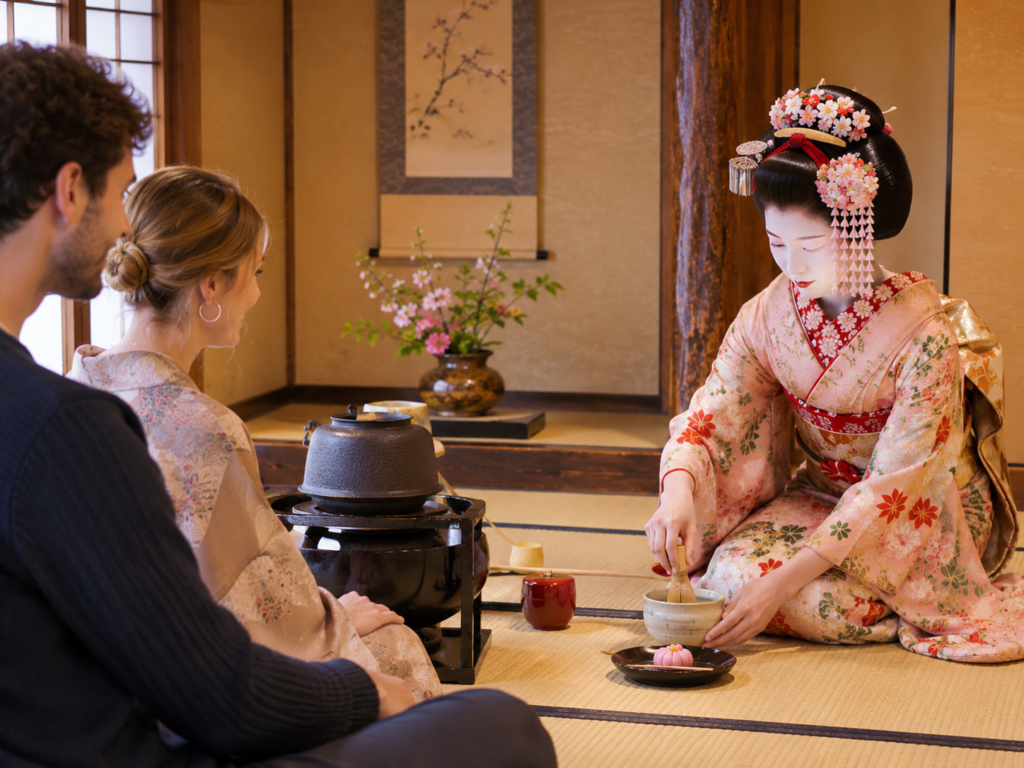
Experience an Authentic Maiko Tea Ceremony at THE TEA CEREMONY GION Orizuruya
Located in Kyoto’s historic Gion district, THE TEA CEREMONY GION Orizuruya offers a cultural experience combining Japanese tea ceremony with the traditions of an authentic maiko.
Visitors can observe a professionally active maiko preparing tea while learning about traditional Japanese hospitality.
The program provides an opportunity to appreciate Kyoto’s living culture in a more personal setting.
What Happens During the Maiko Tea Ceremony?
The experience includes several parts.
- Kimono Dressing
Guests select a kimono, and staff assist with dressing.
Hair styling is also offered for female guests.
- Introduction to Japanese Tea Culture
Learn about the history of tea ceremony, basic etiquette, and traditional matcha preparation.
- Tea Ceremony Demonstration by a Real Maiko
Watch an authentic maiko prepare tea.
Observe the graceful movements and traditional elements of Kyoto’s hospitality culture.
- Prepare Your Own Matcha
Participants have an opportunity to use a bamboo whisk, called a chasen, to prepare their own matcha.
Staff provide guidance for beginners.
- Enjoy Traditional Japanese Sweets
Enjoy matcha together with traditional sweets selected from established Kyoto confectioners.
Duration and Price
Duration: Approximately 90 minutes
Official listed price: ¥16,500 per person, including tax
Who Is This Experience Best For?
The program may be especially appealing to:
- International visitors interested in authentic maiko culture
- Couples and honeymooners
- Travelers curious about Japanese tea ceremony
- Visitors who want to experience traditional Kyoto hospitality
- People interested in Japanese performing arts and cultural traditions
Location and Access
THE TEA CEREMONY GION Orizuruya is located at:
572-7 Gionmachi Minamigawa, Higashiyama Ward, Kyoto, Japan.
It is approximately four minutes on foot from Gion-Shijo Station and seven minutes from Kyoto-Kawaramachi Station.
The location makes it convenient to combine a tea ceremony with sightseeing around Gion.
Booking Tips
Before making a reservation, check:
- Available dates and starting times
- Language support
- Age and participation requirements
- Photography rules
- Kimono arrangements
- Cancellation policies
Availability may vary, and the published duration or price may change.
Explore the Authentic Maiko Tea Ceremony at Gion Orizuruya
Program information and listed prices were checked against the official website in November 2026.
Frequently Asked Questions About Maiko and Geiko
What is the main difference between maiko and geiko?
A maiko is an apprentice training to become a geiko. A geiko is a fully trained professional who performs traditional Japanese arts and provides hospitality in Kyoto’s entertainment districts.
Is a maiko the same as a geisha?
No. Maiko are apprentices. Geisha are professional traditional performing artists. In Kyoto, the local word for geisha is geiko.
What is the difference between geiko and geisha?
Both terms refer to professional traditional performing artists. Geiko is the term commonly used in Kyoto, while geisha is more widely recognized internationally.
How old are maiko?
Maiko often begin their professional apprenticeship in their teens after completing compulsory education. However, individual ages and training paths vary.
Does every maiko become a geiko?
No. Some apprentices eventually become geiko, while others choose different career paths.
What do maiko and geiko do?
They study and perform traditional arts, including Japanese dance and music. They may also provide hospitality at traditional gatherings and public cultural performances.
Why do maiko wear colorful kimono?
Their decorative kimono and accessories are part of traditional apprentice attire. The clothing also reflects artistic customs that have been passed down through generations.
Why do maiko wear white makeup?
Traditional white makeup is associated with formal appearances in Kyoto’s entertainment culture. However, maiko and geiko do not necessarily wear it during every part of their daily lives.
Do maiko wear their own hair?
Traditionally, maiko style their own hair into elaborate Japanese hairstyles, while geiko often wear traditional wigs for formal occasions.
Do maiko change their hair ornaments every season?
Yes, floral hair ornaments may reflect different months and seasonal motifs. These designs are an important part of Kyoto’s traditional aesthetics.
What is erikae?
Erikae means “turning the collar.” It refers to the transition from maiko to geiko, traditionally symbolized by the change from a red apprentice collar to a white collar.
How many hanamachi are there in Kyoto?
Kyoto has five active traditional entertainment districts: Gion Kobu, Gion Higashi, Miyagawacho, Pontocho, and Kamishichiken.
Can tourists meet a real maiko in Kyoto?
Yes. Organized cultural programs and traditional performing arts venues provide opportunities to encounter authentic maiko.
Will I definitely see a maiko if I walk around Gion?
No. Maiko and geiko are professionals going about their work, and sightings are not guaranteed. Formal cultural programs are a more reliable and respectful option.
Can I photograph a maiko in Gion?
Do not take unauthorized photographs. Some areas prohibit photography, and visitors must not follow, stop, or obstruct maiko and geiko. Use an official photography opportunity where permitted.
Is a maiko makeover the same as an authentic maiko experience?
No. A makeover focuses on wearing maiko-inspired clothing and makeup. An authentic cultural experience involves a professionally active maiko.
Can I prepare matcha during a maiko tea ceremony?
It depends on the provider. At THE TEA CEREMONY GION Orizuruya, the listed program includes observing an authentic maiko’s tea preparation and making your own matcha.
Are maiko cultural experiences suitable for children?
Some programs welcome children, while others have age restrictions. Check the minimum age, session duration, and supervision requirements before booking.
Discover the Living Culture of Kyoto’s Maiko and Geiko
Maiko and geiko are among Kyoto’s most recognizable cultural figures.
Both carry forward traditions that have been preserved through years of dedication and artistic training.
However, they represent different stages within the profession.
A maiko is an apprentice learning the traditional arts.
A geiko is a trained professional performing artist.
Their differences can be seen in traditional clothing, hairstyles, hair ornaments, collars, and other details.
But the most meaningful distinction lies in their training and professional responsibilities.
Understanding these traditions allows visitors to appreciate much more than the beauty of their appearance.
The artistry of Japanese dance.
The sounds of traditional musical instruments.
The elegance of carefully practiced movements.
The craftsmanship behind kimono and accessories.
And the hospitality traditions preserved in Kyoto’s historic entertainment districts.
For international travelers, discovering the authentic culture of maiko and geiko can become one of the most meaningful parts of a visit to Kyoto.
When exploring Gion, remember that these traditions are still practiced by real people in a living community.
Respect their work.
Follow local etiquette.
And consider attending an official performance or organized cultural experience if you’d like to learn more.
Discover the difference between maiko and geiko, and experience the traditional Japanese culture that makes Kyoto’s Gion district so remarkable.
Experience an Authentic Maiko Tea Ceremony in Gion, Kyoto