

7 Best Kyoto Cherry Blossom Cultural Experiences: Tea Ceremony, Hanami & Spring Travel Guide
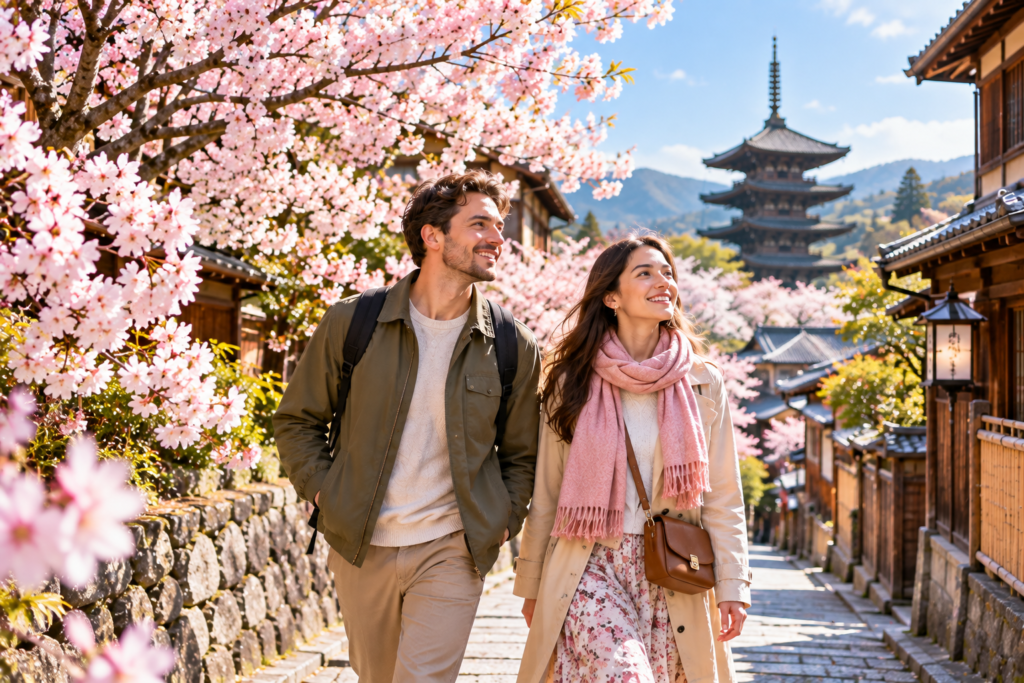
Planning a spring trip to Kyoto, Japan?
Spring is one of the most magical times to visit Japan’s historic capital.
Delicate pink cherry blossoms surround ancient temples and shrines.
Traditional wooden streets become even more beautiful beneath blooming sakura trees.
Seasonal Japanese sweets reflect the colors of spring.
And a peaceful tea ceremony offers an opportunity to discover Japan’s traditional hospitality.
For international travelers, Kyoto’s cherry blossom season is about much more than beautiful scenery.
It’s also a wonderful time to experience Japanese culture firsthand.
You can prepare matcha during a traditional Japanese tea ceremony, wear kimono, create cherry blossom-inspired wagashi, practice Japanese calligraphy, or discover Kyoto’s authentic maiko and geiko traditions.
But planning a Kyoto spring trip can raise several questions.
When is the best time to see cherry blossoms in Kyoto?
What are the best cultural experiences in Kyoto during spring?
Can you enjoy cherry blossom viewing and a Japanese tea ceremony on the same day?
Where can you experience authentic Japanese traditions in Gion?
And how can you avoid spending your entire day in crowded sightseeing areas?
In this guide, we’ll introduce seven unforgettable Kyoto cherry blossom cultural experiences, along with practical travel tips, traditional Japanese spring customs, the 2027 Miyako Odori performance schedule, and a one-day itinerary around Gion and Higashiyama.
Whether you’re traveling as a couple, with family, or on your own, Kyoto offers many ways to discover the beauty of spring.
Why Kyoto Is One of Japan’s Best Spring Travel Destinations
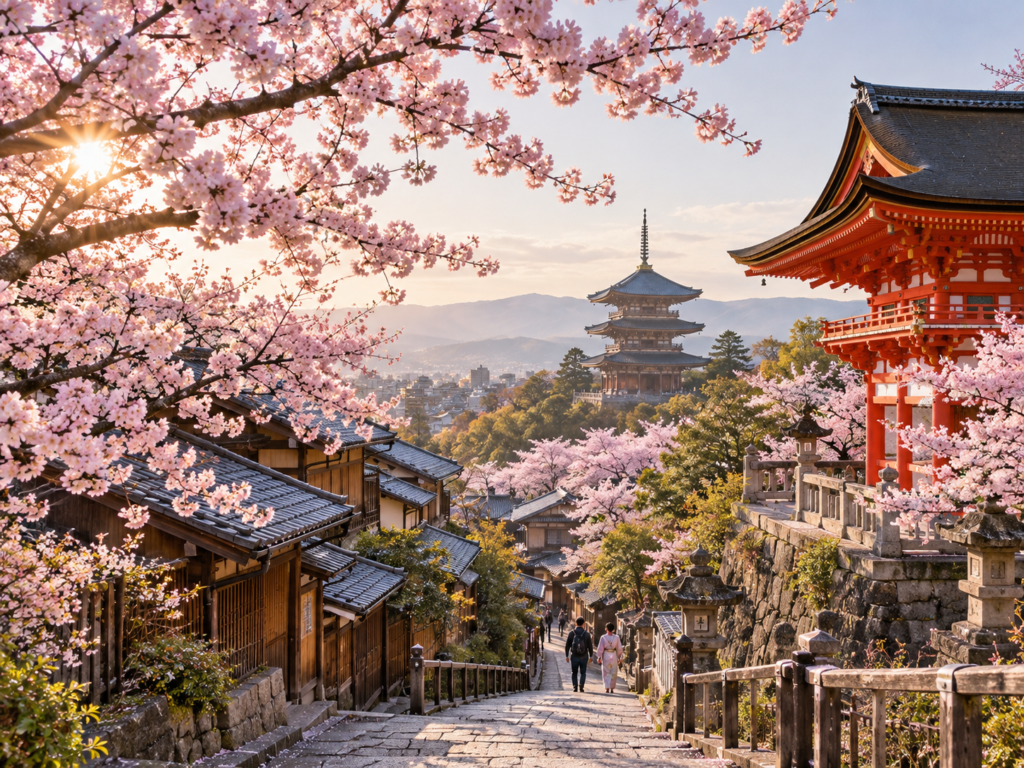
Kyoto is beautiful throughout the year, but spring has a particularly special atmosphere.
Cherry blossoms frame historic temples, traditional Japanese gardens, and picturesque streets.
The soft colors of sakura create a beautiful contrast with traditional wooden buildings and the vermilion gates of Japanese shrines.
For many international visitors, seeing Kyoto’s cherry blossoms is a dream travel experience.
However, Japan’s spring culture goes beyond photography and sightseeing.
Cherry blossoms are deeply connected to Japanese traditions, poetry, seasonal food, and the appreciation of nature.
When Is Cherry Blossom Season in Kyoto?
In central Kyoto, many cherry blossom locations typically reach their peak between late March and early April.
However, the exact blooming dates change every year.
Temperature, weather conditions, cherry tree varieties, and elevation all influence when flowers begin to bloom.
Some early-flowering varieties appear before the main season, while late-flowering cherry trees may remain beautiful after the more common Somei Yoshino trees have finished blooming.
| Travel Period | What You Might Expect |
| Early March | Plum blossoms and other early spring flowers |
| Mid-March | Early-blooming cherry blossoms at selected locations |
| Late March | Cherry blossoms begin opening across more of the city |
| Early April | Often a good period for cherry blossom viewing |
| Mid-April and later | Late-blooming varieties may still be visible |
These are general seasonal patterns, not a guaranteed forecast for 2027.
If seeing cherry blossoms is one of the main reasons for your trip, avoid relying entirely on previous years’ dates.
Check the latest official information as your travel date approaches.
Kyoto Official Cherry Blossom Calendar
What Is Hanami?
Hanami is the Japanese tradition of appreciating flowers, especially cherry blossoms during spring.
It is commonly translated as “cherry blossom viewing.”
In Japan, people may enjoy hanami by taking a walk beneath blooming trees, visiting a park, or gathering with friends and family where picnics are permitted.
Hanami is more than a sightseeing activity.
It reflects Japan’s appreciation for the changing seasons.
Why Are Cherry Blossoms Important in Japanese Culture?
Cherry blossoms bloom beautifully but remain at their peak for a relatively short period.
Throughout Japanese history, their fleeting beauty has inspired poetry, art, and other cultural traditions.
Sakura can symbolize the arrival of spring, the passage of time, and the beauty of moments that cannot last forever.
This sensitivity to seasonal change also appears in Japanese tea ceremony, traditional sweets, kimono designs, and cuisine.
Combining cherry blossom viewing with Japanese cultural experiences allows you to enjoy Kyoto’s spring on a deeper level.
7 Best Kyoto Cherry Blossom Cultural Experiences
Looking for memorable things to do in Kyoto during spring?
Here are seven Japanese experiences that complement cherry blossom sightseeing.
| Experience | What You’ll Do | Why It’s Special in Spring |
| 1. Hanami and cherry blossom walks | Explore sakura spots and learn about hanami | Enjoy Japan’s spring scenery firsthand |
| 2. Japanese tea ceremony | Prepare matcha and enjoy seasonal wagashi | Discover traditional Japanese hospitality |
| 3. Spring wagashi making | Make sweets inspired by cherry blossoms | Experience Japanese seasonal food culture |
| 4. Kimono experience | Wear traditional Japanese clothing | Capture memorable spring photographs |
| 5. Maiko and geiko performances | Watch traditional Kyoto performing arts | Discover Gion’s spring cultural traditions |
| 6. Japanese calligraphy | Write meaningful kanji with brush and ink | Create personal artwork from your trip |
| 7. Traditional spring cuisine | Enjoy seasonal Japanese food and sweets | Discover the flavors of Japanese spring |
Availability, prices, age restrictions, seasonal programs, and English-language support vary by venue.
1. Hanami: Experience Japan’s Cherry Blossom Viewing Tradition
One of the most memorable things to do in Kyoto during spring is participate in hanami.
Kyoto has many beautiful cherry blossom locations, each offering a slightly different atmosphere.
You can appreciate sakura around historic temples, visit traditional Japanese gardens, or walk beside rivers lined with blooming trees.
Maruyama Park: Experience Traditional Hanami in Kyoto
Maruyama Park is one of Kyoto’s most famous cherry blossom destinations.
Located near Yasaka Shrine, it is particularly known for its impressive weeping cherry tree.
The tree’s graceful branches create a memorable spring scene.
During cherry blossom season, many visitors come to the park to admire the flowers and enjoy the atmosphere.
For international travelers interested in Japanese spring customs, Maruyama Park is an excellent place to experience hanami.
However, it can become crowded during peak bloom.
If you prefer a quieter experience, consider adjusting your visit based on current crowd levels.
Gion Shirakawa: Cherry Blossoms and Historic Kyoto Streets
Gion Shirakawa is another beautiful place to enjoy Kyoto in spring.
The area is known for its traditional architecture, scenic waterway, and atmospheric streets.
When the cherry trees bloom, the combination of flowing water, traditional buildings, and delicate pink flowers creates a distinctly Kyoto-style landscape.
It’s especially appealing for visitors interested in photography and traditional Japanese neighborhoods.
However, Gion Shirakawa is not simply a photography location.
People live and work in the surrounding area.
Respect private property, keep public pathways clear, and follow photography restrictions.
Important Hanami Etiquette for International Visitors
While cherry blossom viewing is a popular tradition, it’s important to protect the natural environment and respect local customs.
Keep these rules in mind:
- Never break cherry tree branches or pick blossoms.
- Avoid stepping into restricted garden areas.
- Don’t damage tree roots or protected ground.
- Check whether picnics and food are permitted.
- Dispose of rubbish properly.
- Avoid blocking pathways while taking photographs.
- Follow the rules at temples, shrines, and parks.
The best way to enjoy hanami is to appreciate the scenery while helping preserve it for others.
Best for: First-time visitors, couples, families, photographers, and nature lovers.
2. Japanese Tea Ceremony: Experience Matcha and Spring Hospitality
One of the most meaningful Japanese cultural experiences in Kyoto is participating in a traditional tea ceremony.
Known as chanoyu or sado, tea ceremony is a Japanese practice centered on preparing and serving matcha.
However, it is much more than simply drinking green tea.
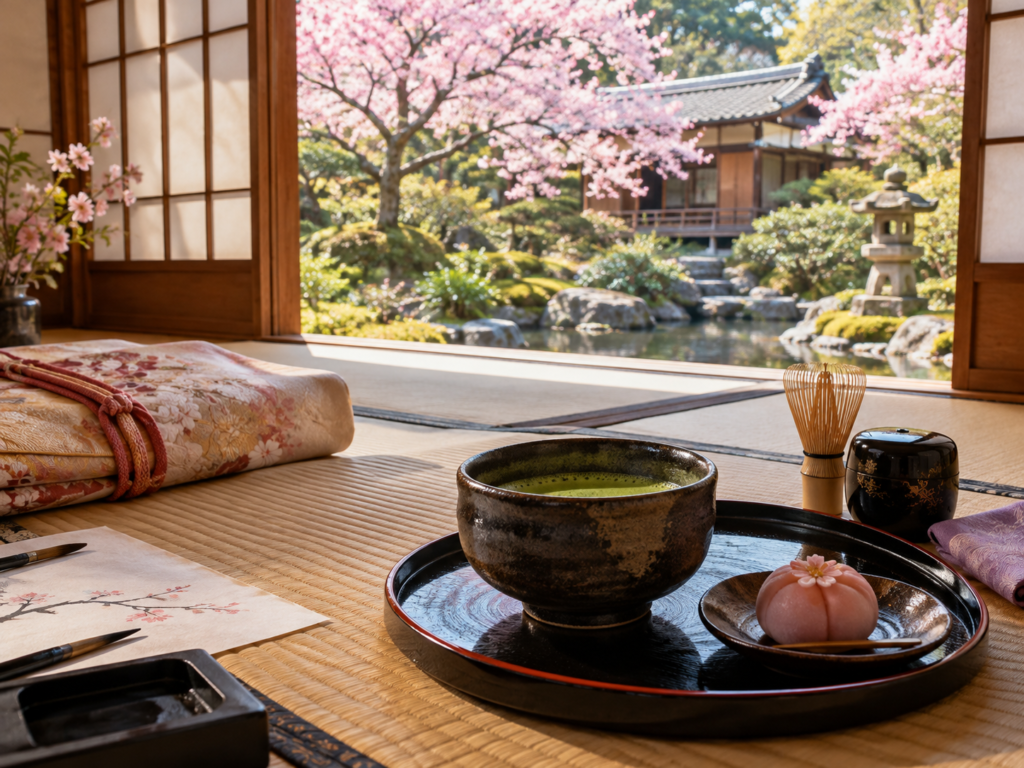
Traditional tea ceremony brings together hospitality, carefully considered movements, beautiful utensils, seasonal decorations, and an appreciation for the present moment.
For international visitors, it offers an opportunity to experience Japanese culture rather than simply observe it.
What Makes a Japanese Tea Ceremony Special in Spring?
Seasonality plays an important role in traditional Japanese tea culture.
Tea rooms may feature flowers, hanging scrolls, utensils, and sweets that reflect the time of year.
During spring, colors and designs inspired by cherry blossoms or other seasonal plants may be used.
These details express the beauty of the changing seasons.
However, the exact decorations and utensils depend on the tea tradition and venue.
Not every tea ceremony uses cherry blossom-themed items during spring.
Learning about these seasonal elements is part of understanding Japanese tea culture.
What Happens During a Japanese Tea Ceremony?
A beginner-friendly tea ceremony may include:
- Learning about Japanese tea ceremony history
- Watching the host demonstrate traditional matcha preparation
- Discovering the meaning of tea utensils
- Learning basic Japanese tea etiquette
- Enjoying seasonal Japanese sweets called wagashi
- Preparing your own matcha using a bamboo whisk
The bamboo whisk is called a chasen.
It is used to mix powdered matcha with hot water.
For many visitors, preparing their own bowl of matcha is one of the most memorable parts of the experience.
Why Combine Cherry Blossom Viewing with Tea Ceremony?
During spring, Kyoto’s popular sightseeing spots can become busy.
After spending the morning exploring cherry blossom locations, a tea ceremony offers a different kind of cultural experience.
Instead of continuing to walk between crowded attractions, you can spend time learning about Japanese hospitality in a traditional setting.
For example, you could visit Maruyama Park or Gion Shirakawa in the morning and participate in a tea ceremony in Gion during the afternoon.
This allows you to enjoy both Japan’s natural beauty and its traditional arts in one day.
Can Foreigners Participate in a Japanese Tea Ceremony?
Yes.
Kyoto offers tea ceremony experiences designed for international visitors and beginners.
You generally don’t need previous knowledge of Japanese etiquette.
However, language support varies by provider.
If you don’t speak Japanese, choose a program that offers explanations in English or another language you understand.
Can You Wear Kimono During the Experience?
Some tea ceremony programs include traditional kimono dressing.
This can provide an additional opportunity to learn about Japanese clothing culture.
Check whether kimono is included in the price and whether photography is permitted.
Best for: Couples, honeymooners, solo travelers, first-time visitors, and anyone interested in Japanese culture.
Experience a Traditional Japanese Tea Ceremony in Gion, Kyoto
3. Spring Wagashi Making: Create Japanese Sweets Inspired by Sakura
If you enjoy food and creative activities, consider joining a traditional Japanese sweets workshop.
Japanese sweets are called wagashi.
Kyoto has a rich confectionery tradition, closely connected to tea ceremony and seasonal celebrations.
Many wagashi express the changing seasons through their shape, color, and ingredients.
Spring provides especially beautiful inspiration.
What Are Traditional Japanese Spring Sweets Like?
Cherry Blossoms
Soft pink colors and delicate flower shapes reflect the arrival of sakura season.
Plum Blossoms
Plum blossoms often appear earlier than cherry blossoms and are another familiar symbol of spring.
Fresh Greenery
Soft green colors can represent new leaves and plants beginning to grow.
Butterflies
Butterflies and flowers may appear in decorative spring confectionery designs.
These small details reflect Japan’s appreciation for nature.
What Happens During a Wagashi-Making Workshop?
Depending on the workshop, participants may learn to shape and decorate sweets using ingredients such as sweet bean paste.
Some programs focus on nerikiri, a traditional Japanese confection that can be shaped into flowers, leaves, and other seasonal designs.
You may learn how to combine colors, shape petals, and use specialized tools to create delicate patterns.
The experience combines food, creativity, and Japanese aesthetics.
Some workshops also allow you to taste the sweets you make.
Can You Make Cherry Blossom-Themed Wagashi?
Not necessarily.
Some workshops change their designs seasonally, while others use fixed designs throughout the year.
If you’d specifically like to make sakura-shaped sweets, confirm the workshop program before booking.
Is Wagashi Making Suitable for Families?
Some workshops welcome children and families.
However, minimum ages, supervision requirements, and participation conditions vary.
Families should choose an appropriate program for their children’s ages.
Best for: Families, couples, dessert lovers, and creative travelers.
4. Kimono Experience: Enjoy Kyoto’s Cherry Blossoms in Traditional Clothing
Wearing kimono is one of Kyoto’s most recognizable traditional cultural experiences.
Kimono is a traditional form of Japanese clothing known for its beautiful patterns, elegant design, and cultural significance.
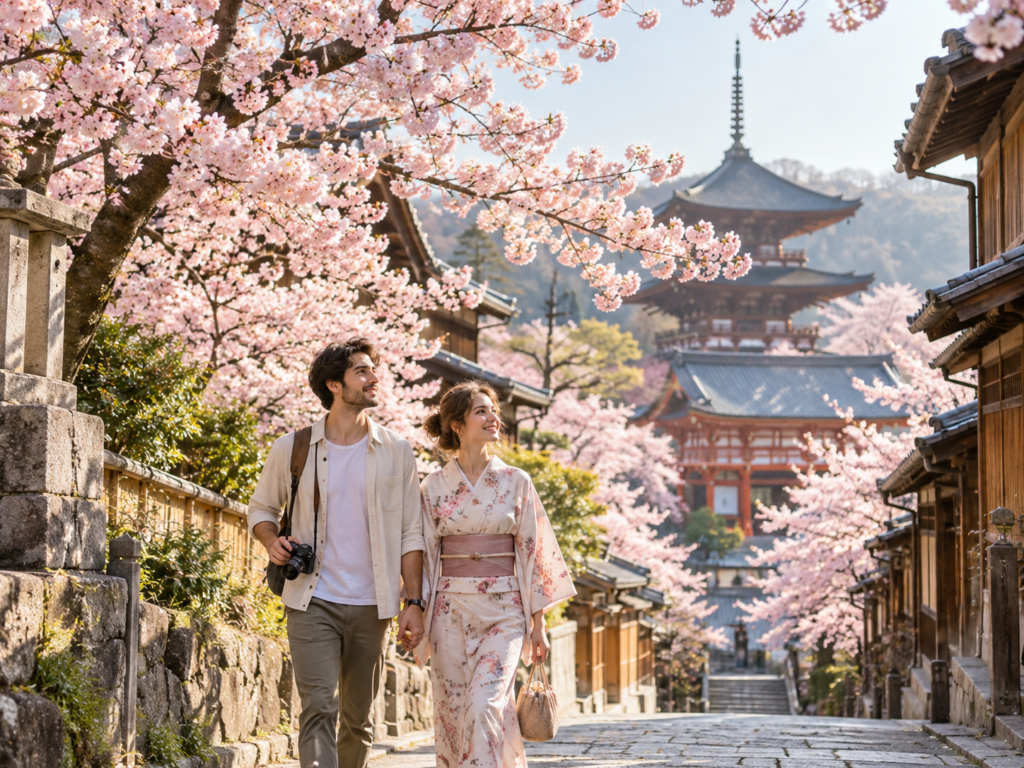
During cherry blossom season, Kyoto’s historic streets create a particularly beautiful setting for a kimono experience.
Why Try Kimono in Spring?
The soft pink colors of cherry blossoms complement Kyoto’s traditional architecture and clothing.
Kimono comes in many colors and patterns.
You might choose a spring-inspired floral design, a soft pastel color, or a more understated traditional pattern.
For couples, coordinating kimono colors can be part of the experience.
For families, choosing outfits together can create a memorable travel activity.
Where Can You Enjoy Kimono Sightseeing?
Gion and Higashiyama are popular neighborhoods for visitors interested in traditional Kyoto scenery.
Depending on bloom conditions, you may enjoy cherry blossoms near Maruyama Park or along the Shirakawa area.
However, not every scenic street permits unrestricted photography.
Some privately owned roads and properties have specific restrictions.
Photography Etiquette in Kyoto
Always follow local photography rules.
Don’t enter private streets or properties without permission.
Avoid blocking pedestrians or traffic.
If you’re hiring a professional photographer, confirm where commercial photography is allowed.
Never chase or photograph maiko and geiko without permission.
Is Walking in Kimono Comfortable?
Kimono is different from everyday Western-style clothing.
Walking long distances may feel tiring, especially if you’re unfamiliar with traditional footwear.
Kyoto also has stone-paved streets, steps, and slopes.
Plan shorter walking routes and allow time to rest.
Combine Kimono with Tea Ceremony
Some tea ceremony experiences include kimono dressing.
This allows you to enjoy traditional Japanese clothing and matcha culture during the same visit.
It’s a convenient option if you want to experience kimono without spending the entire day walking outdoors.
Best for: Couples, honeymooners, families, and visitors who want memorable Kyoto photographs.
5. Maiko and Geiko Performances: Experience Kyoto’s Spring Tradition of Miyako Odori
One of Kyoto’s most distinctive cultural traditions is the world of maiko and geiko.
A maiko is an apprentice geiko, a professional entertainer in Kyoto’s traditional entertainment districts.
International visitors may be more familiar with the term geisha.
In Kyoto, geiko is the locally used term for a fully trained professional, while maiko refers to an apprentice.
Maiko and geiko train in traditional Japanese performing arts, including dance and music, as well as etiquette and hospitality.
Spring is a particularly exciting time to discover these traditions.
What Is Miyako Odori?
Miyako Odori is a traditional spring dance performance associated with the Gion Kobu district of Kyoto.
First performed in 1872, it has become one of Kyoto’s best-known spring cultural events.
The performance features beautiful traditional dance by geiko and maiko, accompanied by music and elaborate stage presentations.
Colorful kimono, graceful movements, and seasonal themes make it a memorable way to discover Kyoto’s performing arts.
Miyako Odori 2027: Dates and Tickets
The official Miyako Odori website has announced the following schedule for 2027.
Performance dates: April 1–30, 2027
Venue: Gion Kobu Kaburenjo Theater, Kyoto
Performances: Three shows per day
| Performance | Start Time |
| First show | 12:30 PM |
| Second show | 2:30 PM |
| Third show | 4:30 PM |
Miyako Odori 2027 Ticket Prices
| Ticket Type | Listed Price |
| First-class ticket with tea | ¥8,000 |
| First-class ticket | ¥7,000 |
| Second-class ticket | ¥5,000 |
Ticket sales are scheduled to begin on January 6, 2027, at 10:00 AM Japan time.
The official information states that ticket changes, cancellations, and refunds are not accepted.
Prices and schedules may change, so confirm the latest information before booking.
Miyako Odori Official English Website
Is Miyako Odori the Same as a Maiko Tea Ceremony?
No.
They are two different cultural experiences.
Miyako Odori
A traditional stage performance where visitors watch maiko and geiko perform Kyoto-style dance.
Authentic Maiko Tea Ceremony
A cultural program in which visitors observe a real maiko preparing tea and learn about Japanese tea traditions.
If you’re especially interested in traditional dance, Miyako Odori is a wonderful choice.
If you’d prefer an up-close cultural experience involving tea preparation, a maiko tea ceremony may be more suitable.
Can You Meet a Real Maiko in Gion?
You might occasionally see maiko or geiko walking through Gion.
However, these professionals are often on their way to work.
You should never chase them, block their path, touch them, or take unauthorized photographs.
An organized cultural experience or performance is a more respectful and reliable way to learn about their traditions.
Best for: Couples, honeymooners, performing arts enthusiasts, and visitors interested in authentic Kyoto traditions.
Discover an Authentic Maiko Tea Ceremony in Gion
6. Japanese Calligraphy: Write Kanji Inspired by Spring
Japanese calligraphy, known as shodo, is another memorable cultural experience.
It is the traditional art of writing characters using brush and ink.
Calligraphy emphasizes the movement of the brush, the thickness of each stroke, and the overall balance of the characters.
For international visitors, it offers a creative introduction to Japanese writing and art.
Japanese Kanji Inspired by Spring
Here are some meaningful characters to consider.
春 — Spring
Represents the arrival of spring.
桜 — Cherry Blossom
The Japanese character for sakura, one of the country’s most recognizable spring flowers.
花 — Flower
A simple character representing flowers.
和 — Harmony
Expresses harmony and peace.
旅 — Journey
A meaningful choice for travelers visiting Japan.
For a spring Kyoto trip, writing the character for cherry blossom can make a particularly personal souvenir.
What Happens During a Calligraphy Workshop?
A beginner-friendly workshop may introduce you to Japanese brushes, black ink, special paper, and basic writing techniques.
You can practice how different brush movements change the appearance of each stroke.
Some programs allow you to create a finished piece of calligraphy to take home.
Why Try Calligraphy During Cherry Blossom Season?
After visiting outdoor attractions, calligraphy offers an opportunity to focus on a different part of Japanese culture.
Instead of photographing the scenery, you can create a piece of artwork inspired by your journey.
Can You Combine Calligraphy and Tea Ceremony?
Yes.
Some Kyoto cultural experiences combine calligraphy with traditional Japanese tea ceremony.
This can be a convenient option for travelers who want to discover two traditional Japanese arts during the same visit.
Best for: Solo travelers, art lovers, couples, and visitors interested in Japanese writing.
7. Traditional Japanese Spring Cuisine: Taste the Flavors of the Season
Spring in Japan isn’t just beautiful to look at.
It’s also an exciting season for traditional Japanese food.
Japanese cuisine places great importance on seasonal ingredients and presentation.
Kyoto’s food culture is particularly known for its refined approach to seasonal cooking.
Popular Spring Ingredients in Japan
Bamboo Shoots — Takenoko
Bamboo shoots are a familiar ingredient in Japanese spring cooking.
Nanohana — Rapeseed Greens
These tender greens have a distinctive slightly bitter flavor and are associated with spring.
Sansai — Wild Mountain Vegetables
Various edible mountain plants are traditionally enjoyed during spring.
Salt-Preserved Sakura Leaves and Blossoms
Cherry blossom leaves and flowers are sometimes preserved in salt and used in traditional sweets and other foods.
Not every restaurant serves these ingredients, but they illustrate the importance of seasonal cooking in Japan.
What Is Sakura Mochi?
Sakura mochi is a traditional Japanese sweet associated with spring.
It generally contains sweet bean paste and is wrapped in a preserved cherry blossom leaf.
Different regional varieties exist.
In the Kansai region, including Kyoto, sakura mochi often uses domyoji rice flour, giving it a distinctive texture.
Trying this sweet is another way to experience Japanese cherry blossom culture.
Enjoy Traditional Kyoto Cuisine
Kyoto offers many restaurants serving Japanese dishes with seasonal ingredients.
Some traditional dining experiences emphasize beautiful tableware and presentation inspired by the season.
If you’re interested in a special meal, consider booking in advance during cherry blossom season.
What Should International Travelers Check?
Before reserving a restaurant, ask about food allergies, vegetarian or vegan options, English menus, children’s meals, and cancellation policies.
These services vary by restaurant.
Best for: Food lovers, families, couples, and travelers interested in Japanese seasonal cuisine.
Best Places to Combine Cherry Blossoms and Cultural Experiences in Gion
Kyoto has many famous cherry blossom destinations.
However, if you want to combine hanami with a traditional cultural experience, Gion and Higashiyama are especially convenient areas.
Historic streets, shrines, parks, traditional architecture, and cultural venues are located within a relatively compact part of Kyoto.
Gion Shirakawa: Cherry Blossoms and Traditional Streets
The Shirakawa area is known for its beautiful stream and traditional streetscape.
During cherry blossom season, blooming trees add delicate color to the historic surroundings.
It’s a memorable location for a short spring walk.
Yasaka Shrine: Discover Japanese Shrine Culture
Yasaka Shrine is one of Kyoto’s most famous Shinto shrines.
Located near Gion and Maruyama Park, it’s a convenient place to learn about Japanese shrine traditions.
Remember that shrines are places of worship.
Respect worshippers and follow local photography rules.
Maruyama Park: A Famous Hanami Destination
Maruyama Park is known for its beautiful cherry blossoms, particularly its famous weeping cherry tree.
It is a popular destination for experiencing hanami culture.
Gion Cultural Experiences: Try Tea Ceremony or Calligraphy
After exploring outdoor cherry blossom locations, consider a cultural workshop in Gion.
A Japanese tea ceremony or calligraphy experience allows you to discover a different aspect of Japanese tradition.
This combination helps create a balanced spring itinerary.
5 Tips for Avoiding Crowds During Kyoto Cherry Blossom Season
Cherry blossom season is one of Kyoto’s busiest travel periods.
Popular destinations can become crowded, and transportation may take longer than expected.
These five tips can help you plan a more comfortable visit.
1. Don’t Try to Visit Every Cherry Blossom Spot in One Day
Kyoto has many famous sakura locations, but you don’t need to see them all.
Focus on one or two neighborhoods rather than spending most of your day traveling across the city.
2. Allow Extra Time for Transportation
Public transportation and roads may become crowded during peak season.
If you’ve booked a cultural experience at a fixed time, allow enough time to arrive comfortably.
3. Reserve Cultural Activities in Advance
Tea ceremony, wagashi workshops, and other activities may have limited availability.
If you have a preferred date, consider booking ahead.
4. Follow Updated Bloom Reports
Cherry blossom conditions change each year.
Check official updates as your trip approaches so you can adjust your sightseeing choices.
5. Respect Photography and Local Etiquette
Popular photography spots can become crowded.
Don’t block roads or pathways, and don’t enter restricted properties.
In Gion, respect the privacy of local residents, maiko, and geiko.
What to Wear in Kyoto During Cherry Blossom Season
Spring temperatures in Kyoto can vary considerably.
March may still feel chilly.
April often brings more comfortable daytime conditions.
However, mornings, evenings, and rainy days can still be cool.
Recommended Spring Clothing
A Light Jacket or Cardigan
Layering makes it easier to adjust to changing temperatures.
Comfortable Walking Shoes
Many Kyoto temples and historic neighborhoods have stone paths, stairs, or slopes.
Socks
Some temples, tea rooms, and traditional buildings require visitors to remove their shoes.
A Compact Umbrella
Spring weather can change, so a small umbrella may be useful.
An Extra Warm Layer
For early-morning sightseeing or evening illuminations, a warmer layer may be helpful.
What About Wearing Kimono?
Kimono can be worn in spring, but comfort depends on the fabric, layers, and weather.
If you’re renting kimono, ask about appropriate seasonal clothing and accessories.
Avoid scheduling excessively long walks if you’re not accustomed to traditional footwear.
A One-Day Kyoto Cherry Blossom Itinerary: Hanami and Tea Ceremony in Gion
If you want to experience both cherry blossoms and traditional Japanese culture, consider spending a day around Gion and Higashiyama.
These areas make it possible to combine spring scenery, shrines, traditional streets, and cultural workshops without traveling across the entire city.
Here’s a suggested itinerary.
9:30 AM — Explore the Cherry Blossoms of Gion Shirakawa
Begin your morning with a walk through the Shirakawa area.
When the cherry trees are in bloom, the combination of flowers, flowing water, and traditional buildings creates beautiful scenery.
Take time to enjoy the atmosphere.
Remember to stay on public streets and respect private property.
10:30 AM — Visit Yasaka Shrine
Continue to Yasaka Shrine.
Admire its traditional architecture and discover Japanese shrine culture.
Follow local etiquette and respect people who are visiting to worship.
11:00 AM — Enjoy Hanami at Maruyama Park
Walk to nearby Maruyama Park.
If cherry blossoms are in season, take time to appreciate the famous weeping cherry tree and surrounding scenery.
Rather than simply taking photographs, try enjoying the moment as part of Japan’s hanami tradition.
12:00 PM — Have Lunch Around Gion
After your morning walk, enjoy lunch in Gion.
Choose a traditional Japanese restaurant or another dining option that suits your preferences.
Cherry blossom season can be busy, so leave enough time before your afternoon reservation.
1:30 PM — Experience a Japanese Tea Ceremony
Spend the afternoon discovering Japanese tea culture.
Learn about traditional tea etiquette.
Watch the host prepare matcha.
Discover Japanese tea utensils.
Enjoy traditional wagashi.
And prepare your own matcha if hands-on participation is included in the program.
After experiencing sakura outdoors, this offers an opportunity to discover the seasonal aesthetics and hospitality of Japanese tea culture.
The 1:30 PM start time is an example. Confirm actual reservation availability before planning your day around it.
3:30 PM — Relax or Explore Gion
After your tea ceremony, take a break at a nearby café or enjoy a short walk around Gion.
Spring sightseeing can be tiring when popular locations are crowded.
A relaxed afternoon may make the day more enjoyable.
4:30 PM — Consider Miyako Odori in April
If you’re visiting Kyoto in April, Miyako Odori’s 4:30 PM performance may be another option.
However, only include it if your tea ceremony finishes in time and you have already secured tickets.
The performance is a traditional dance show, not a hands-on tea ceremony.
This itinerary is a planning example. Adjust the schedule according to cherry blossom conditions, actual reservations, walking times, and opening hours.
Kyoto Spring 2027: Important Travel Information
If you’re planning a Kyoto trip in spring 2027, there are two important things to check before traveling.
Cherry Blossom Forecast for 2027
As of October 2026, the exact cherry blossom blooming and peak dates for spring 2027 have not been established.
Kyoto’s official tourism website publishes updated cherry blossom information during the season.
The most useful approach is to check the latest reports closer to your trip.
Kyoto Official Cherry Blossom Calendar
Miyako Odori 2027
The official Miyako Odori schedule currently lists:
Dates: April 1–30, 2027
Venue: Gion Kobu Kaburenjo Theater
Performance times: 12:30 PM, 2:30 PM, and 4:30 PM
Ticket sales scheduled to begin: January 6, 2027, at 10:00 AM JST
Tickets are offered in different categories, with listed prices ranging from ¥5,000 to ¥8,000 for the standard categories described above.
Check the official site for the latest information.
Details reflect information available in October 2026 and may change.
Experience Traditional Japanese Culture at THE TEA CEREMONY GION Orizuruya
Located in Kyoto’s historic Gion district, THE TEA CEREMONY GION Orizuruya offers traditional Japanese cultural experiences for international visitors.
The venue is approximately four minutes on foot from Gion-Shijo Station and seven minutes from Kyoto-Kawaramachi Station.
Its location makes it convenient to combine a cultural workshop with cherry blossom sightseeing around Gion.
Traditional Japanese Tea Ceremony
The traditional tea ceremony experience introduces visitors to Japanese matcha culture and hospitality.
Participants learn about the history and basic etiquette of tea ceremony.
They can watch the host prepare matcha and discover traditional utensils.
Guests also have an opportunity to prepare their own matcha using a bamboo whisk and enjoy Kyoto wagashi.
Kimono dressing is included in the program.
Duration: Approximately 90 minutes
Listed price: ¥7,700 per person
Explore the Traditional Japanese Tea Ceremony
Japanese Calligraphy and Tea Ceremony
For travelers interested in two traditional Japanese arts, Orizuruya offers a combined calligraphy and tea ceremony experience.
Participants can practice Japanese brush writing and discover traditional matcha preparation during the same visit.
You might choose a kanji inspired by your spring journey and create artwork as a travel memory.
Duration: Approximately 120 minutes
Listed price: ¥13,200 per person
Discover the Calligraphy and Tea Ceremony Experience
Authentic Maiko Tea Ceremony
For visitors interested in Kyoto’s traditional entertainment culture, Orizuruya also offers a special tea ceremony involving a real maiko.
Guests can observe a professionally active maiko preparing tea and learn about Japanese hospitality.
The program also includes an opportunity to prepare matcha.
It provides a distinctive experience for couples, honeymooners, and anyone interested in Kyoto’s authentic traditions.
Duration: Approximately 90 minutes
Listed price: ¥16,500 per person, including tax
Discover the Authentic Maiko Tea Ceremony
Booking During Cherry Blossom Season
Spring is one of Kyoto’s most popular travel seasons.
If you have a preferred date or time, check availability as early as possible.
Before booking, confirm:
- Available dates and start times
- English-language guidance
- Kimono dressing arrangements
- Photography policies
- Children’s participation conditions
- Cancellation and change policies
Prices and program details reflect official information checked in October 2026 and may change. Confirm the latest booking conditions on the official website.
Frequently Asked Questions About Kyoto Cherry Blossom Cultural Experiences
When is cherry blossom season in Kyoto?
Many locations in central Kyoto typically reach peak bloom between late March and early April. The exact timing varies by year and location.
When will cherry blossoms reach full bloom in Kyoto in 2027?
The exact dates are not yet known as of October 2026. Check the latest official forecasts and bloom reports closer to your travel dates.
What are the best things to do in Kyoto during spring?
Popular activities include hanami, Japanese tea ceremony, kimono rental, wagashi making, calligraphy, traditional performing arts, and seasonal Japanese dining.
Can I enjoy cherry blossoms and a tea ceremony on the same day?
Yes. You can visit cherry blossom spots around Gion in the morning and attend a reserved tea ceremony in the afternoon, provided the times work.
Can foreigners join a Japanese tea ceremony in Kyoto?
Yes. Kyoto offers beginner-friendly tea ceremony experiences for international travelers. Check language support and participation requirements before booking.
Where are good places to see cherry blossoms near Gion?
Gion Shirakawa and Maruyama Park are popular choices. Yasaka Shrine is also conveniently located nearby for cultural sightseeing.
Is it worth wearing kimono during cherry blossom season?
Yes. Kimono can be a memorable way to experience traditional Japanese clothing during spring. Choose a comfortable outfit and respect photography restrictions.
Is Kyoto crowded during cherry blossom season?
Yes. Popular sightseeing areas may become busy, especially around peak bloom. Allow additional travel time and consider reserving cultural experiences in advance.
Can I have a picnic under cherry blossom trees?
It depends on the location. Some parks allow picnics, while certain temples, gardens, or restricted areas do not. Follow local rules.
What is Miyako Odori?
Miyako Odori is a traditional spring dance performance featuring geiko and maiko from Kyoto’s Gion Kobu district.
When is Miyako Odori in 2027?
The currently announced dates are April 1–30, 2027, with three performances scheduled each day. Check the official website for updates.
Is Miyako Odori the same as a maiko tea ceremony?
No. Miyako Odori is a stage performance, while a maiko tea ceremony involves observing a real maiko preparing tea in a cultural experience setting.
What are the best spring activities in Kyoto for couples?
Couples may enjoy kimono experiences, traditional tea ceremony, cherry blossom walks, wagashi making, and Japanese performing arts.
What can families do in Kyoto during spring?
Families can consider cherry blossom viewing, age-appropriate wagashi workshops, calligraphy, and selected cultural experiences. Check minimum age requirements.
Can solo travelers enjoy Japanese cultural experiences?
Yes. Solo travelers can participate in many tea ceremony and calligraphy programs. Confirm whether one-person bookings are accepted.
What should I wear in Kyoto in March or April?
Comfortable walking shoes, layered clothing, and a light jacket are useful. Early mornings and evenings may still feel chilly.
What can I do in Kyoto if it rains during cherry blossom season?
Indoor cultural activities such as tea ceremony, calligraphy, and wagashi making can be useful alternatives. Museums and other indoor attractions are also options.
How many days should I spend in Kyoto during spring?
A one-day itinerary can cover selected Gion-area attractions and one cultural experience. Two or three days allow more flexibility for visiting different neighborhoods and adjusting to bloom conditions.
Discover Kyoto’s Cherry Blossom Season Beyond the Beautiful Scenery
Spring in Kyoto is unforgettable.
Pink cherry blossoms along traditional streets.
Historic shrines surrounded by seasonal flowers.
Peaceful Japanese gardens.
The famous weeping cherry tree at Maruyama Park.
And the vibrant cultural traditions of Gion.
But Kyoto’s spring beauty is not limited to what you see.
It’s also about what you experience.
Preparing matcha during a Japanese tea ceremony.
Creating sweets inspired by cherry blossoms.
Wearing kimono in a historic neighborhood.
Writing meaningful Japanese characters with a traditional brush.
Watching maiko and geiko perform at Miyako Odori.
And discovering seasonal Japanese cuisine.
These experiences provide opportunities to understand the traditions, aesthetics, and hospitality that make Kyoto special.
Cherry blossom season is brief, and peak bloom can never be guaranteed far in advance.
That’s why building cultural experiences into your itinerary can make your trip rewarding, whether you arrive at the height of the blossoms or just before or after their peak.
Choose activities that genuinely interest you.
Allow time to appreciate Kyoto’s atmosphere.
Respect its cultural heritage and local communities.
And enjoy Japan’s spring at your own pace.
This spring, don’t just admire Kyoto’s cherry blossoms. Experience the traditional Japanese culture that makes the season truly memorable.
Book a Traditional Japanese Tea Ceremony in Gion, Kyoto