

How to Make Matcha: A Beginner’s Guide to Using a Bamboo Whisk
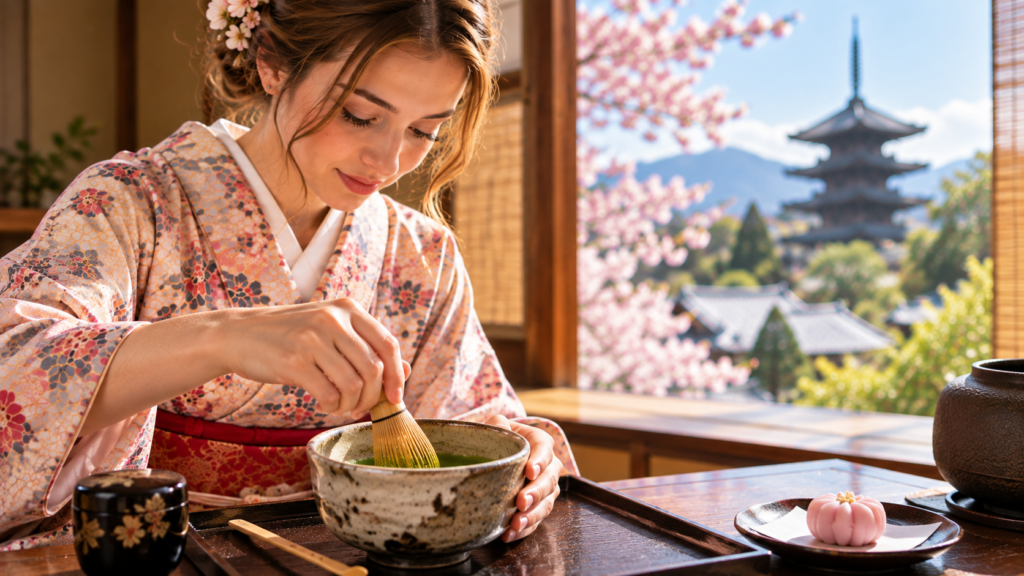
Matcha is now enjoyed around the world.
You can find matcha lattes in cafés, matcha ice cream in supermarkets, and matcha desserts almost everywhere in Japan.
But have you ever prepared a bowl of traditional matcha yourself?
Making matcha looks simple:
Add matcha.
Pour in hot water.
Whisk.
Drink.
But the first time you pick up a traditional bamboo whisk, called a chasen, you may have a few questions.
How much matcha should you use?
How hot should the water be?
How do you hold a matcha whisk?
Should you stir in circles?
Why isn’t your matcha foamy?
In this beginner’s guide, we explain how to make matcha with a bamboo whisk, including the basic tools, water temperature, whisking technique, common mistakes, and tips for creating a smooth bowl of matcha.
We will also explore how visitors can learn to whisk matcha themselves during a tea ceremony experience in Kyoto.
What Does It Mean to “Whisk” Matcha?
Matcha is different from ordinary loose-leaf tea.
With teas such as sencha or black tea, tea leaves are steeped in hot water and then removed.
Matcha works differently.
Finely ground tea powder is placed directly into a bowl.
Hot water is added.
The matcha is then mixed into the water using a bamboo whisk.
Because the tea powder itself remains in the bowl, the goal is to distribute the matcha evenly through the water.
This creates the distinctive texture of traditionally prepared matcha.
What Is a Chasen?
A chasen is a traditional Japanese bamboo whisk used to prepare matcha.
If you have seen a Japanese tea ceremony, you have probably seen one.
It looks simple, but its construction is surprisingly intricate.
A piece of bamboo is carefully split into many fine tines that can move rapidly through the tea.
The chasen helps combine the matcha powder and hot water while creating a smooth texture.
For many international visitors, the bamboo whisk becomes one of the most memorable objects associated with Japanese tea ceremony.
It is practical, beautiful, and closely connected to Japan’s long tea culture.
What Do You Need to Make Matcha?
You do not need a large collection of expensive tea utensils to begin making matcha.
A few basic tools are enough.
Matcha
Matcha is finely ground Japanese green tea powder.
Different matcha can vary significantly in aroma, bitterness, umami, color, and quality.
Chawan — Matcha Bowl
A traditional matcha bowl is called a chawan.
For beginners, a relatively wide bowl makes it easier to move the whisk quickly.
Chasen — Bamboo Matcha Whisk
The chasen is used to mix the matcha and water.
If you plan to make traditional-style matcha regularly, this is one of the most useful tools to own.
Chashaku — Bamboo Tea Scoop
A chashaku is a traditional bamboo scoop used to measure matcha.
If you are making matcha casually at home, you can also measure the powder using other appropriate kitchen tools.
Fine Sifter
A small sifter is extremely useful.
Matcha powder can form small clumps, and sifting it before adding water can make the finished tea much smoother.
How to Make Matcha Step by Step
The following method is intended as a simple introduction for beginners making usucha, or thin matcha.
Formal Japanese tea ceremony procedures vary according to tea school and occasion.
Think of this as a practical way to learn the basics rather than a complete formal tea ceremony procedure.
Step 1: Warm the Bowl and Chasen
Begin by adding hot water to your matcha bowl.
Place the tips of the chasen into the warm water briefly.
This serves two useful purposes.
First, it warms the tea bowl.
Second, it helps soften the dry bamboo tines before whisking.
After warming the bowl and whisk, discard the water.
Dry the bowl before adding your matcha.
Step 2: Sift the Matcha
This is a small step that can make a noticeable difference.
Matcha is an extremely fine powder and can easily form clumps.
If those clumps go directly into the bowl, they may remain even after whisking.
Pass the matcha through a fine sifter before adding the water.
The powder should become soft and evenly distributed in the bowl.
If you often wonder:
“Why is my matcha clumpy?”
Skipping this step may be the reason.
Step 3: Add the Matcha
For a beginner-friendly bowl of thin matcha, you can start with approximately 1.5 to 2 grams of matcha.
A traditional chashaku is often used to measure the powder.
The exact amount can be adjusted according to the matcha and your personal preference.
If the flavor is too strong, try slightly less powder.
If you want a more intense matcha flavor, adjust accordingly.
There is no need to chase the perfect measurement on your first attempt.
Start with a basic ratio and learn what you enjoy.
Step 4: Add Hot Water
Pour hot water into the bowl.
For a beginner preparing thin matcha at home, approximately 70 to 80 ml of water provides a useful starting point.
Water temperature also matters.
Using boiling water can make some matcha taste more bitter or astringent.
A temperature around 70–80°C (158–176°F) is a practical range to experiment with.
Different matcha may taste better at different temperatures, so consider this a starting point rather than an absolute rule.
Step 5: Hold the Chasen Correctly
You do not need to squeeze the bamboo whisk tightly.
Hold the handle comfortably and keep your hand relaxed.
One of the most common beginner mistakes is trying to whisk using the entire arm.
That quickly becomes tiring.
Instead, focus on the wrist.
A relaxed wrist allows you to move the chasen quickly with small movements.
The goal is speed and control rather than strength.
Step 6: Do Not Stir Matcha in Circles
This is one of the biggest differences between making matcha and stirring an ordinary drink.
Beginners often move the chasen in circles, like stirring coffee with a spoon.
Instead, move the whisk rapidly back and forth.
You may hear the movement described as drawing a quick:
M
or
W
with the whisk.
You do not literally need to write letters in the tea.
The idea simply helps you imagine a fast back-and-forth movement instead of slow circular stirring.
Keep your wrist loose and make small, quick movements.
Step 7: Whisk Until Smooth
Continue whisking until the matcha is evenly mixed with the water.
Depending on the style of preparation, you may also create a layer of fine foam across the surface.
Try to avoid large, uneven bubbles.
Smaller bubbles generally create a smoother-looking surface.
But there is an important point:
More foam does not automatically mean better matcha.
Different Japanese tea schools have different approaches to whisking and foam.
For a beginner making matcha at home, focus first on creating tea that is smooth, well mixed, and enjoyable to drink.
Step 8: Finish Gently
Once the matcha is well mixed, slow your movement.
If necessary, gently move the whisk near the surface to help refine larger bubbles.
Then lift the chasen smoothly from the bowl.
Your matcha is ready.
Take a moment before drinking it.
Notice the green color.
Smell the tea.
Hold the bowl.
Then taste it.
The preparation is part of the experience.
How to Make Matcha Foamier
A common beginner question is:
“Why won’t my matcha foam?”
Several things can make whisking easier.
Use Quick, Small Movements
Slow, large movements are generally less effective than fast movements driven by the wrist.
Keep Your Wrist Relaxed
Too much tension makes it difficult to whisk quickly.
Do Not Press Too Hard Against the Bottom
The chasen should move freely.
Pressing it hard against the bowl makes whisking more difficult and may damage the delicate bamboo tines.
Sift Your Matcha
Removing clumps helps the powder mix more evenly.
Check Your Water Ratio
Too much water can make it harder for beginners to create the texture they expect.
Start with a modest amount and adjust later.
Use a Suitable Bowl
A bowl with enough room to move the whisk makes learning much easier.
Common Matcha Mistakes
Your first bowl probably will not look like matcha prepared by an experienced tea practitioner.
That is completely normal.
Here are some of the most common beginner problems.
My Matcha Has Clumps
Sift the powder before adding water.
Matcha is extremely fine and naturally tends to clump.
The Bubbles Are Too Large
Try making smaller, faster movements with your wrist instead of moving the whisk slowly around the bowl.
My Matcha Is Too Bitter
Experiment with the amount of matcha, water quantity, and water temperature.
Also remember that traditional matcha is often enjoyed with a Japanese sweet.
My Arm Gets Tired
You may be using too much of your arm.
Relax your grip and focus more on quick wrist movement.
The Whisk Feels Difficult to Move
Avoid pressing the bamboo tines firmly against the bottom of the bowl.
The whisk needs space to move freely through the tea.
Do You Need Foam on Matcha?
Not necessarily.
Photographs of matcha often show a bright green surface covered with tiny bubbles.
That has led some beginners to believe that matcha without a thick layer of foam is automatically wrong.
Japanese tea traditions are more nuanced than that.
Different tea schools may prepare thin matcha differently, including differences in the amount and appearance of foam.
If you are simply learning to make matcha at home, focus on the fundamentals:
Is the powder properly mixed?
Are there large clumps?
Does the texture feel pleasant?
Does the matcha taste good?
Those questions are more useful than judging success only by the amount of foam.
Usucha vs Koicha: What Is the Difference?
When researching Japanese tea ceremony, you may encounter two terms:
Usucha
and
Koicha
Usucha means thin tea.
This is generally closer to the style of matcha that many international visitors picture: matcha whisked with water into a relatively light drink.
Koicha means thick tea.
It uses considerably more matcha relative to the amount of water and creates a much thicker consistency.
Koicha is not prepared by rapidly creating foam in the same way as thin tea. The preparation is closer to carefully kneading or blending the tea and water together.
For beginners learning how to whisk matcha, usucha is the easier place to start.
Why Is Wagashi Served With Matcha?
If you join a tea ceremony in Kyoto, you may receive a traditional Japanese sweet called wagashi before drinking matcha.
Why?
One important reason is the contrast between sweetness and bitterness.
Traditional matcha is not usually sweetened by adding sugar directly to the bowl.
Instead, the guest first enjoys the wagashi.
The sweetness remains in the mouth.
Then the matcha is served.
The slight bitterness and umami of the tea create a pleasant contrast with the sweet.
Wagashi can also express the Japanese seasons through colors, ingredients, shapes, and poetic themes.
So the sweet is not simply an extra dessert.
It is part of the wider tea experience.
How to Clean a Bamboo Matcha Whisk
Your chasen is made from bamboo and should be handled carefully.
After preparing matcha, rinse the whisk with clean water or lukewarm water to remove any remaining tea.
Avoid aggressively scrubbing the delicate tines.
Allow the chasen to dry completely before storing it.
Leaving bamboo damp for extended periods can cause deterioration or mold.
Some matcha enthusiasts use a chasen holder, sometimes called a whisk stand, to help maintain the whisk’s shape while drying.
With appropriate care, your bamboo whisk will remain useful for many bowls of matcha.
Can You Make Matcha Without a Chasen?
Technically, yes.
If your only goal is to mix matcha powder and water, other kitchen tools can accomplish that.
But a traditional bamboo chasen is specifically designed for preparing matcha.
It also changes the experience.
Holding a chasen and learning how to move it connects the preparation of the drink with the Japanese tradition surrounding it.
If you simply want matcha quickly, another tool may work.
If you want to understand how matcha has traditionally been prepared in Japanese tea culture, the chasen is worth experiencing.
Making Matcha at Home vs Joining a Tea Ceremony
Once you understand the basic technique, you can make matcha at home.
So why join a tea ceremony in Kyoto?
Because learning how to whisk matcha is only one small part of Japanese tea culture.
A tea ceremony introduces you to a much larger experience.
The tatami room.
The tea bowl.
The bamboo scoop.
The chasen.
Wagashi.
Seasonal details.
The movements of the host.
The interaction between host and guest.
The atmosphere of the room.
The history behind the tradition.
You can learn a whisking technique from a guide or video.
But sitting inside a tea room and watching an experienced host prepare tea in front of you provides cultural context that is difficult to recreate at home.
Make Your Own Matcha in Kyoto
Kyoto is one of the best places in Japan to explore matcha culture.
The Kyoto region has deep historical connections with Japanese tea, including nearby Uji, one of the country’s most famous tea-producing areas.
Visitors can enjoy matcha in many different ways.
Matcha cafés.
Matcha parfaits.
Matcha ice cream.
Traditional wagashi.
Tea shops.
These are all worth exploring.
But if you want to move beyond simply consuming matcha, try preparing it yourself.
Hold the bamboo whisk.
Feel how light it is.
Watch the matcha powder disappear into the water.
Move your wrist.
See the surface begin to change.
Then drink the bowl you prepared yourself.
That small process can transform matcha from something you order into something you understand.
Why Gion Is a Great Place for a Tea Ceremony
Gion is one of Kyoto’s most famous historic districts.
The area is associated with traditional architecture, temples, shrines, maiko and geiko culture, and many other aspects of Kyoto’s cultural heritage.
Popular places nearby include Yasaka Shrine and Kennin-ji Temple, as well as traditional streets and the Kamo River area.
This makes it easy to combine sightseeing with a cultural experience.
You can spend part of your day walking through Kyoto.
Then step away from the busy streets.
Enter a tea room.
Sit on tatami.
And prepare a bowl of matcha.
The contrast itself is part of what makes the experience memorable.
Make Matcha at THE TEA CEREMONY GION Orizuruya
Located in Kyoto’s historic Gion district, THE TEA CEREMONY GION Orizuruya offers tea ceremony experiences suitable for beginners and international visitors.
Orizuruya is approximately 4 minutes on foot from Gion-Shijo Station and 7 minutes from Kyoto-Kawaramachi Station, making it easy to include in a day exploring Gion.
During the experience, guests do more than simply receive a finished bowl of tea.
You can learn about Japanese tea culture.
Observe how the host prepares matcha.
See how traditional tea utensils are used.
And then pick up a bamboo chasen and whisk matcha yourself.
The experience also allows guests to enjoy matcha with Kyoto wagashi.
If you have never used a bamboo whisk before, seeing the technique in person makes the movement much easier to understand.
You do not need previous tea ceremony experience.
The goal is not to create a perfect bowl on your first attempt.
It is to experience Japanese tea culture through your own hands.
Frequently Asked Questions About Making Matcha
How much matcha should I use?
For a beginner preparing thin matcha, approximately 1.5 to 2 grams is a useful starting point.
You can adjust the amount according to the matcha and your personal taste.
How much water should I use for matcha?
Around 70 to 80 ml can be a practical starting point for a beginner bowl of thin matcha.
Adjust the ratio depending on how strong you prefer your tea.
What temperature should matcha water be?
Approximately 70–80°C (158–176°F) is a useful range to begin experimenting with.
The ideal temperature can vary depending on the matcha and your taste.
How do you use a matcha whisk?
Hold the chasen comfortably and move it quickly back and forth using your wrist.
Avoid slowly stirring the tea in circles like coffee.
Why is my matcha clumpy?
Matcha powder naturally forms clumps.
Sifting the powder before adding water can make it much easier to create a smooth bowl.
Why is my matcha not foamy?
You may be moving the whisk too slowly, using large circular movements, pressing too hard against the bowl, or using a difficult matcha-to-water ratio.
Remember that a large amount of foam is not required in every style of Japanese tea preparation.
Can I use boiling water for matcha?
You can prepare tea with very hot water, but boiling water may make some matcha taste more bitter or astringent.
Allowing the water to cool slightly can produce a softer flavor.
Do I need a bamboo whisk?
A bamboo whisk is not the only possible way to mix matcha, but it is the traditional tool designed for the purpose and is recommended if you want to experience traditional matcha preparation.
Can tourists make their own matcha in Kyoto?
Yes.
Beginner-friendly tea ceremony experiences in Kyoto allow international visitors to learn how matcha is prepared and, depending on the experience, whisk their own bowl using a chasen.
Do I need to know tea ceremony etiquette first?
No.
A beginner-friendly tea ceremony should guide you through the necessary steps.
You can learn while participating.
Don’t Just Drink Matcha—Learn to Make It
Matcha is easy to recognize.
Bright green powder.
A tea bowl.
A bamboo whisk.
But preparing it yourself reveals another side of Japanese tea culture.
Sift the powder.
Add the water.
Hold the chasen.
Relax your wrist.
Whisk quickly.
Watch the tea change.
Then drink the bowl you made yourself.
The technique is simple enough for a beginner to try, but behind those movements is a tea culture that has developed in Japan over centuries.
You can learn the basics at home.
But when you visit Kyoto, consider experiencing matcha where the preparation, utensils, hospitality, and atmosphere come together.
Pick up a bamboo whisk and make your own bowl of matcha in Gion at THE TEA CEREMONY GION Orizuruya.