

Maiko vs Geisha: What’s the Difference? A Complete Guide to Kyoto’s Traditional Entertainers
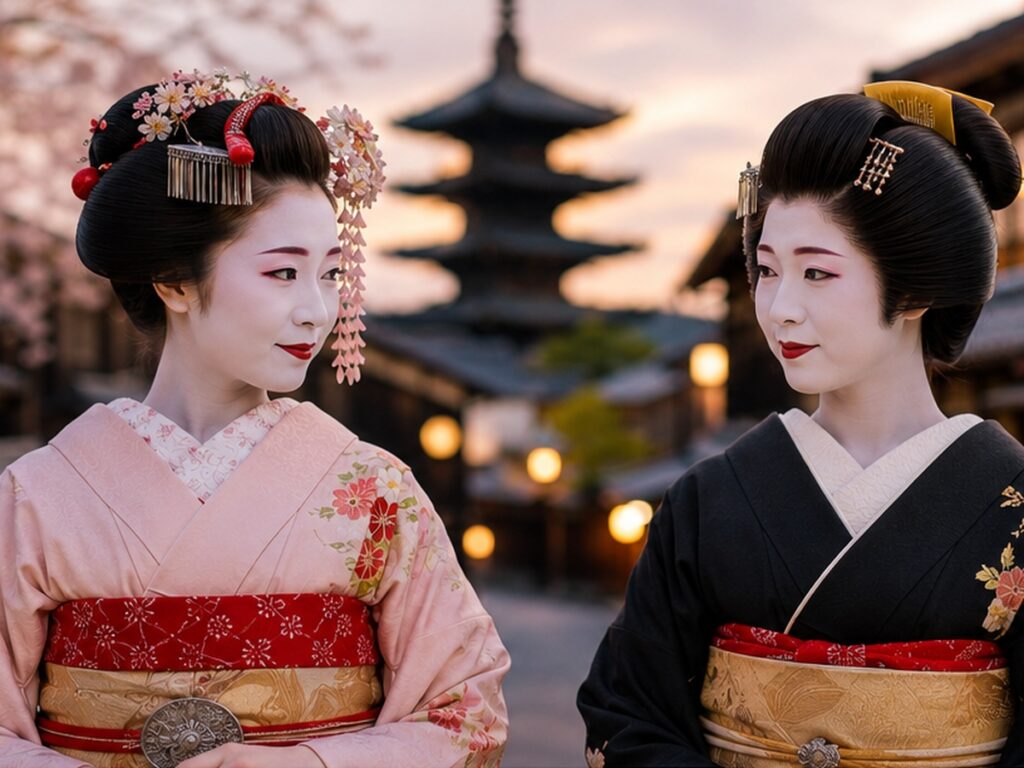
For many international travelers, seeing a maiko or geisha is one of the most fascinating experiences associated with Kyoto.
Beautiful kimono.
White makeup.
Elaborate hairstyles.
Traditional Japanese dance and music.
Graceful movements and refined hospitality.
The word “Geisha” is famous around the world, but when you visit Kyoto, you may also encounter the words “Maiko” and “Geiko.”
So what is the difference?
Is a maiko simply a young geisha?
What is a geiko?
Can you tell a maiko and geisha apart by their kimono?
And where can you meet a real maiko in Kyoto?
In simple terms:
A maiko is an apprentice training in traditional arts and hospitality, while a geiko is a fully trained professional entertainer.
But there is much more to the difference than that.
Their kimono, obi, hairstyles, hair ornaments, makeup, footwear, and professional roles can all be different.
In this guide, we explain the differences between maiko, geiko, and geisha, how to recognize them, the culture of Kyoto’s traditional entertainment districts, and how travelers can respectfully experience authentic maiko culture in Kyoto.
Geisha vs Geiko: What’s the Difference?
Before comparing maiko and geisha, there is another important term to understand: geiko.
“Geisha” is the term most international visitors already know.
In Kyoto, however, professional female traditional entertainers are generally called geiko.
The terminology varies by region, but when learning about Kyoto’s traditional entertainment culture, you will frequently see:
Maiko — 舞妓
and
Geiko — 芸妓
Both are part of Kyoto’s traditional kagai, or entertainment districts, but they represent different stages of professional development.
For international travelers, it is perfectly understandable to use the word “geisha.”
However, knowing the word “geiko” will help you better understand Kyoto’s culture.
What Is a Maiko?
A maiko is an apprentice training in Kyoto’s traditional arts and hospitality before becoming a geiko.
Maiko are particularly recognizable because of their colorful appearance.
You may have seen them in photographs, travel advertisements, documentaries, or images of Kyoto.
But being a maiko is not simply about wearing beautiful kimono and makeup.
Maiko spend years learning and practicing traditional skills.
Their training may include:
- Japanese dance
- Shamisen
- Traditional songs
- Tea and other Japanese cultural traditions
- Etiquette
- Conversation
- Hospitality
They develop these skills while gaining real experience within Kyoto’s traditional entertainment districts.
In other words, a maiko is not a costumed tourist attraction.
She is an apprentice participating in a living cultural tradition and training toward becoming a professional geiko.
What Is a Geiko?
A geiko is a professional traditional entertainer who has completed extensive training in the arts and hospitality.
Geiko may perform Japanese dance, play traditional musical instruments such as shamisen, sing, converse with guests, and provide refined entertainment at traditional gatherings.
International discussions about geisha often focus heavily on appearance.
But the word geiko itself contains the Japanese character 芸, meaning “art” or “performance.”
The arts are at the heart of the profession.
Training also does not simply stop when a maiko becomes a geiko.
Geiko continue practicing and refining their skills throughout their careers.
They are professionals who help preserve and continue Kyoto’s traditional performing arts and hospitality culture.
Maiko vs Geisha: The Main Difference
The easiest way to understand the distinction is:
Maiko = apprentice
Geiko = fully trained professional
A maiko is still developing her traditional artistic and hospitality skills.
A geiko has progressed to the professional stage.
However, visitors can also notice several visual differences between them.
Let’s look at some of the easiest ways to tell a maiko and geiko apart.
1. Kimono: Colorful vs Refined
One of the first things you may notice is the kimono.
Maiko typically wear highly decorative, colorful kimono with bold patterns.
Their appearance is intentionally youthful and elaborate.
Geiko generally wear more understated and refined kimono.
The overall impression is often more mature and elegant.
Of course, clothing changes depending on season, occasion, and other factors, so kimono color alone is not a perfect way to identify someone.
But as a general guide:
Maiko → colorful and elaborate
Geiko → refined and understated
This is one of the easiest differences for first-time visitors to notice.
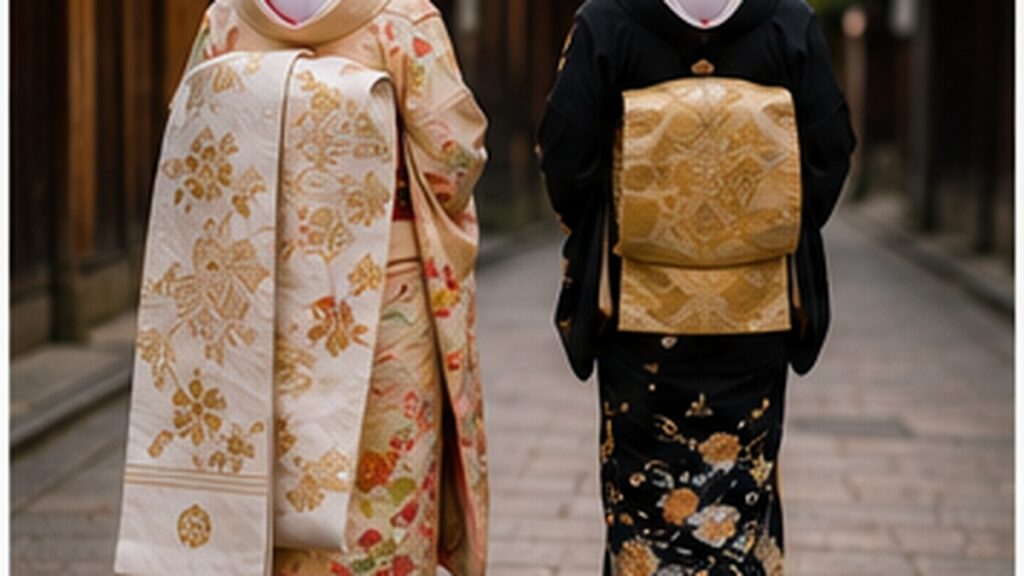
2. Obi: Look for the Long Darari Obi
Another very recognizable difference is the obi, the sash worn with kimono.
Maiko are famous for wearing a long style of obi known as the darari obi.
It hangs dramatically down the back and is one of the most distinctive features of a maiko’s appearance.
Geiko do not wear the same long hanging obi style.
If you are unsure whether you are looking at a maiko or geiko, looking at the back of the kimono can provide an important clue.
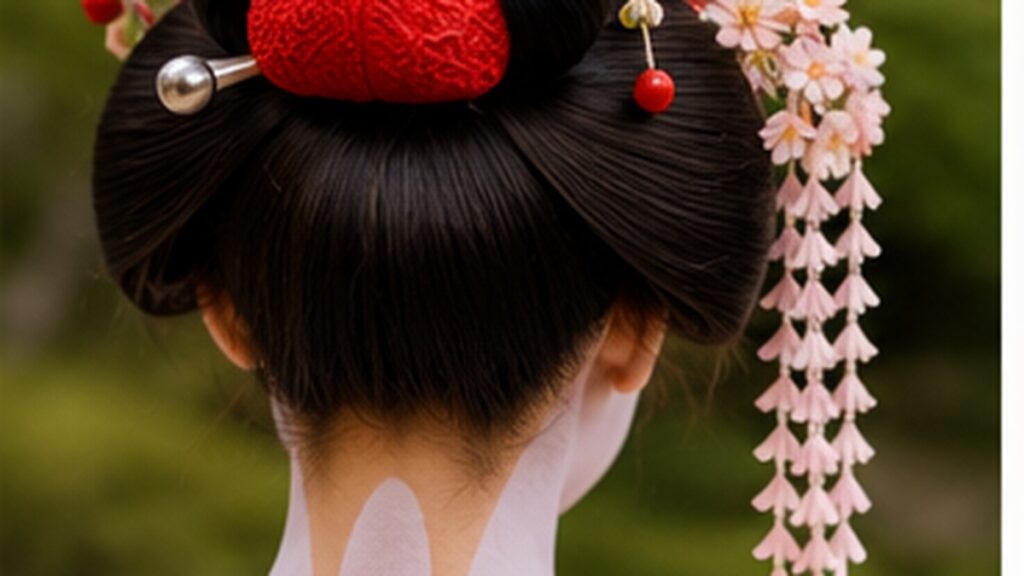
3. Hairstyle: Natural Hair vs Wig
Hair is another important difference.
Maiko traditionally style their own natural hair into elaborate traditional hairstyles.
Their hairstyles can also change depending on their stage of training and particular occasions.
Geiko generally wear traditional wigs styled appropriately for their profession.
To an unfamiliar visitor, the hairstyles may initially look similar.
But once you begin learning about Kyoto’s kagai culture, you will notice that hairstyle carries meaning and can indicate professional status.
4. Hair Ornaments: Maiko Are More Elaborate
The beautiful hair ornaments worn by maiko are called kanzashi.
These are among the most visually striking parts of a maiko’s appearance.
Kanzashi can reflect the changing seasons.
Spring may feature seasonal flowers.
Summer designs may evoke coolness and nature.
Autumn may feature leaves or seasonal plants.
Other designs appear throughout the year.
This reflects a broader characteristic of Japanese culture: a deep appreciation for the seasons.
Geiko generally wear simpler and more restrained hair ornaments.
Again, the contrast reflects the overall visual difference:
Maiko → youthful and decorative
Geiko → mature and refined
5. Makeup: Is White Makeup Only for Maiko?
No.
White makeup is strongly associated with both maiko and geiko culture, so makeup alone is not always the easiest way for visitors to identify them.
Maiko are particularly famous for their white foundation, red lips, and carefully designed eye makeup.
Interestingly, makeup can also reveal information about a maiko’s stage of training.
For example, newly debuted maiko traditionally use distinctive lip makeup compared with more experienced maiko.
These small details are part of a much larger cultural system.
What may initially look like simply beautiful makeup can actually communicate status, experience, and tradition.
6. Footwear: Look for the Maiko’s Okobo
Another clue can be found at their feet.
Maiko are well known for wearing tall wooden footwear called okobo.
Their distinctive height and shape make them relatively easy to recognize.
Geiko generally wear lower traditional footwear rather than the tall okobo associated with maiko.
So if you are trying to identify a maiko in Kyoto, do not only look at her kimono and hairstyle.
Look at the footwear as well.
How Old Are Maiko?
Maiko are generally young women who enter training during their teenage years.
Some begin their path in Kyoto’s traditional entertainment districts after completing compulsory education.
However, it is misleading to think of the difference between maiko and geiko as simply an age difference.
There is no universal rule that says:
“At this exact age, a maiko automatically becomes a geiko.”
The transition depends on training, experience, professional development, and circumstances within the kagai.
Therefore, the most useful distinction is not:
young vs old
but rather:
apprentice vs professional.
How Does a Maiko Become a Geiko?
Becoming a maiko is already part of a longer process.
Before formally working as a maiko, a young woman typically goes through a period of learning about life within the kagai, etiquette, and the expectations of the profession.
As a maiko, she continues training in areas such as:
Japanese dance.
Shamisen.
Traditional songs.
Etiquette.
Conversation.
Hospitality.
Over time, she develops her skills and experience.
Eventually, if she continues along this professional path, she may make the transition from maiko to geiko.
This transition is much more than changing clothing or hairstyle.
It represents moving from an apprenticeship into a professional stage.
Understanding this makes it easier to appreciate the years of practice behind the beautiful appearance visitors see in Kyoto.
What Is a Kagai?
To understand maiko and geiko, it helps to understand the Japanese word kagai.
A kagai is a traditional entertainment district where geiko and maiko live, train, perform, and entertain guests.
These districts developed around establishments where professional entertainers performed music, dance, and other traditional arts.
Kyoto still has active kagai today.
This is an important point.
Gion is not simply an old neighborhood preserved to look like historical Japan.
The culture is still alive.
Maiko and geiko continue to train and work there.
Traditional arts continue to be practiced.
This living connection between past and present is one of the reasons Gion is such a fascinating place to visit.
Kyoto’s Five Kagai
Kyoto is traditionally known for five major kagai, often referred to collectively as the Gokagai, or Five Kagai.
They are:
- Gion Kobu
- Miyagawacho
- Pontocho
- Kamishichiken
- Gion Higashi
Each has its own history and character.
Gion is perhaps the most internationally famous, but maiko and geiko culture continues across several areas of Kyoto.
The continued existence of these districts is one reason Kyoto remains such an important destination for travelers interested in authentic Japanese traditional culture.
Can You See a Real Maiko Walking Around Gion?
Yes, it is possible.
Visitors walking through Gion may occasionally see a real maiko or geiko traveling between appointments.
Early evening is often associated with maiko and geiko heading to work.
However:
You are not guaranteed to see a maiko simply by visiting Gion.
Maiko and geiko are not walking through the neighborhood as tourist performers.
They may be traveling to professional appointments and often have somewhere they need to be.
There is another reason identifying a real maiko can be difficult.
Kyoto also has makeover experiences where visitors can dress in maiko-inspired clothing and makeup.
Therefore, seeing someone in a colorful kimono and white makeup does not automatically mean you have found a professional maiko.
Etiquette When You See a Maiko or Geiko in Gion
Seeing a real maiko in Kyoto may feel like an extraordinary travel moment.
But remember:
Gion is not a theme park.
Maiko and geiko are real people going to work.
Visitors should behave respectfully.
Do Not Chase Them
Never follow a maiko or geiko down the street trying to get a photograph.
She may be on her way to an appointment.
Do Not Block Their Path
Do not stand in front of someone or block a street in order to take a photo.
Do Not Demand a Photograph
Seeing a maiko in public does not mean she is available for a photo session.
Avoid approaching aggressively or demanding that she stop.
Never Touch Their Kimono or Hair Ornaments
Kimono, obi, hairstyles, and kanzashi may be fascinating to see up close.
But never touch them.
Respect Private Property
Gion contains private streets, homes, businesses, and other areas that are not public tourist attractions.
Always follow local signs and photography restrictions.
Respectful tourism helps protect the traditions visitors have traveled to Kyoto to experience.
How Can You Meet a Real Maiko in Kyoto?
If meeting a real maiko is an important part of your Kyoto trip, relying on a chance encounter in the street is not the best approach.
Instead, consider booking an official cultural experience involving a real maiko.
Depending on the experience, visitors may have opportunities to:
- Watch a maiko perform
- Speak with a maiko
- Take photographs together
- Learn about Kyoto culture
- Experience traditional hospitality
- Watch tea being prepared by a maiko
This allows you to spend meaningful time experiencing the culture rather than seeing someone for only a few seconds on the street.
It is also a much more respectful way to interact with Kyoto’s living maiko tradition.
“Become a Maiko” vs “Meet a Real Maiko”
International travelers should pay close attention to the meaning of the phrase “Maiko Experience.”
It can describe two completely different activities.
Maiko Makeover Experience
You dress in maiko-inspired kimono and makeup yourself.
This can be a fun way to experience traditional clothing and take memorable photographs.
Meet a Real Maiko Experience
A professional maiko participates in the experience.
You may watch her perform, interact with her, take photographs, or experience another traditional activity together.
Both can be enjoyable.
But if your goal is specifically:
“I want to meet a real maiko in Kyoto,”
check the description carefully before making a reservation.
Experience Maiko and Japanese Tea Ceremony Together
For travelers who want to discover several Kyoto traditions at once, combining maiko culture with Japanese tea ceremony can be particularly memorable.
Japanese tea ceremony is much more than drinking matcha.
It brings together:
The tea room.
Traditional utensils.
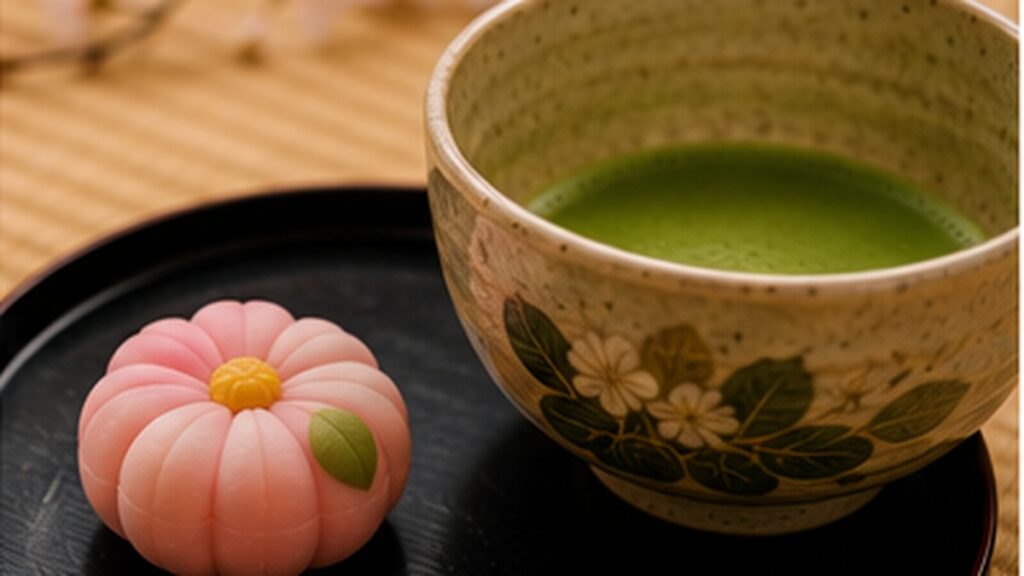
Wagashi.
Seasonality.
Careful movement.
Hospitality.
Respect between host and guest.
Maiko culture also places great importance on traditional arts, etiquette, graceful movement, and hospitality.
Together, they offer visitors a deeper look at Kyoto’s traditional culture.
Rather than treating a maiko as something simply to photograph, you can experience the skills, movements, and hospitality connected with the tradition.
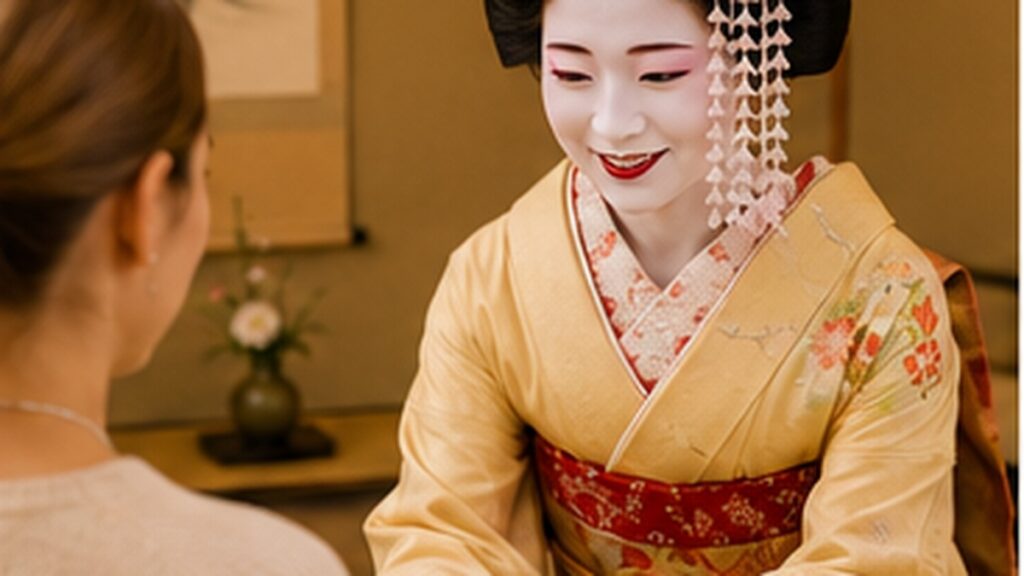
Meet a Real Maiko at THE TEA CEREMONY GION Orizuruya
Located in historic Gion, THE TEA CEREMONY GION Orizuruya offers a Maiko Tea Ceremony Experience combining two of Kyoto’s best-known traditions.
Visitors can experience tea preparation by a real maiko at close range in a traditional setting.
This is very different from briefly seeing a maiko walking through Gion.
Instead, you can spend time in a calm environment experiencing the movements, hospitality, and atmosphere connected with Kyoto’s living traditional culture.
It is particularly suitable for travelers who are thinking:
“I want to meet a real maiko in Kyoto.”
“I want to understand geisha culture.”
“I want an authentic Japanese cultural experience.”
“I want to do something beyond normal sightseeing.”
Orizuruya is conveniently located in Gion, approximately:
4 minutes on foot from Gion-Shijo Station
and
7 minutes on foot from Kyoto-Kawaramachi Station.
Nearby attractions include Kennin-ji Temple, Yasaka Shrine, Gion’s historic streets, and the Kamo River, making the experience easy to include in a Gion sightseeing itinerary.
Frequently Asked Questions About Maiko and Geisha
What is the main difference between a maiko and geisha?
A maiko is an apprentice training in traditional arts and hospitality.
A geiko is a fully trained professional traditional entertainer.
Their kimono, obi, hairstyles, hair ornaments, and footwear can also differ.
What is the difference between geisha and geiko?
“Geisha” is the term most commonly known internationally.
In Kyoto, professional female traditional entertainers are generally called geiko.
Is a maiko a geisha?
A maiko is an apprentice training toward becoming a professional geiko.
For a more accurate understanding of Kyoto culture, it is useful to distinguish between maiko and geiko.
How can you tell a maiko and geiko apart?
Maiko are generally more elaborately dressed, with colorful kimono, long darari obi, seasonal hair ornaments, traditional hairstyles using their own hair, and tall okobo footwear.
Geiko generally have a more refined and understated appearance.
Can I see a real maiko in Kyoto?
Yes.
Real maiko and geiko still work in Kyoto today.
You may occasionally see them in districts such as Gion, but there is no guarantee.
If meeting a real maiko is important to you, consider booking an official cultural experience.
Can I take a photo of a maiko in Gion?
You should always respect the individual, local rules, and private property.
Never chase a maiko, block her path, touch her, or approach aggressively for a photograph.
If you participate in an official maiko experience, photography may be available according to the rules of that particular program.
Can foreigners meet a real maiko?
Yes.
There are cultural experiences in Kyoto designed for international visitors where guests can meet real maiko and learn about the tradition.
Choosing an experience with explanations in a language you understand can make the cultural encounter much more meaningful.
Understanding the Difference Makes Maiko Culture Even More Fascinating
At first glance, maiko and geiko may appear similar.
Both can wear beautiful kimono.
Both are associated with Kyoto’s historic entertainment districts.
Both represent traditions that have fascinated visitors from around the world.
But once you know what to look for, the differences become much easier to see.
The colorful kimono of a maiko.
The long darari obi.
Seasonal kanzashi.
Traditional hairstyles.
Tall okobo.
The more refined appearance of a geiko.
And behind those visual differences is something even more important:
training and experience.
Maiko and geiko are not simply symbols created for Kyoto tourism.
They study dance, music, etiquette, conversation, hospitality, and other traditional arts while helping preserve a cultural world that has developed over generations.
So when you visit Kyoto, look beyond the photographs.
Learn about the culture.
Respect the people who continue it.
And if you want to experience authentic maiko culture for yourself, consider doing so in an environment designed for respectful cultural exchange.
Experience a real maiko and Japanese tea culture at THE TEA CEREMONY GION Orizuruya.