

Japanese Tea Ceremony Etiquette: A Complete Guide for First-Time Visitors
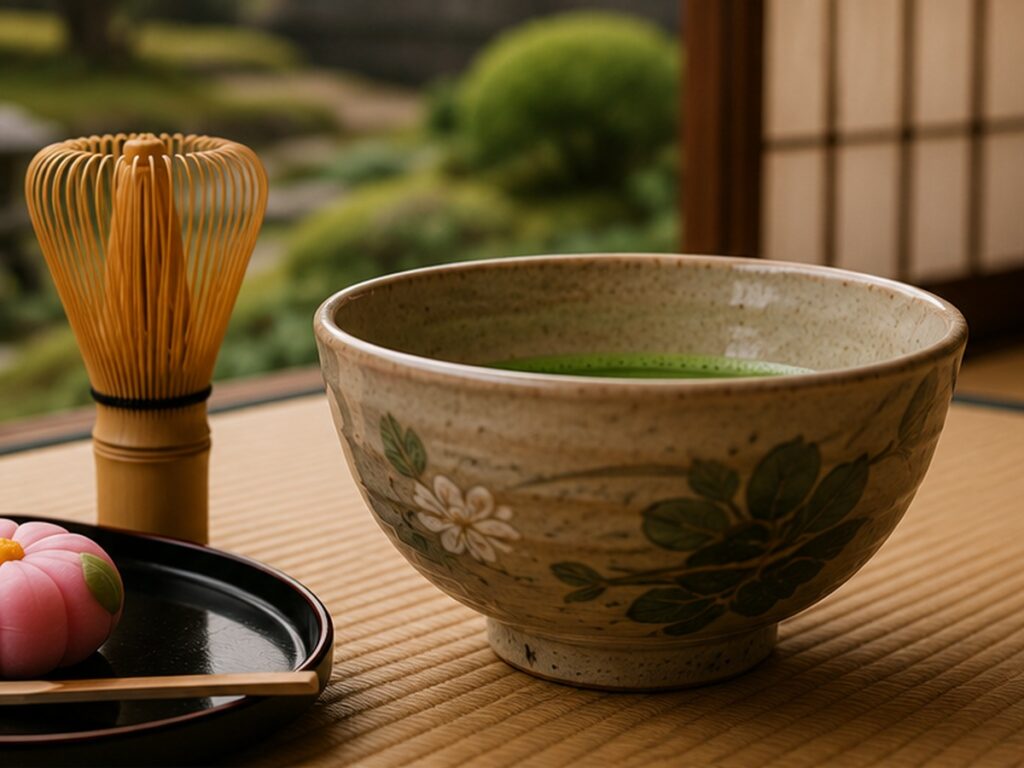
Experiencing a traditional Japanese tea ceremony is one of the most memorable ways to discover Japanese culture in Kyoto.
Step inside a tatami tea room.
Taste seasonal Japanese sweets.
Watch matcha being prepared in front of you.
Hold a traditional tea bowl in your hands.
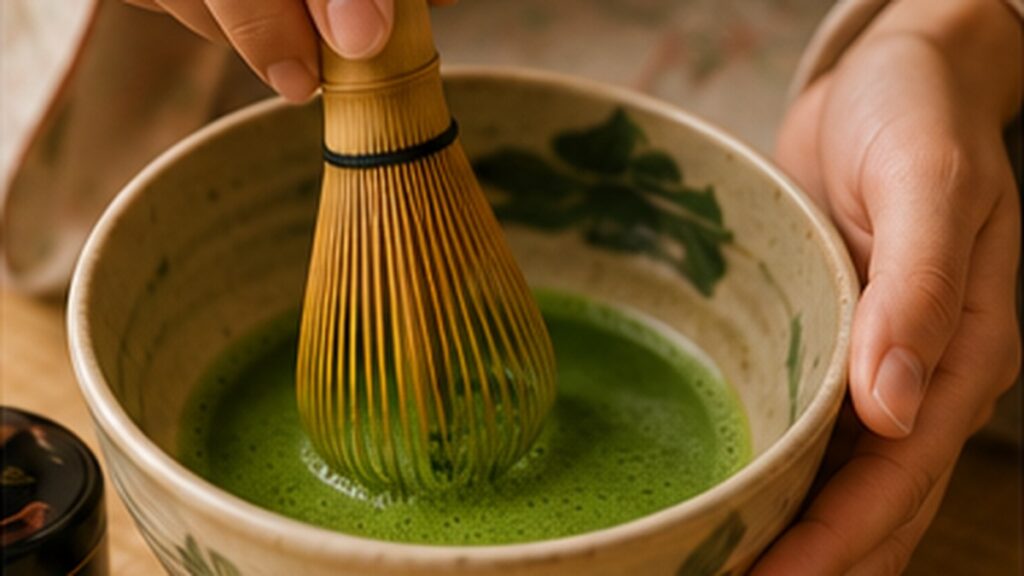
And perhaps even use a bamboo whisk to prepare your own matcha.
Unlike simply visiting a temple or shrine, a tea ceremony allows you to actively participate in a tradition that has been practiced in Japan for centuries.
But if this is your first Japanese tea ceremony, you may also have a few questions.
How should I hold the tea bowl?
Do I bow before drinking matcha?
Why do people turn the tea bowl?
Do I have to sit in seiza?
What if I accidentally do something considered rude?
The good news is simple:
You do not need to memorize every rule of Japanese tea ceremony etiquette before you participate.
Beginner-friendly tea ceremonies are designed to introduce visitors to the tradition, and your host can guide you through the basic etiquette during the experience.
However, understanding a few customs beforehand can help you appreciate the meaning behind each movement.
This guide explains the basic etiquette, manners, and customs you should know before attending a Japanese tea ceremony in Kyoto.
Why Does Japanese Tea Ceremony Have So Many Rules?
At first glance, Japanese tea ceremony can appear to involve many rules.
How to enter the room.
How to receive sweets.
How to hold the bowl.
When to bow.
How to drink the matcha.
Why the bowl is turned.
It may seem complicated.
But tea ceremony etiquette is not simply a collection of strict rules.
Behind these customs is an important idea: respect for the host, the guest, the objects being used, and the moment being shared.
Before guests arrive, the host carefully prepares the tea room.
Flowers may be selected according to the season.
A hanging scroll may be chosen.
Tea utensils are prepared.
Wagashi are selected.
Matcha is prepared for each guest.
The guest, in return, receives this hospitality with appreciation and treats the tea utensils and space with care.
In this way, tea ceremony etiquette reflects the Japanese spirit of omotenashi, or thoughtful hospitality.
Instead of thinking:
“I must not make a mistake.”
It may be more helpful to think:
“These customs are ways of showing consideration and respect.”
Do Beginners Need to Know Tea Ceremony Etiquette?
No.
You do not need previous tea ceremony experience to participate in a beginner-friendly ceremony.
Traditional Japanese tea ceremony contains many detailed procedures, and customs can also differ between tea schools and styles.
People who seriously study tea ceremony practice for years.
Nobody expects a first-time international visitor to understand everything immediately.
During a tourist-friendly tea ceremony in Kyoto, your host will usually explain the important steps as you go.
If you are unsure what to do, simply watch, listen, and follow the host’s guidance.
For a first-time visitor, the most important things are:
- Listen to your host
- Handle tea utensils carefully
- Respect the tea room
- Be considerate of other guests
- Enjoy the experience
Tea ceremony is not an etiquette test.
Understanding the meaning behind the movements is far more valuable than worrying about performing every movement perfectly.
Japanese Tea Ceremony Etiquette: Step-by-Step
The exact procedure varies depending on the school, host, and type of tea ceremony.
A formal Japanese tea gathering can be much more complex than a cultural experience designed for travelers.
However, the following steps will give first-time visitors a useful idea of what to expect.
1. Entering the Tea Room
A tea ceremony begins before you drink any tea.
In a traditional Japanese room, you will normally remove your shoes before stepping onto the tatami.
Once inside, take a moment to look around.
You may notice:
Tatami mats.
A hanging scroll.
Seasonal flowers.
Tea utensils.
Traditional architecture.
These details are not simply decorations.
The host may have selected them specifically for the occasion or season.
In beginner-friendly experiences, you will usually be shown where and how to sit.
Simply follow your host’s instructions.
2. Greeting the Host
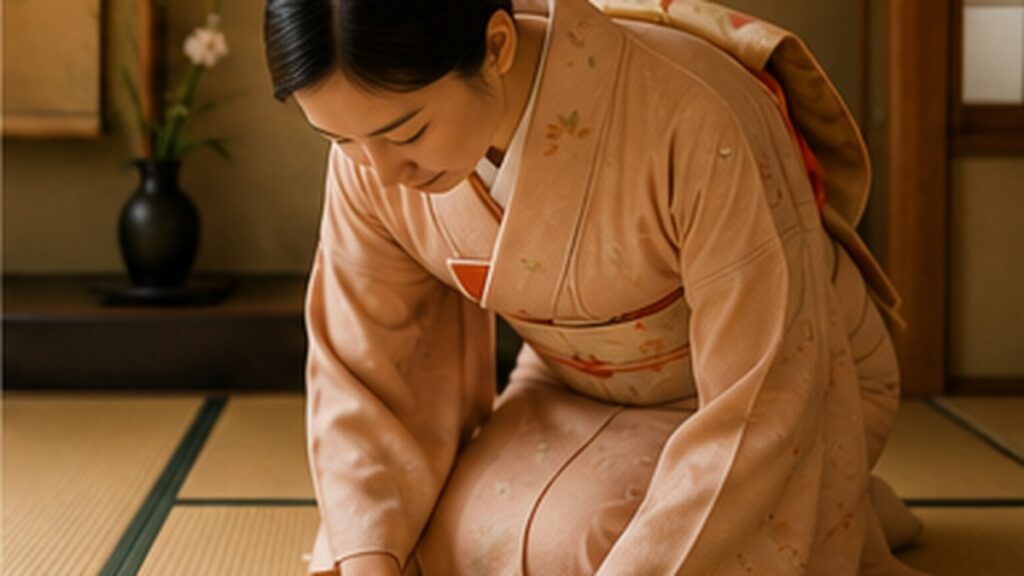
Respect between host and guest is an important part of Japanese tea ceremony.
You may bow at different moments during the experience, such as when greeting the host or receiving tea.
If you have never bowed before, do not worry about performing a perfect formal bow.
A simple, respectful bow following your host’s example is enough for a beginner.
Think of it as a way to express:
“Thank you for preparing this for me.”
3. Eat the Wagashi Before Drinking Matcha
One tea ceremony custom that may surprise first-time visitors is the order in which tea and sweets are enjoyed.
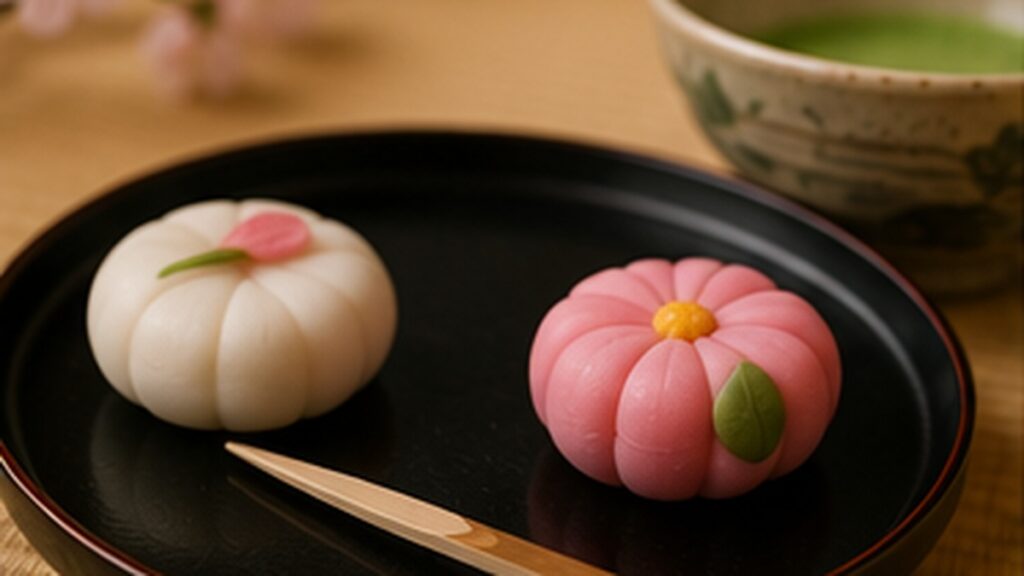
Generally, you eat the wagashi before drinking the matcha.
Wagashi are traditional Japanese sweets and are an important part of tea culture.
They may be served on a small plate and, depending on the type of sweet, eaten using a small utensil.
Why eat something sweet first?
The sweetness prepares your palate and creates a pleasant contrast with the bitterness and umami of the matcha that follows.
Wagashi are also closely connected with Japan’s seasons.
Their colors, shapes, and designs may represent cherry blossoms, flowers, leaves, water, snow, or other seasonal motifs.
Before eating, take a moment to appreciate how the sweet looks.
4. Receiving the Matcha Bowl
When your matcha is served, receive the tea bowl carefully.
Traditional tea bowls are an important part of the ceremony and should be handled respectfully.
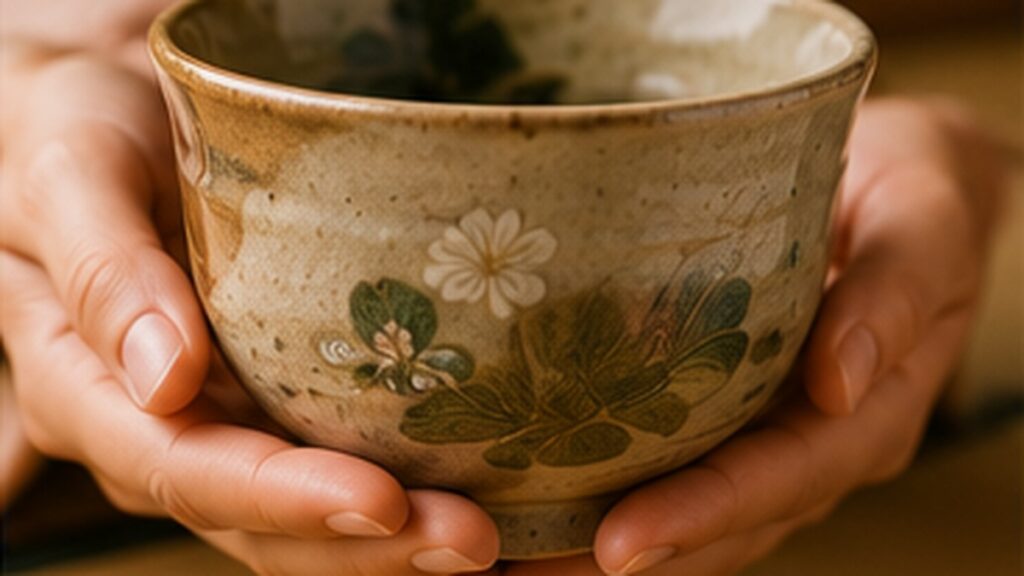
You will generally hold the bowl with both hands.
Depending on the ceremony, you may also bow to the host or acknowledge other guests before drinking.
Again, you do not need to memorize the exact sequence before arriving.
Your host can show you what to do.
Why Do You Turn the Tea Bowl Before Drinking Matcha?
This is one of the most common questions international visitors ask about Japanese tea ceremony etiquette.
You may have seen people rotate the tea bowl before taking their first sip.
Why?
A tea bowl can have a preferred or decorative front.
When the host serves the tea, this beautiful side may be presented toward the guest as a gesture of hospitality.
The guest then turns the bowl slightly before drinking so that they do not place their lips directly on its most beautiful front.
It is a small gesture of respect toward both the host and the tea bowl.
After drinking, there may also be a custom of returning the bowl to its original orientation.
The exact movements and number of turns can vary according to the school or ceremony.
So rather than memorizing something like:
“I must turn the bowl exactly this many times.”
follow the instructions given during your particular tea ceremony.
How Do You Drink Matcha During a Tea Ceremony?
Once you have received and positioned the bowl, it is time to drink the matcha.
Hold the bowl carefully and bring it toward you.
Matcha during tea ceremony is generally consumed in several sips rather than slowly over a long period like a large cup of coffee.
However, first-time visitors do not need to worry excessively about the exact number of sips.
Instead, pay attention to the tea itself.
Notice the aroma.
Taste the bitterness.
Look for the natural umami.
Feel the warmth of the bowl in your hands.
And notice how the flavor changes after eating sweet wagashi.
These sensory details are part of what makes tea ceremony different from simply ordering a matcha drink at a café.
 Are You Supposed to Make a Sound After Drinking Matcha?
You may have read that guests should make a slight sound when finishing their tea.
In some tea ceremony traditions, the final sip may be taken with a small audible sound.
This can indicate that the guest has finished the tea.
However, customs may differ depending on the tea school and style of ceremony.
There is no need to make an exaggerated slurping noise.
If this custom is part of your experience, your host can explain it.
Can You Look at the Tea Bowl After Drinking?
Yes, appreciating the tea utensils can be an important part of tea ceremony.
Japanese tea bowls come in many different shapes, textures, colors, and designs.
Some may reflect the season.
Others may be valued for their craftsmanship or unique imperfections.
After finishing your matcha, you may have an opportunity to look more closely at the bowl.
If so, handle it very carefully.
Tea utensils can be delicate and valuable.
Follow your host’s instructions when picking up or examining anything in the tea room.
And do not focus only on the bowl.
The bamboo whisk, tea scoop, tea container, kettle, flowers, and hanging scroll can all contribute to the complete experience.
Do You Have to Sit in Seiza During a Japanese Tea Ceremony?
This is another common concern for international visitors.
Seiza is the traditional Japanese sitting position in which you kneel on the floor and sit back on your heels.
For people who are not accustomed to it, sitting in seiza for a long time can be uncomfortable.
Fortunately, tourist-friendly tea ceremonies may offer more flexibility.
Depending on the venue, chairs may be available, or guests may be allowed to adjust their sitting position.
You should not force yourself to remain in severe discomfort simply because you believe it is required.
If sitting on the floor is difficult for you, check with the tea ceremony venue before booking.
What Should You Wear to a Japanese Tea Ceremony?
For most tea ceremony experiences designed for travelers, you do not need formal Japanese clothing.
Normal travel clothes are generally acceptable.
However, there are a few practical considerations.
Wear clean socks
Traditional tea rooms usually require you to remove your shoes before stepping onto tatami.
Wearing clean socks is therefore a good idea.
Be careful with large jewelry
Large rings, watches, bracelets, or other accessories could potentially come into contact with delicate tea utensils.
Depending on the experience, you may be asked to remove certain items.
Kimono is optional
You do not need to wear a kimono to enjoy tea ceremony.
However, if you are planning to rent a kimono in Kyoto, combining it with a tea ceremony can create a particularly memorable cultural experience.
For example:
Kimono rental → Gion walk → Japanese tea ceremony
is a popular way to spend part of a day in Kyoto.
Tea Ceremony Manners: What Should You Avoid?
You do not need perfect knowledge of Japanese etiquette, but there are a few simple things you should avoid.
Do not handle tea utensils roughly
Tea bowls and other utensils should always be treated carefully.
Some may be handmade, delicate, old, or valuable.
Do not touch objects without permission
If you see an interesting tea utensil, avoid picking it up without asking.
Your host may give you an opportunity to examine particular items.
Avoid loud conversations
Quietness is part of the atmosphere of tea ceremony.
If other guests are participating, be considerate of their experience as well.
Check before taking photos
Photography rules vary between tea ceremony venues.
Some experiences encourage photography, while others may restrict it during particular parts of the ceremony.
Always follow the venue’s rules.
Avoid strong perfume
Tea ceremony engages several senses, including smell.
The aroma of matcha, wagashi, tatami, flowers, and the tea room can all contribute to the experience.
Very strong perfume may interfere with these subtle scents and affect other guests.
The Most Important Tea Ceremony Etiquette: Respect the Moment
After reading about bows, bowls, wagashi, seiza, and matcha, tea ceremony etiquette may still seem complicated.
But there is a deeper idea behind these customs.
One expression closely associated with Japanese tea culture is:
Ichigo Ichie — 一期一会
It can be understood as valuing an encounter because this exact moment will never occur in precisely the same way again.
The host.
The guests.
The season.
The tea.
The flowers.
The atmosphere.
That particular combination exists only once.
This is why tea ceremony encourages people to pay attention to the present moment.
Listen to the sound of the hot water.
Watch the movement of the bamboo whisk.
Notice the aroma of the matcha.
Look at the seasonal wagashi.
Feel the tea bowl in your hands.
Appreciate the care your host has put into the experience.
For a first-time visitor, this mindset matters much more than remembering every technical rule.
Can Foreign Visitors Experience Tea Ceremony in Kyoto?
Absolutely.
Kyoto is one of the best places in Japan for international travelers to experience traditional tea culture.
Many tea ceremony experiences are designed specifically for beginners and people visiting Japan for the first time.
Gion is an especially attractive area for a tea ceremony because the surrounding neighborhood is closely connected with Kyoto’s traditional culture.
Historic streets.
Traditional machiya.
Kennin-ji Temple.
Yasaka Shrine.
Maiko and geiko culture.
You can explore Gion and then step inside a quiet tea room, making the tea ceremony part of a larger cultural experience rather than an isolated activity.
Experience Tea Ceremony at THE TEA CEREMONY GION Orizuruya
For travelers looking for a beginner-friendly tea ceremony in Kyoto, THE TEA CEREMONY GION Orizuruya offers a hands-on introduction to Japanese tea culture in historic Gion.
During the standard Tea Ceremony Experience, guests can learn about tea culture, watch traditional matcha preparation, and enjoy matcha with Japanese wagashi.
And you do not only watch.
Guests can also use a traditional bamboo chasen to prepare their own matcha.
This makes the experience suitable for travelers who want to actively participate in Japanese culture rather than simply observe it.
You do not need previous tea ceremony experience or detailed knowledge of Japanese etiquette.
The standard Tea Ceremony Experience lasts approximately 90 minutes and costs ¥7,700 per person.
Orizuruya is located approximately:
4 minutes on foot from Gion-Shijo Station
and
7 minutes on foot from Kyoto-Kawaramachi Station.
Its location also makes it easy to combine tea ceremony with sightseeing around Gion, Kennin-ji, Yasaka Shrine, the Kamo River, and other central Kyoto attractions.
Frequently Asked Questions About Japanese Tea Ceremony Etiquette
Can beginners participate in a Japanese tea ceremony?
Yes.
Beginner-friendly tea ceremony experiences guide guests through the important steps, so you do not need previous experience.
How many times should I turn the tea bowl?
The exact procedure can differ between tea schools and ceremonies.
The basic idea is to avoid drinking directly from the decorative front of the bowl.
Follow the instructions provided by your host rather than worrying about memorizing a specific number of turns.
How many sips should I take when drinking matcha?
Matcha is generally enjoyed in several sips.
First-time visitors do not need to focus excessively on an exact number.
Follow your host’s guidance and enjoy the tea.
Do you eat wagashi before or after matcha?
Wagashi are generally eaten before drinking the matcha.
The sweetness of the wagashi complements the bitterness and umami of the tea.
Do I have to sit in seiza?
Not necessarily.
Some tourist-friendly tea ceremony venues offer chairs or allow alternative sitting positions.
If sitting on the floor is difficult, check with the venue before your visit.
Can I wear normal clothes?
Yes.
Most cultural tea ceremony experiences do not require kimono or formal clothing.
Clean socks are recommended because you may need to remove your shoes before entering a tatami room.
Can I take photos during a tea ceremony?
It depends on the venue.
Always check the photography rules and avoid interrupting the host or other guests.
Will I offend the host if I make a mistake?
Beginner-friendly tea ceremony hosts understand that international visitors may not know traditional etiquette.
Listen to the instructions, treat the space and utensils respectfully, and do not worry about being perfect.
Understanding the Etiquette Makes Tea Ceremony More Meaningful
Turning the tea bowl.
Bowing to the host.
Eating wagashi before matcha.
Holding the bowl carefully with both hands.
At first, these customs may seem like a long list of rules.
But once you understand the meaning behind them, they begin to tell a different story.
The host presents the beautiful side of the bowl to the guest.
The guest respects the bowl by avoiding its front when drinking.
Seasonal wagashi connect the experience with nature and the time of year.
A bow expresses gratitude.
Careful movements show respect for the objects and people sharing the room.
Japanese tea ceremony etiquette is ultimately not about performing everything perfectly.
It is about attention, consideration, appreciation, and respect.
So if you are planning your first tea ceremony in Kyoto, you do not need to arrive as an expert.
Come curious.
Listen to your host.
Notice the details.
Enjoy the matcha.
And experience the meaning behind one of Japan’s most enduring cultural traditions.
Experience Japanese tea ceremony and the spirit of omotenashi at THE TEA CEREMONY GION Orizuruya in Kyoto.