

8 Best Indoor Activities in Kyoto in Summer: Stay Cool & Experience Japanese Culture
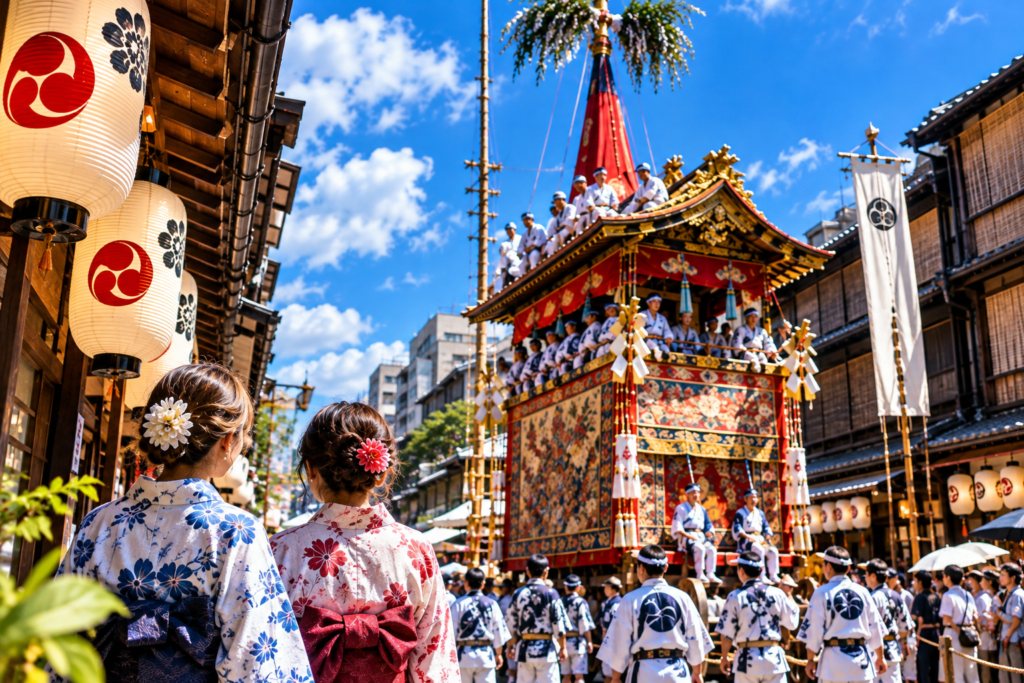
Planning a summer trip to Kyoto, Japan?
Kyoto is one of Japan’s most beautiful destinations, famous for its historic temples, traditional wooden streets, peaceful gardens, and fascinating cultural traditions.
However, there’s one thing international visitors should know before traveling to Kyoto in summer.
Kyoto can get extremely hot and humid.
During July and August, temperatures frequently rise above 30°C (86°F), and some days can exceed 35°C (95°F).
Spending hours walking between outdoor attractions can quickly become exhausting.
But that doesn’t mean you have to miss out on Kyoto’s incredible cultural experiences.
In fact, summer is a great opportunity to discover traditional Japanese activities that take place indoors.
Imagine learning to prepare matcha during a Japanese tea ceremony.
Creating your own calligraphy artwork.
Making beautiful Japanese sweets inspired by summer flowers and flowing water.
Or discovering Kyoto’s authentic maiko culture.
These experiences allow you to explore Japanese traditions while reducing the amount of time you spend sightseeing in the summer heat.
So, what are the best indoor activities in Kyoto in summer?
Where can international visitors experience Japanese culture?
Are there activities suitable for couples, families, and solo travelers?
And how can you plan a Kyoto sightseeing itinerary that avoids the hottest part of the day?
In this guide, we’ll introduce eight of the best Kyoto summer indoor activities, along with practical heat-safety tips, summer clothing advice, and a relaxing half-day itinerary in Gion.
Whether you’re visiting Kyoto in June, July, August, or early September, you’ll find plenty of ways to experience Japanese culture.
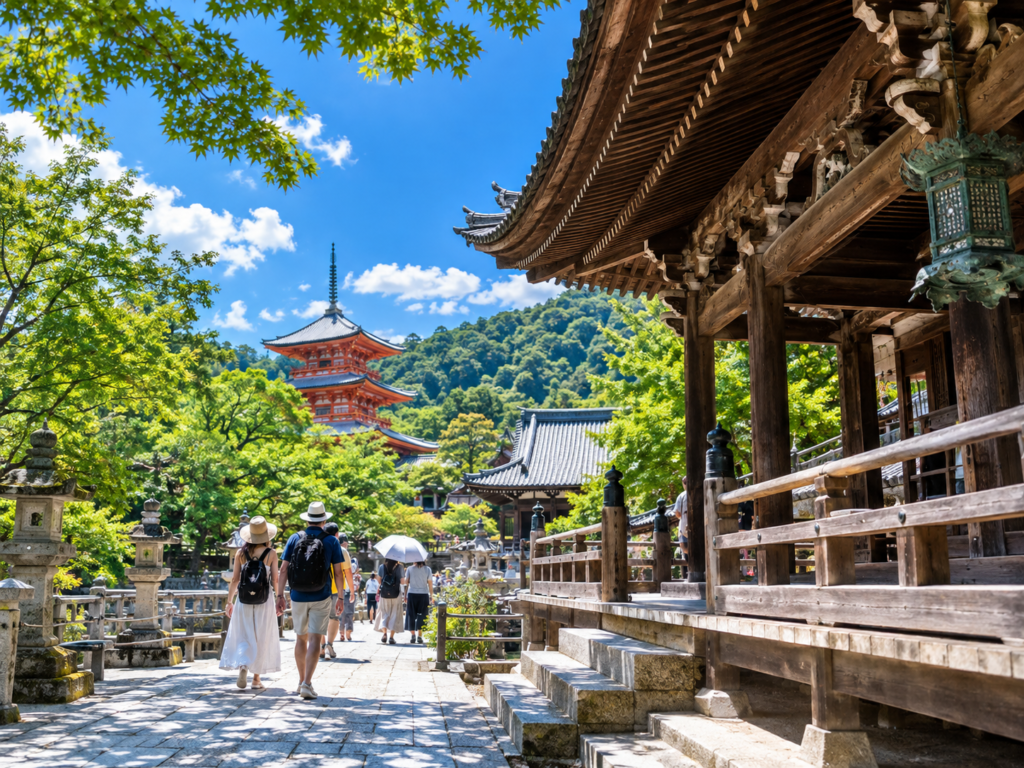
How Hot Is Kyoto in Summer? Why Indoor Activities Are a Great Choice
Kyoto’s summer generally lasts from June through August, although hot weather can continue well into September.
Because Kyoto is located in a basin surrounded by mountains, the city can experience particularly uncomfortable heat and humidity.
July and August are usually the hottest months.
On some summer days, temperatures exceed 35°C (95°F).
For travelers visiting from countries with milder summers, Kyoto’s combination of heat and humidity may feel especially intense.
Why Summer Sightseeing in Kyoto Can Be Challenging
Kyoto has many famous outdoor attractions, including:
Kiyomizu-dera Temple.
Fushimi Inari Taisha.
Arashiyama Bamboo Grove.
The historic streets of Gion and Higashiyama.
These destinations are absolutely worth visiting.
However, exploring them for several hours during the hottest part of the day can be physically demanding.
Long walks, crowded streets, direct sunlight, and limited shade can increase the risk of heat-related illness.
That’s why it’s important to plan your sightseeing schedule carefully.
The Best Way to Explore Kyoto in Summer
A practical approach is to divide your day into three parts.
Morning: Explore outdoor attractions
Visit temples, shrines, and historic neighborhoods earlier in the day, when temperatures may be lower.
Midday and early afternoon: Enjoy indoor cultural experiences
Take a break from walking outside by participating in a tea ceremony, calligraphy workshop, or another indoor activity.
Late afternoon and evening: Enjoy food and relaxed sightseeing
Depending on the weather, spend time at a café, enjoy dinner, or explore Kyoto when conditions become more comfortable.
Remember that summer evenings can still be hot and humid.
Always check the actual weather and heat conditions rather than assuming that a particular time of day will be safe.
Are All Indoor Activities in Kyoto Air-Conditioned?
Not necessarily.
While museums, modern cultural facilities, and many restaurants have air conditioning, some traditional Japanese buildings may not.
Historic wooden townhouses and traditional workshops can sometimes feel warm during summer.
If staying cool is a priority, confirm whether the venue has air conditioning before booking.
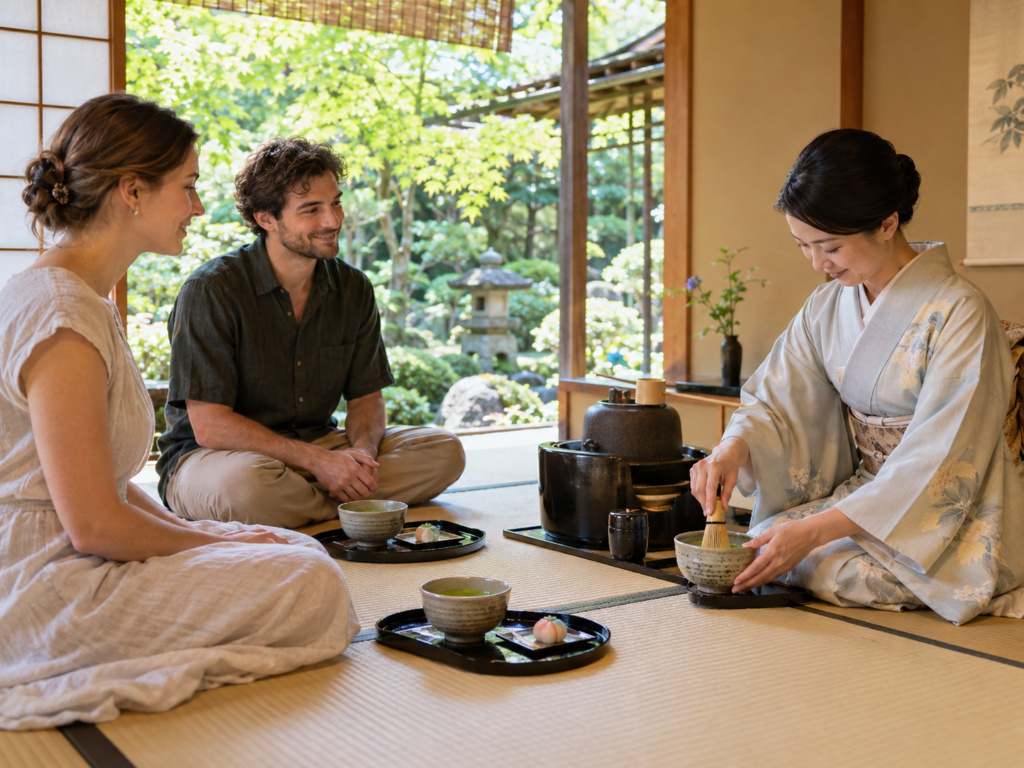
8 Best Kyoto Summer Indoor Activities for International Travelers
Looking for things to do in Kyoto when it’s hot outside?
Here are eight cultural experiences worth considering.
| Experience | What You’ll Do | Why It’s Great for Summer |
| 1. Japanese tea ceremony | Prepare matcha and enjoy wagashi | Discover Japanese hospitality indoors |
| 2. Summer wagashi making | Create seasonal Japanese sweets | Explore Japanese summer aesthetics |
| 3. Japanese calligraphy | Write kanji with brush and ink | Enjoy a focused creative activity |
| 4. Japanese fan making | Decorate folding fans or traditional fans | Make a practical summer souvenir |
| 5. Kyoto textile dyeing | Create patterns and colors on fabric | Discover Kyoto’s traditional craftsmanship |
| 6. Japanese pottery | Make or decorate ceramic objects | Create a handmade travel souvenir |
| 7. Maiko cultural experience | Learn about Kyoto’s traditional performing arts | Experience an important Gion tradition |
| 8. Museums and art galleries | Explore Japanese history and art | Enjoy indoor sightseeing, often with air conditioning |
Program availability, air conditioning, English-language support, prices, and participation requirements vary by venue.
Let’s take a closer look at each experience.
1. Japanese Tea Ceremony: Discover Traditional Matcha Culture Indoors
One of the most memorable cultural activities in Kyoto is participating in a traditional Japanese tea ceremony.
Known as chanoyu or sado, Japanese tea ceremony is a cultural practice centered on preparing and serving matcha.
However, it is much more than simply drinking green tea.
Japanese tea ceremony brings together hospitality, seasonal aesthetics, beautiful utensils, and carefully considered movements.
For international visitors, it offers an opportunity to experience an important Japanese tradition firsthand.
What Makes a Summer Tea Ceremony Special?
Seasonality is an important part of Japanese tea culture.
Traditional tea rooms may feature flowers, utensils, decorations, and sweets that reflect the time of year.
During summer, certain colors, materials, and decorative motifs are used to suggest coolness.
For example, a tea bowl may feature a refreshing design inspired by water or nature.
Seasonal flowers and Japanese sweets may also reflect summer.
These details introduce visitors to a fascinating Japanese aesthetic: creating a sense of coolness through visual and cultural expression.
The specific arrangements depend on the venue and tea tradition.
What Happens During a Japanese Tea Ceremony?
A beginner-friendly tea ceremony may include:
- Learning about the history and philosophy of Japanese tea culture
- Watching the host demonstrate traditional matcha preparation
- Discovering the meaning of tea utensils
- Learning basic tea ceremony etiquette
- Enjoying seasonal Japanese sweets called wagashi
- Preparing matcha using a bamboo whisk called a chasen
Some programs include hands-on matcha preparation, while others focus mainly on observing the host.
Check the program description before booking.
Why Is Tea Ceremony a Great Summer Activity?
Tea ceremony gives you a chance to slow down and focus on Japanese culture.
Instead of spending the entire afternoon walking between tourist attractions, you can take time to appreciate the atmosphere of a traditional tea room.
The aroma of matcha.
The beauty of seasonal sweets.
The texture of a handcrafted ceramic bowl.
The graceful movements of the host.
These details create an experience that feels different from ordinary sightseeing.
Can Foreigners Join a Japanese Tea Ceremony?
Yes.
Kyoto offers beginner-friendly tea ceremony experiences for international visitors.
You don’t need previous knowledge of Japanese etiquette to participate in an introductory workshop.
However, check whether English-language guidance is available.
Can You Wear Kimono During a Summer Tea Ceremony?
Some tea ceremony experiences include traditional kimono dressing.
Wearing kimono can add another cultural dimension to the experience.
However, kimono can feel warm in summer, depending on the fabric, room temperature, and clothing layers.
If you’re concerned about the heat, ask the provider about the clothing options and indoor climate.
Best for: First-time visitors, couples, solo travelers, and visitors interested in Japanese culture.
Explore a Traditional Japanese Tea Ceremony in Gion, Kyoto
2. Summer Wagashi Making: Create Traditional Japanese Sweets Inspired by the Season
Japanese sweets, known as wagashi, are an important part of Japan’s traditional food culture.
Kyoto has a particularly rich history of traditional confectionery, much of which is closely connected to tea ceremony.
Many wagashi are inspired by Japan’s changing seasons.
Cherry blossoms in spring.
Autumn leaves in fall.
Snow and plum blossoms in winter.
And refreshing images of water, greenery, and flowers in summer.
What Are Traditional Japanese Summer Sweets Like?
Summer wagashi often express a sense of coolness through their appearance.
Some designs are inspired by:
Flowing Water
Transparent or light-colored ingredients can suggest rivers, streams, and refreshing water.
Morning Glories
Known as asagao in Japanese, morning glories are familiar summer flowers.
Fresh Green Maple Leaves
Green maple leaves, or aomomiji, represent the beauty of Kyoto’s summer scenery.
Goldfish
Goldfish are a popular summer motif in Japanese decorative arts and sweets.
These designs reflect the importance of seasonality in Japanese culture.
What Happens During a Wagashi-Making Workshop?
Depending on the workshop, participants may learn how to shape and decorate traditional sweets using ingredients such as sweet bean paste.
Some programs focus on nerikiri, a type of Japanese confection that can be shaped into flowers and other delicate designs.
You might learn how to:
Shape petals and leaves.
Combine different colors.
Use traditional confectionery tools.
Create seasonal patterns.
Finish your own handmade sweets.
Why Try Wagashi Making in Summer?
Wagashi making is a hands-on cultural activity that can be enjoyed indoors.
It combines creativity, food, and Japanese aesthetics.
For couples, making sweets together can be a memorable shared experience.
For families, some workshops provide age-appropriate activities.
For solo travelers, it can be an enjoyable opportunity to focus on making something with your own hands.
Can You Make Summer-Themed Wagashi?
This depends on the workshop.
Not every venue offers transparent summer sweets or specific seasonal designs.
Some workshops use fixed ingredients and designs throughout the year.
If you want to create a particular summer motif, confirm the available designs before making a reservation.
Best for: Families, couples, food lovers, and creative travelers.
3. Japanese Calligraphy: Create Your Own Kanji Artwork
If you enjoy art and creative activities, Japanese calligraphy is another excellent indoor experience.
Japanese calligraphy, known as shodo, is the traditional art of writing characters using a brush and ink.
Unlike ordinary handwriting, calligraphy emphasizes artistic expression.
The pressure of your brush changes the thickness of each stroke.
The speed of your movement affects the appearance of the lines.
Even when two people write the same character, their finished artwork will be different.
Japanese Kanji Inspired by Summer
One enjoyable part of calligraphy is choosing a character based on its meaning.
For summer travelers, some interesting choices include:
夏 — Summer
A simple character that represents the season.
涼 — Coolness
A character associated with refreshing coolness.
風 — Wind
Represents wind or breeze.
和 — Harmony
A character associated with harmony and peace.
旅 — Journey
A meaningful choice for someone traveling through Japan.
Choosing a character connected to your trip can make the experience more personal.
What Happens During a Calligraphy Workshop?
A beginner-friendly workshop may introduce you to:
Traditional Japanese brushes.
Black calligraphy ink.
Japanese paper.
Basic brush techniques.
Kanji meanings and stroke order.
After practicing, you may create a finished piece of artwork.
Why Is Calligraphy Ideal for Summer?
Calligraphy allows you to focus on your own creative project indoors.
It’s a good activity for travelers who want a break from outdoor sightseeing.
Depending on the program, you may be able to take your completed artwork home.
This can become a meaningful souvenir from your Kyoto trip.
Combine Calligraphy with Tea Ceremony
Some Kyoto cultural experiences combine calligraphy and traditional tea ceremony.
You can practice Japanese writing before learning how to prepare matcha.
For travelers with limited time, this offers an opportunity to discover two traditional arts during the same visit.
Best for: Solo travelers, couples, art lovers, and visitors interested in Japanese writing.
4. Japanese Fan Making: Create a Traditional Summer Souvenir
Fans are one of the most recognizable accessories associated with Japanese summer.
Two traditional types are particularly well known.
Sensu — Folding Fan
A folding fan that can be opened and closed for convenient carrying.
Uchiwa — Traditional Flat Fan
A non-folding fan commonly used to create a refreshing breeze.
Both have long been used in Japanese daily life and cultural traditions.
Discover Kyoto’s Traditional Folding Fans
Kyoto is associated with Kyo-sensu, a traditional style of Japanese folding fan.
These fans are made using carefully selected materials and specialized craftsmanship.
Their decorations may include flowers, landscapes, and traditional Japanese patterns.
What Can You Do During a Fan-Making Workshop?
Depending on the workshop, you may be able to:
Choose a fan design.
Paint a traditional pattern.
Decorate a fan surface.
Learn about Japanese fan craftsmanship.
Create a personal souvenir.
Some experiences focus on decorating prepared fan surfaces rather than constructing a complete folding fan from raw materials.
Why Is Fan Making Perfect for Summer?
A fan is both a cultural object and a practical summer accessory.
Creating your own fan can be a memorable way to learn about Japanese craftsmanship.
You may even be able to use your finished fan while exploring Kyoto.
However, remember that a fan alone is not sufficient protection against extreme summer heat.
Best for: Families, craft enthusiasts, and travelers looking for a traditional Japanese souvenir.
5. Kyoto Textile Dyeing: Explore Traditional Japanese Colors and Patterns
Kyoto is famous for its traditional textile craftsmanship.
One of its most recognizable traditions is Kyo-yuzen, a decorative dyeing technique associated with beautifully patterned kimono.
Traditional Japanese textile designs often feature flowers, plants, seasonal landscapes, and other nature-inspired motifs.
Some Kyoto workshops allow visitors to learn about these traditions through hands-on activities.
What Happens During a Textile Dyeing Workshop?
Depending on the program, you may be able to decorate a fabric item such as a handkerchief or small accessory.
You might learn about traditional patterns, select colors, or apply designs using specialized tools.
These workshops provide an introduction to Kyoto’s textile culture.
Why Try Textile Dyeing in Summer?
Textile workshops can be a convenient indoor activity during the summer months.
They allow you to explore traditional Japanese craftsmanship while focusing on a creative project.
If the finished item can be taken home, it becomes a personal travel souvenir.
What Should You Check Before Booking?
Some dyeing activities involve materials that may stain clothing.
Ask whether aprons are provided and whether protective clothing is recommended.
Also, because traditional workshops sometimes take place in older buildings, confirm whether the workspace has air conditioning if you’re sensitive to heat.
Best for: Creative travelers, craft enthusiasts, and visitors interested in Japanese clothing and textiles.
6. Japanese Pottery: Make a Handmade Kyoto Souvenir
Kyoto has a long history of ceramic craftsmanship.
One of its best-known traditions is Kiyomizu-yaki, associated with Kyoto’s historic pottery-making areas.
Pottery workshops give visitors an opportunity to create or decorate Japanese ceramic objects.
What Can You Make During a Pottery Workshop?
Depending on the studio, you may be able to make:
Tea cups.
Small plates.
Rice bowls.
Decorative ceramic objects.
Some workshops focus on shaping clay.
Others offer painting or decorative experiences using prepared ceramic pieces.
Why Is Pottery a Good Indoor Activity?
Pottery offers a hands-on experience that allows you to focus on creating something.
For couples, making matching cups or bowls can be a memorable activity.
For solo travelers, it can be a relaxing creative experience.
However, pottery workshops are not necessarily cool.
Some facilities contain kilns or equipment that generate heat.
If avoiding hot temperatures is important, check whether the actual workshop area is air-conditioned.
Important Tips for International Visitors
Many ceramic pieces require firing before they are ready.
This means your finished work may not be available for collection on the same day.
Before booking, check:
- How long production takes
- Whether international shipping is available
- Whether shipping fees are included
- Whether the studio offers same-day alternatives
These details are particularly important if you’re only visiting Kyoto for a few days.
Best for: Couples, solo travelers, and visitors who enjoy making lasting souvenirs.
7. Authentic Maiko Cultural Experience: Discover Kyoto’s Traditional Arts
Kyoto is famous for the traditions of maiko and geiko.
A maiko is an apprentice geiko, a professional entertainer in Kyoto’s traditional entertainment districts.
International visitors may be more familiar with the word geisha.
In Kyoto, however, geiko is the local term commonly used for a fully trained professional, while maiko refers to an apprentice.
Maiko study traditional Japanese performing arts, including dance and music, as well as etiquette and hospitality.
Their beautiful kimono, elaborate hairstyles, and seasonal hair ornaments are recognizable symbols of Kyoto.
What Makes Maiko Culture Interesting in Summer?
Traditional Japanese culture places great importance on the seasons.
The clothing and decorative hair ornaments worn by maiko reflect seasonal customs.
During summer, designs may include flowers, plants, and patterns associated with the warmer months.
Learning about these details offers visitors a deeper appreciation of Kyoto’s cultural heritage.
Can Tourists Meet a Real Maiko?
You may occasionally see maiko or geiko walking through Gion.
However, they are often traveling to professional engagements.
You should never follow them, block their path, touch them, or photograph them where photography is restricted.
If you want to learn about maiko culture, an organized cultural program is a more respectful and reliable option.
Authentic Maiko Experience vs. Maiko Makeover
These are two different activities.
Maiko makeover experience
Visitors dress in maiko-inspired clothing and makeup for photographs.
Authentic maiko cultural experience
Visitors encounter a real, professionally active maiko through an organized program.
Both can be enjoyable, but they serve different purposes.
Combine Maiko Culture with Japanese Tea Ceremony
Some special programs in Gion combine a real maiko with traditional Japanese tea ceremony.
Guests can observe traditional tea preparation and learn about Kyoto’s entertainment culture.
This offers an opportunity to discover two different Japanese traditions during the same visit.
Best for: Couples, honeymooners, cultural enthusiasts, and travelers interested in Kyoto’s traditional performing arts.
Discover an Authentic Maiko Tea Ceremony in Gion
8. Museums and Art Galleries: Explore Kyoto’s Culture in Air-Conditioned Spaces
If you’re looking for indoor sightseeing options, Kyoto’s museums and art galleries are another excellent choice.
The city has a rich artistic and cultural heritage.
Museums allow visitors to explore Japanese history, craftsmanship, traditional arts, and contemporary culture.
What Can You Discover in Kyoto’s Museums?
Depending on the venue, exhibitions may focus on:
Traditional Japanese Crafts
Learn about ceramics, textiles, and Kyoto’s artistic heritage.
Japanese Art
Discover paintings, sculptures, and decorative works.
Manga and Popular Culture
Explore another important aspect of Japanese creative culture.
Kyoto’s History
Learn about Kyoto’s development as Japan’s historic capital.
Why Are Museums Convenient in Summer?
Many museums offer air-conditioned exhibition areas.
They can provide a more comfortable environment for visitors who want to escape the outdoor heat.
Museums also allow you to explore at your own pace.
However, air conditioning and access conditions vary by building and exhibition area.
Do You Need to Book in Advance?
Some museums allow visitors to buy tickets on arrival.
Others require advance reservations or timed-entry tickets for special exhibitions.
Check opening hours, closing dates, and ticket requirements before visiting.
Best for: Solo travelers, families, history lovers, and visitors seeking flexible indoor sightseeing.
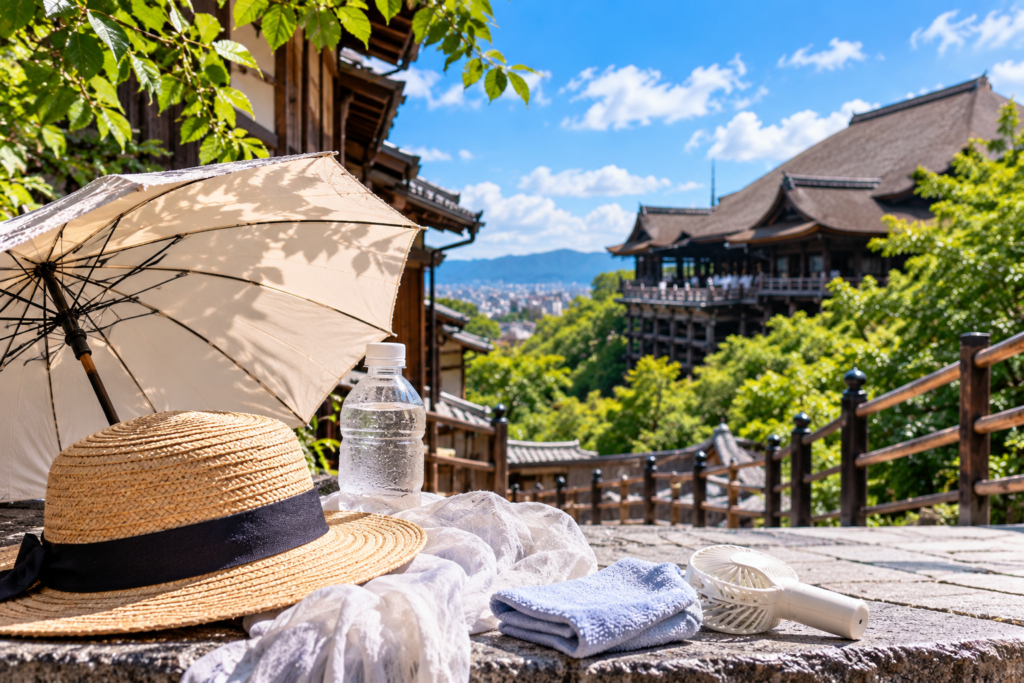
Essential Kyoto Summer Heat Safety Tips for International Travelers
Summer in Kyoto can be enjoyable, but heat safety should be a priority.
Visitors who aren’t accustomed to Japan’s humid summer climate may need extra time to adjust.
Here are some practical precautions.
1. Drink Water Regularly
Don’t wait until you’re extremely thirsty.
Drink water regularly throughout the day.
If you’re sweating heavily for an extended period, replacing lost electrolytes may also be necessary.
2. Use Sun Protection
A sun hat, umbrella, and appropriate sun protection can help reduce direct sun exposure.
Sun umbrellas are commonly used in Japan during summer.
They can be particularly useful when walking between outdoor attractions.
3. Wear Breathable Clothing
Choose lightweight, comfortable clothing suitable for warm and humid weather.
However, some traditional cultural venues may have dress expectations.
Check the venue’s guidance if you’re unsure.
4. Avoid Long Outdoor Walks During Extreme Heat
When temperatures are high, reduce your time outdoors.
Plan indoor activities, meals, and rest breaks throughout the day.
Remember that early mornings and evenings are not always cool enough for prolonged activity.
5. Check Japan’s Heatstroke Alerts
Japan issues official heatstroke-related alerts when heat risks are elevated.
You can check local weather conditions and the Wet Bulb Globe Temperature, or WBGT, which is used to assess heat stress.
If you experience dizziness, headache, nausea, or unusual weakness, stop activity and move somewhere cool.
Seek medical assistance when necessary.
Severe symptoms such as confusion or loss of consciousness require emergency care.
Important: A traditional indoor workshop may still be hot. Choose a genuinely cool environment when the weather poses a health risk.
Can You Wear Kimono in Kyoto During Summer?
Kimono rental is one of Kyoto’s most popular cultural experiences.
However, traditional clothing can feel warm during the summer months.
Kimono vs. Yukata: What’s the Difference?
Kimono is a broad category of traditional Japanese clothing.
Different materials and styles are worn throughout the year.
Yukata is a lighter, casual garment commonly associated with Japanese summer festivals and seasonal events.
Tourist rental shops may offer yukata during summer.
Tips for Wearing Traditional Clothing in Hot Weather
Consider the following:
Choose clothing suitable for the season.
Ask about breathable fabric options.
Avoid long walks in direct sunlight.
Bring drinking water.
Take regular rest breaks.
Prioritize your health if temperatures become uncomfortable.
Combine Kimono with an Indoor Cultural Experience
Some Kyoto tea ceremony programs include kimono dressing.
This can allow you to experience Japanese traditional clothing and tea culture without spending the entire day walking outdoors.
However, indoor temperatures and kimono options vary.
Check the program details before booking.
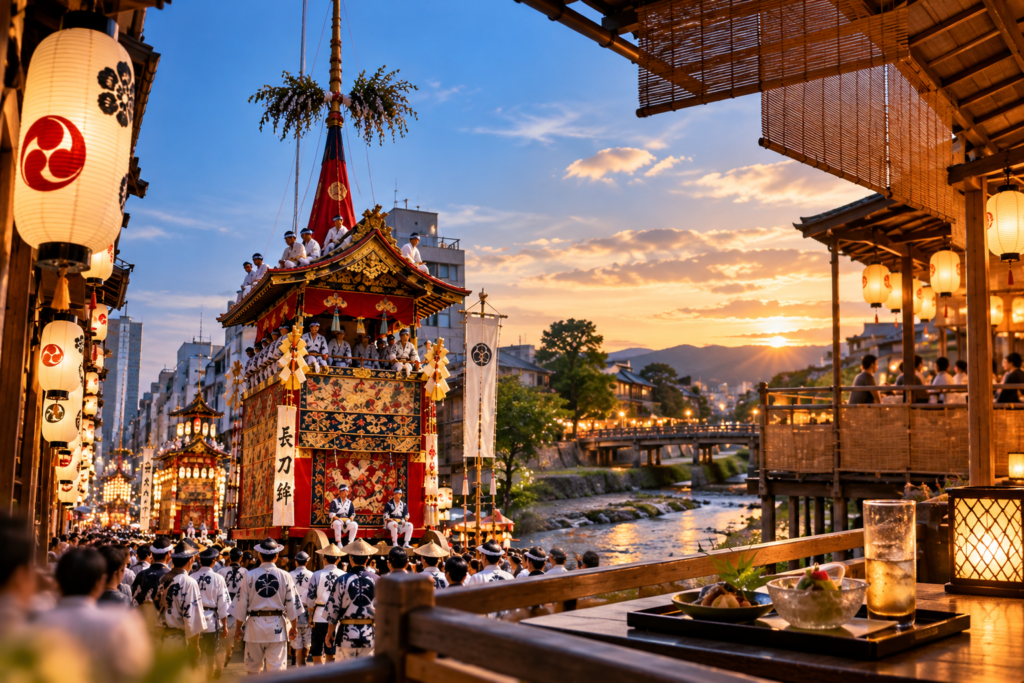
Kyoto’s Summer Traditions: Gion Matsuri and Riverside Dining
Summer in Kyoto isn’t only about indoor activities.
It’s also an exciting season for traditional festivals and cultural customs.
Two particularly famous examples are Gion Matsuri and riverside dining.
Gion Matsuri: Kyoto’s Famous July Festival
Gion Matsuri is one of Japan’s most famous traditional festivals.
Associated with Yasaka Shrine, it takes place throughout July.
The festival includes traditional religious ceremonies, beautifully decorated floats, music, and processions.
Two major float processions are traditionally held on:
July 17 — Saki Matsuri (Early Festival)
July 24 — Ato Matsuri (Latter Festival)
These events introduce visitors to a remarkable part of Kyoto’s living cultural heritage.
However, the processions and many associated activities take place outdoors.
Summer temperatures and crowds can make festival sightseeing physically demanding.
If you’re attending Gion Matsuri, schedule plenty of rest breaks and consider combining festival sightseeing with an indoor cultural experience.
Check official schedules for your travel year.
Kyoto’s Riverside Dining: Noryo-yuka and Kawadoko
Kyoto also has a tradition of enjoying meals in riverside settings during warmer months.
Along the Kamo River, seasonal dining platforms called noryo-yuka are a famous summer feature.
The Kibune area is also known for kawadoko, where restaurants offer dining near flowing water.
These experiences combine Japanese cuisine with seasonal atmosphere.
However, riverside dining is generally outdoors, not an air-conditioned indoor activity.
On extremely hot days, consider choosing an indoor restaurant instead.
Opening periods, weather policies, and reservation requirements differ by restaurant.
5 Things to Check Before Booking Indoor Activities in Kyoto in Summer
Not every indoor cultural experience is equally comfortable during hot weather.
Before booking, consider these five factors.
1. Check Whether the Venue Has Air Conditioning
Some cultural experiences take place in historic buildings.
These venues may not offer the same climate control as modern facilities.
If heat is a concern, ask about air conditioning.
2. Consider the Distance from Public Transportation
Even a short walk can feel difficult on a very hot day.
Check the route from the nearest station or bus stop.
Allow time for water breaks and rest.
3. Look for English-Friendly Programs
If you don’t speak Japanese, choose an experience that offers explanations in a language you understand.
Learning the meaning behind traditional customs can make the activity more enjoyable.
4. Review Age and Participation Requirements
Some activities have minimum age requirements.
Tea ceremony and pottery workshops may involve hot water, delicate utensils, or other equipment requiring supervision.
Families should confirm whether children can participate.
5. Allow Extra Time Between Activities
Summer travel can be tiring.
Avoid scheduling activities so closely together that you have no time to rest.
A relaxed itinerary is often more enjoyable than a packed schedule.
A Half-Day Summer Itinerary in Gion, Kyoto
Gion is one of Kyoto’s most famous historic neighborhoods.
It’s also a convenient area for combining sightseeing with traditional cultural experiences.
If you’re visiting during summer, consider limiting unnecessary travel and spending more time in one neighborhood.
Here’s a suggested half-day itinerary.
9:00 AM — Explore Historic Gion
Begin your day with a short walk through Gion.
Admire traditional wooden buildings, narrow streets, and Kyoto-style townhouses.
Morning can be more comfortable than midday, but temperatures may still be high.
Keep your walk short and adjust your plans based on actual weather conditions.
10:00 AM — Take a Break Indoors
Visit an open café or another suitable indoor venue.
Enjoy a cold drink and take time to rest.
This is also a good opportunity to review your reservations and afternoon plans.
11:30 AM — Enjoy Lunch in Gion
Choose a restaurant in the Gion area.
You might try traditional Japanese food or a seasonal Kyoto dish.
On a particularly hot day, selecting an air-conditioned restaurant can make lunchtime more comfortable.
1:00 PM — Experience a Japanese Tea Ceremony
Spend the early afternoon discovering Japanese tea culture.
Learn about tea ceremony history and etiquette.
Watch the host prepare matcha.
Enjoy traditional wagashi.
And, if included in the experience, use a bamboo whisk to prepare your own matcha.
This is an opportunity to experience Kyoto’s traditions while avoiding another long outdoor sightseeing session.
2:30–3:00 PM — Relax at a Café or Indoor Attraction
After your cultural experience, take another break.
You could visit a nearby café, browse traditional crafts, or explore another indoor attraction.
If temperatures remain high, avoid returning immediately to strenuous outdoor activities.
This is a suggested itinerary. Adjust the schedule according to operating hours, reservation availability, travel times, and current weather conditions.
Experience Traditional Japanese Culture at THE TEA CEREMONY GION Orizuruya
Located in Kyoto’s historic Gion district, THE TEA CEREMONY GION Orizuruya offers traditional cultural experiences for visitors interested in Japanese tea ceremony and other arts.
The venue is approximately four minutes on foot from Gion-Shijo Station and seven minutes from Kyoto-Kawaramachi Station.
Its central location makes it convenient to combine a cultural activity with sightseeing in Gion.
Traditional Japanese Tea Ceremony Experience
The standard tea ceremony experience introduces visitors to the traditions of Japanese matcha preparation.
Participants can learn about tea culture, observe the host preparing matcha, and enjoy seasonal Kyoto wagashi.
Guests also have the opportunity to prepare their own matcha using a bamboo whisk.
The course includes kimono dressing.
Duration: Approximately 90 minutes
Listed price: ¥7,700 per person
Explore the Traditional Japanese Tea Ceremony
Japanese Calligraphy and Tea Ceremony Experience
For travelers who want to explore more than one Japanese tradition, Orizuruya also offers a combined calligraphy and tea ceremony experience.
Participants can practice traditional Japanese writing with brush and ink and discover the art of matcha preparation during the same visit.
Duration: Approximately 120 minutes
Listed price: ¥13,200 per person
Discover the Calligraphy and Tea Ceremony Experience
Authentic Maiko Tea Ceremony
For visitors interested in Kyoto’s traditional entertainment culture, Orizuruya offers a special Maiko Tea Ceremony Experience.
Guests can observe a real maiko preparing tea and learn about traditional Japanese hospitality.
The program also includes an opportunity to prepare matcha.
This can be a memorable option for couples, honeymooners, and travelers interested in Kyoto’s unique cultural heritage.
Duration: Approximately 90 minutes
Listed price: ¥16,500 per person, including tax
Explore the Authentic Maiko Tea Ceremony
Important Information for Summer Visitors
Before booking, confirm your preferred date and session time.
If you are concerned about summer heat, ask about the venue’s indoor temperature and clothing arrangements.
Also check language support, group requirements, children’s participation conditions, and any other needs.
Prices and durations reflect the official information checked in October 2026 and may change. Confirm current details before booking.
Frequently Asked Questions About Kyoto Summer Indoor Activities
How hot does Kyoto get in summer?
Kyoto is typically hot and humid in summer. Temperatures can exceed 35°C (95°F), particularly during July and August. Travelers should prepare for the heat and plan regular indoor breaks.
What are the best indoor activities in Kyoto in summer?
Popular options include Japanese tea ceremony, calligraphy, wagashi making, fan decorating, textile dyeing, pottery, maiko cultural experiences, and museums.
Are Kyoto’s indoor cultural experiences air-conditioned?
Some are, but not all. Traditional Japanese buildings may have limited air conditioning. Check directly with the venue before booking.
Can foreigners participate in a Kyoto tea ceremony?
Yes. Kyoto has beginner-friendly tea ceremony experiences designed for international visitors. Check language support and participation conditions before booking.
What are the best Kyoto summer activities for couples?
Couples may enjoy tea ceremony, pottery, wagashi making, calligraphy, and traditional crafts. These activities provide opportunities to learn or create something together.
What indoor activities in Kyoto are suitable for families?
Families can consider age-appropriate wagashi workshops, fan decorating, traditional crafts, museums, and tea ceremony experiences that accept children.
Always confirm age restrictions and supervision requirements.
What can solo travelers do indoors in Kyoto?
Solo travelers can explore museums, participate in calligraphy workshops, try tea ceremony, or join traditional craft experiences.
Check whether one-person reservations are permitted.
Can you wear kimono in Kyoto during summer?
Yes, but traditional clothing may feel hot. Consider summer-appropriate garments, shorter walking routes, and indoor activities.
Is Gion a good place to visit during summer?
Yes. Gion offers traditional streets, restaurants, cultural experiences, and convenient transportation access.
However, visitors should avoid excessive outdoor walking during extreme heat.
Can I book a Kyoto cultural experience on the same day?
Some activities may accept same-day reservations, depending on availability.
Advance booking is recommended for popular experiences.
When is Gion Matsuri held?
Gion Matsuri takes place throughout July. Its major float processions are traditionally held on July 17 and July 24.
Check the official schedule for your travel year.
Is Kyoto’s riverside dining a good way to escape the heat?
Riverside dining can be atmospheric, but it is generally outdoors and may still be hot or humid.
If you need a reliably cool environment, choose an air-conditioned restaurant.
What is the best time of day to explore Kyoto in summer?
Earlier mornings may be more comfortable for outdoor sightseeing, while midday and early afternoon are often better suited to indoor activities.
Always prioritize current weather and heat-risk information.
What should I do if the summer heat becomes overwhelming?
Stop strenuous activity, move to a cool environment, drink fluids if you can do so safely, and seek medical help if symptoms develop.
Severe symptoms require immediate medical attention.
Beat the Summer Heat and Discover Kyoto’s Traditional Culture
Kyoto is an incredible destination throughout the year.
Summer brings beautiful green gardens, traditional festivals, seasonal cuisine, and vibrant cultural celebrations.
However, enjoying Kyoto in summer requires thoughtful planning.
Instead of spending the entire day walking outdoors, consider mixing sightseeing with traditional indoor activities.
Explore a historic neighborhood in the morning.
Enjoy a Japanese lunch.
Learn to prepare matcha during a tea ceremony.
Create your own calligraphy artwork.
Make seasonal Japanese sweets.
Or discover the traditions of Kyoto’s maiko culture.
These experiences can help you appreciate Kyoto beyond its famous temples and shrines.
More importantly, they give you opportunities to participate in Japanese traditions rather than simply observe them.
You don’t have to visit every attraction or fill every hour of your itinerary.
Choose a few activities that genuinely interest you.
Allow time to rest.
Stay hydrated.
And enjoy Kyoto at a pace that suits the summer weather.
Don’t let Kyoto’s summer heat stop you from discovering Japan’s culture. Make your trip memorable with traditional experiences that bring you closer to the heart of Kyoto.