

Best Traditional Japanese Cultural Experiences in Kyoto: Tea Ceremony, Calligraphy, Kimono & More
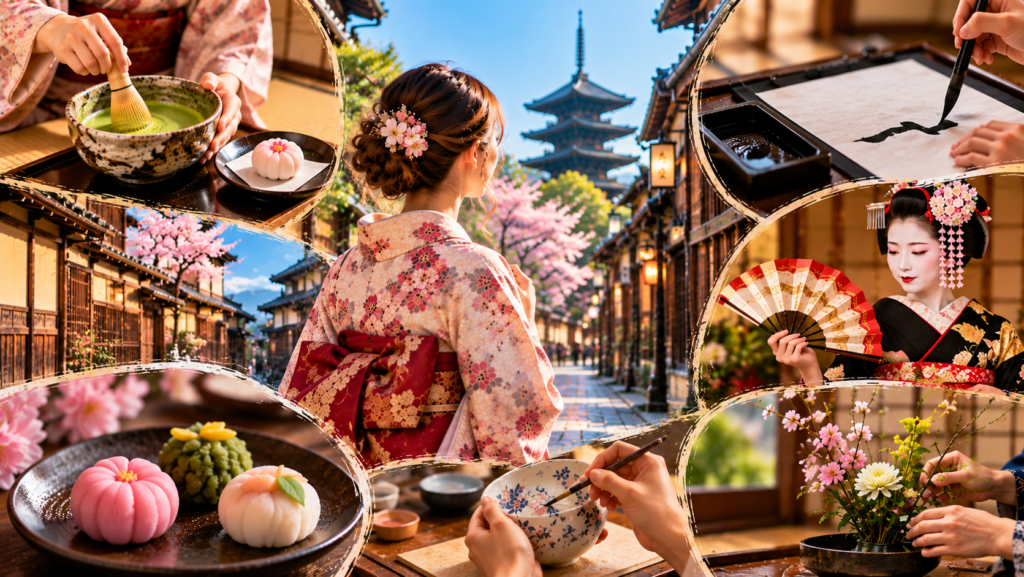
Kyoto is one of the best places in Japan to experience traditional Japanese culture.
Ancient temples, historic shrines, wooden townhouses, and beautiful gardens are everywhere.
But Kyoto offers something even more memorable than sightseeing.
The opportunity to experience Japanese traditions for yourself.
You can prepare matcha during a Japanese tea ceremony.
Write kanji using a traditional calligraphy brush.
Wear a kimono while exploring the historic streets of Gion.
Learn about Kyoto’s maiko culture.
Make seasonal Japanese sweets.
Or create a traditional craft to take home.
These experiences allow you to connect with Japanese culture in ways that simply visiting famous attractions cannot.
But with so many options available, how do you choose?
Which traditional Japanese experiences are best for first-time visitors?
How much time should you allow?
And which activities can you combine during a short trip to Kyoto?
In this guide, we compare seven of the best traditional Japanese cultural experiences in Kyoto, explain what each involves, and help you choose the right activities for your trip.
Why Kyoto Is One of the Best Places to Experience Japanese Culture
Kyoto served as Japan’s capital for more than a thousand years.
Over the centuries, it became an important center of religion, art, craftsmanship, architecture, and traditional Japanese aesthetics.
Many cultural traditions that developed or flourished in Kyoto are still practiced today.
Tea ceremony.
Calligraphy.
Ikebana.
Traditional crafts.
Kimono culture.
Maiko and geiko entertainment.
These are not simply historical activities recreated for tourists.
They are living traditions, passed down through generations of practitioners, teachers, artists, and craftspeople.
That is what makes Kyoto particularly special.
You can visit a historic temple in the morning and participate in a traditional Japanese art in the afternoon.
Instead of only learning about Japanese culture, you can become part of it.
Best Traditional Japanese Experiences in Kyoto: Quick Comparison
Not sure which cultural activity to choose?
Here is a quick comparison to help you plan.
| Experience | What You’ll Do | Typical Duration | Best For |
| Japanese tea ceremony | Prepare matcha and enjoy wagashi | 45–90 minutes | First-time visitors |
| Japanese calligraphy | Write kanji using brush and ink | 45–90 minutes | Creative travelers |
| Kimono experience | Wear kimono and explore Kyoto | 2–4+ hours | Couples and photography lovers |
| Maiko cultural experience | Learn about authentic Kyoto entertainment culture | 60–120 minutes | Visitors seeking something unique to Kyoto |
| Wagashi making | Create traditional Japanese sweets | 45–90 minutes | Food lovers and families |
| Traditional crafts | Try pottery, textiles, or other crafts | 60–120 minutes | Hands-on learners |
| Ikebana | Create a Japanese flower arrangement | 60–90 minutes | Art and nature lovers |
Durations are approximate. Actual programs vary depending on the venue and experience.
Let’s explore what makes each experience special.
1. Japanese Tea Ceremony: Experience the Art of Matcha
<text preserveWhitespace>{“”}</text>
One of the most iconic traditional Japanese experiences in Kyoto is the Japanese tea ceremony, also known as chanoyu or sado.
Tea ceremony is the practice of preparing and serving matcha with care and attention.
But it is much more than simply drinking green tea.
The experience brings together Japanese hospitality, seasonal aesthetics, traditional utensils, architecture, and carefully considered movements.
What happens during a Japanese tea ceremony?
A beginner-friendly tea ceremony experience may include:
- Learning about the history and philosophy of Japanese tea culture
- Watching the host demonstrate traditional tea preparation
- Discovering the meaning and use of tea utensils
- Enjoying seasonal Japanese sweets called wagashi
- Learning basic tea ceremony etiquette
- Preparing matcha yourself with a bamboo whisk
- Drinking the matcha you have prepared
The exact activities depend on the venue.
Some experiences focus on watching a formal demonstration, while others allow guests to prepare their own tea.
For first-time visitors, a hands-on experience is particularly memorable.
Why is tea ceremony a good choice for first-time visitors?
Tea ceremony introduces several aspects of Japanese culture within a single activity.
Tatami.
Ceramics.
Calligraphy.
Bamboo utensils.
Seasonal flowers.
Japanese sweets.
Matcha.
Traditional hospitality.
Even if you have never studied Japanese culture before, you can experience these elements together in a traditional tea room.
And you do not need to know tea ceremony etiquette in advance.
Beginner-friendly experiences guide you through the process.
Best for: First-time visitors, couples, culture lovers, and travelers with limited time.
Suggested time: 45–90 minutes.
Explore a Japanese Tea Ceremony in Gion, Kyoto
2. Japanese Calligraphy: Create Art with Brush and Ink
Japanese calligraphy, known as shodo, is another fascinating cultural activity to try in Kyoto.
Unlike ordinary handwriting, Japanese calligraphy treats the shape, movement, and expression of written characters as an art form.
The thickness of a line changes depending on the pressure of the brush.
The speed of a stroke affects its appearance.
Even the empty space around the characters contributes to the finished work.
What do you do during a calligraphy experience?
A beginner-friendly Japanese calligraphy workshop typically introduces you to:
Traditional brushes
Black ink
Japanese calligraphy paper
Basic brush techniques
The structure of Japanese characters
You then practice writing a chosen character or phrase before creating your final piece.
Many international visitors enjoy choosing kanji based on their meanings.
Popular examples include:
愛 — Love
夢 — Dream
心 — Heart / Mind
和 — Harmony
幸 — Happiness
Why try Japanese calligraphy in Kyoto?
One of the best things about calligraphy is that it creates a personal connection with Japanese writing.
You are not simply looking at kanji on a sign.
You are learning how the characters are formed and expressing them through your own movements.
Depending on the workshop, you may also be able to take your completed artwork home.
This makes calligraphy an excellent choice for travelers who want a meaningful souvenir.
Best for: Creative travelers, families, Japanese language enthusiasts, and anyone who enjoys hands-on activities.
Suggested time: 45–90 minutes.
3. Kimono Experience: Explore Kyoto in Traditional Japanese Clothing
Wearing a kimono is one of the most popular cultural activities among visitors to Kyoto.
Kimono rental shops allow travelers to experience traditional Japanese clothing while exploring the city’s historic neighborhoods.
Gion and Higashiyama are especially popular areas because their wooden buildings, temples, shrines, and narrow streets create a beautiful setting.
What does a kimono experience include?
Depending on the rental shop and package, a kimono experience may include:
Choosing a kimono
Selecting an obi belt
Professional dressing assistance
Traditional footwear
Optional hairstyling
Time to explore Kyoto
Some visitors choose kimono primarily for photography.
Others enjoy learning about the clothing itself.
The patterns, colors, fabrics, and styles of kimono can reflect different seasons, occasions, and aesthetic traditions.
What should you combine with a kimono experience?
One particularly enjoyable combination is:
Kimono rental → Gion sightseeing → Japanese tea ceremony
You can explore Kyoto’s traditional streets and then enter a tea room to experience another aspect of Japanese culture.
Just remember that kimono dressing takes time.
Walking may also be slower than usual, particularly if you are wearing traditional footwear.
Best for: Couples, friends, photography enthusiasts, and travelers who want an immersive Kyoto experience.
Suggested time: 2–4 hours or longer, including dressing and sightseeing.
4. Maiko Cultural Experience: Discover a Tradition Unique to Kyoto
For travelers interested in Kyoto’s distinctive cultural heritage, a maiko experience can be especially memorable.
A maiko is an apprentice geiko in Kyoto’s traditional entertainment districts.
Maiko undergo extensive training in traditional performing arts and hospitality.
Their training can include dance, music, etiquette, and other skills associated with Kyoto’s entertainment culture.
What is the difference between a maiko and a geiko?
A maiko is an apprentice.
A geiko is a fully trained professional entertainer in Kyoto’s traditional entertainment culture.
The distinction involves training, experience, dress, hairstyle, and professional role.
Both are important parts of Kyoto’s living cultural heritage.
Two different types of maiko experiences
When searching for a maiko experience in Kyoto, it is important to understand that the term can refer to two very different activities.
Maiko makeover experience
Visitors wear maiko-inspired clothing and makeup, usually for photography.
Authentic maiko cultural experience
Visitors encounter a real maiko through an organized cultural program.
Both can be enjoyable, but they offer different experiences.
If your goal is to learn about real maiko culture, make sure the program involves an actual maiko rather than only a costume transformation.
Can you combine a maiko experience with tea ceremony?
Yes.
Some Kyoto experiences combine Japanese tea culture with an opportunity to meet a real maiko.
This allows visitors to explore two cultural traditions within a single program.
It can also be a more respectful and reliable way to encounter maiko culture than hoping to see a maiko walking through Gion.
Best for: Visitors interested in Kyoto’s unique traditions, couples, and travelers looking for a special cultural experience.
Suggested time: 60–120 minutes.
Discover a Maiko Tea Ceremony Experience in Kyoto
5. Wagashi Making: Create Traditional Japanese Sweets
Japanese sweets, known as wagashi, are an important part of Japan’s traditional food culture.
In Kyoto, wagashi are closely associated with tea culture and the changing seasons.
Traditional sweets may represent:
Cherry blossoms in spring
Fresh greenery in early summer
Autumn leaves
Winter snow
Seasonal flowers and plants
Their shapes, colors, and ingredients can reflect the time of year.
What happens during a wagashi-making experience?
Depending on the workshop, you may learn how to shape and decorate traditional sweets using specialized ingredients and tools.
The process can involve:
Choosing colors
Shaping the sweet
Creating decorative patterns
Learning about seasonal designs
Enjoying the finished wagashi
Some experiences also include Japanese tea.
Why combine wagashi with matcha?
In Japanese tea ceremony, wagashi is generally eaten before drinking matcha.
The sweetness of the confection creates a pleasant contrast with the tea’s bitterness and umami.
Experiencing both helps visitors understand how Japanese food culture values balance and seasonality.
Best for: Food lovers, families, couples, and travelers interested in Japanese sweets.
Suggested time: 45–90 minutes.
6. Traditional Japanese Crafts: Make Your Own Kyoto Souvenir
Kyoto has a long history of traditional craftsmanship.
Many crafts developed through the city’s connections with the imperial court, temples, shrines, merchants, and traditional arts.
Depending on the workshop, visitors may be able to try activities involving:
Pottery
Textile dyeing
Japanese fans
Bamboo crafts
Traditional paper
Decorative arts
Incense-related crafts
Why choose a traditional craft workshop?
Buying a souvenir is enjoyable.
Making one yourself creates a different kind of memory.
You learn how materials are handled.
You discover the techniques involved.
You understand why traditional crafts require patience and skill.
And you may leave with something that reflects your own experience in Kyoto.
Craft workshops are also useful when the weather is rainy or too hot for long periods of outdoor sightseeing.
Best for: Hands-on learners, creative travelers, families, and visitors who want a personal souvenir.
Suggested time: 60–120 minutes.
7. Ikebana: Discover the Japanese Art of Flower Arrangement
Ikebana is the Japanese art of flower arrangement.
Unlike simply placing flowers in a vase, ikebana emphasizes relationships between flowers, branches, leaves, containers, and surrounding space.
The direction of a branch matters.
The height of a flower matters.
Empty space matters.
Balance and asymmetry can be important elements of the composition.
What happens during an ikebana experience?
A beginner workshop may introduce you to basic design principles before guiding you through your own arrangement.
You learn to consider:
Line
Shape
Balance
Space
Seasonality
The relationship between natural materials
Who should try ikebana?
Ikebana is particularly suitable for travelers interested in art, nature, Japanese aesthetics, and quiet creative activities.
It offers a different perspective on the Japanese appreciation of seasons and natural beauty.
Best for: Art lovers, nature enthusiasts, and travelers interested in Japanese aesthetics.
Suggested time: 60–90 minutes.
Which Japanese Cultural Experience Should You Choose?
There is no single best activity for everyone.
The right choice depends on what you want from your trip.
Best for first-time visitors: Tea Ceremony
If you only have time for one traditional Japanese experience, tea ceremony is an excellent starting point.
It brings together hospitality, traditional architecture, matcha, wagashi, utensils, and seasonal aesthetics.
Best for creative travelers: Calligraphy
If you enjoy making things, calligraphy gives you the opportunity to create a piece of Japanese art yourself.
Best for memorable photographs: Kimono
If you want to explore Kyoto’s historic streets in traditional clothing, kimono rental is a natural choice.
Best for experiencing Kyoto’s unique heritage: Maiko Culture
If you are interested in a tradition particularly associated with Kyoto, consider an authentic cultural experience involving a real maiko.
Best for food lovers: Wagashi and Tea
If food is an important part of your travels, learning about traditional Japanese sweets and matcha is a rewarding option.
Best for handmade souvenirs: Traditional Crafts
If you want to take home something you created yourself, choose a craft workshop.
Best for art and nature lovers: Ikebana
If you enjoy flowers, design, and Japanese aesthetics, ikebana may be the right experience.
Can You Combine Multiple Japanese Cultural Experiences in One Day?
Absolutely.
In fact, combining two complementary experiences can be one of the best ways to spend your time in Kyoto.
Instead of traveling across the city to visit many separate attractions, you can explore different aspects of Japanese culture in one neighborhood.
Some particularly good combinations include:
Tea Ceremony + Calligraphy
Experience two traditional arts involving careful movements and specialized tools.
Use a brush to write kanji.
Then use a bamboo whisk to prepare matcha.
This combination is particularly suitable for travelers interested in hands-on learning.
Kimono + Tea Ceremony
Wear traditional Japanese clothing while exploring Kyoto, then join a tea ceremony.
This is a popular combination for visitors who want both sightseeing and cultural participation.
Maiko + Tea Ceremony
Learn about Kyoto’s traditional entertainment culture while experiencing Japanese tea.
This is a distinctive choice for travelers who want to explore cultural traditions associated with Gion.
For a half-day cultural itinerary, one or two activities are usually enough.
Leave time to enjoy each experience rather than rushing between them.
Where Is the Best Area in Kyoto for Traditional Cultural Experiences?
Kyoto offers cultural activities in several neighborhoods.
The best area depends on your sightseeing plans.
Gion: Best for Traditional Kyoto Atmosphere
Gion is one of Kyoto’s most recognizable historic districts.
It is closely associated with traditional wooden architecture, tea houses, maiko and geiko culture, and Japanese hospitality.
Visitors can combine cultural experiences with nearby attractions such as Kennin-ji Temple and Yasaka Shrine.
For travelers who want to experience Japanese culture while exploring a historic neighborhood, Gion is an excellent choice.
Higashiyama: Best for Temples and Historic Streets
Higashiyama is known for its temples, traditional streets, and historic atmosphere.
The area is particularly suitable for combining sightseeing with kimono experiences and traditional crafts.
Kyoto Station Area: Best for Convenience
The area around Kyoto Station is useful for travelers who prioritize transportation convenience.
It may be especially practical on arrival or departure days when you have limited time.
Arashiyama: Best for Nature and Cultural Sightseeing
Arashiyama is famous for its bamboo grove and scenic surroundings.
Visitors can combine natural landscapes with temples and cultural activities available in the area.
A Half-Day Cultural Experience Itinerary in Gion
If you want to experience several sides of Japanese culture without spending hours traveling across Kyoto, Gion is a convenient place to start.
Here is a sample itinerary.
10:00 AM — Visit Kennin-ji Temple
Begin your morning at Kennin-ji, a historic Zen temple in Gion.
Explore the temple and learn about Kyoto’s religious and cultural heritage.
11:00 AM — Walk Through Gion
Spend some time exploring the traditional streets.
Notice the wooden machiya buildings, shop curtains, and architectural details.
Always respect local photography restrictions and private property.
12:00 PM — Enjoy Lunch
Stop for a relaxed lunch in or around Gion.
Leave enough time to reach your afternoon reservation.
1:00 PM — Join a Japanese Tea Ceremony
Spend the afternoon learning about Japanese tea culture.
Watch the host prepare matcha.
Enjoy seasonal wagashi.
Then prepare your own bowl of matcha using a bamboo whisk.
2:30 PM — Visit Yasaka Shrine
Finish your half-day itinerary with a visit to Yasaka Shrine.
This route combines:
Zen culture + traditional streets + Japanese food + tea ceremony + Shinto culture
in one relatively compact area.
All times are examples. Confirm attraction opening hours and experience availability before visiting.
Are Traditional Japanese Experiences Good for Rainy Days?
Yes.
Some of Kyoto’s most rewarding cultural experiences take place indoors.
Tea ceremony.
Calligraphy.
Wagashi making.
Craft workshops.
Museums.
These are particularly useful when rain makes outdoor sightseeing uncomfortable.
For example, a rainy-day itinerary could include:
Short Gion walk
↓
Lunch
↓
Tea ceremony
↓
Calligraphy workshop
Instead of trying to follow a sunny-day sightseeing plan in bad weather, you can spend more time participating in Japanese culture.
Experience Traditional Japanese Culture at THE TEA CEREMONY GION Orizuruya
If you want to include traditional Japanese experiences in your Kyoto itinerary, THE TEA CEREMONY GION Orizuruya offers several cultural programs in the historic Gion district.
Located approximately 4 minutes on foot from Gion-Shijo Station and 7 minutes from Kyoto-Kawaramachi Station, Orizuruya is conveniently situated for visitors exploring central Kyoto.
Japanese Tea Ceremony Experience
During the tea ceremony experience, guests can learn about Japanese tea culture, observe the host preparing matcha, enjoy Kyoto wagashi, and prepare their own matcha using a bamboo chasen.
This is a good option for visitors who want a hands-on introduction to Japanese culture.
Explore the Tea Ceremony Experience
Japanese Calligraphy and Tea Ceremony
For travelers interested in experiencing multiple traditions, Orizuruya also offers a program combining Japanese calligraphy and tea ceremony.
The experience introduces two different aspects of Japanese culture through traditional tools and hands-on activities.
Maiko Tea Ceremony Experience
Visitors who want to discover Kyoto’s unique maiko culture can also explore an experience combining a real maiko with Japanese tea ceremony.
This offers an opportunity to experience two traditions associated with Kyoto within one cultural program.
Discover the Maiko Tea Ceremony Experience
Whether you are visiting Kyoto for the first time or returning to explore the city more deeply, participating in a traditional cultural experience can make your trip more meaningful.
Frequently Asked Questions About Japanese Cultural Experiences in Kyoto
What are the best traditional Japanese experiences in Kyoto?
Popular options include Japanese tea ceremony, calligraphy, kimono rental, authentic maiko cultural experiences, wagashi making, traditional crafts, and ikebana.
The best choice depends on your interests and available time.
What is the best cultural experience for first-time visitors to Japan?
A Japanese tea ceremony is an excellent introduction because it brings together several elements of Japanese culture, including matcha, wagashi, traditional utensils, hospitality, and seasonal aesthetics.
Do I need to speak Japanese to join a cultural experience?
Not necessarily.
Some cultural experiences in Kyoto offer English-language guidance or programs designed for international visitors.
Check the language options before booking.
Can beginners participate in tea ceremony or calligraphy?
Yes.
Beginner-friendly programs are designed for people with little or no previous experience.
Instructors guide participants through the relevant techniques and etiquette.
How much time should I allow for a Japanese cultural experience?
Many individual experiences last approximately 45–90 minutes.
Programs combining multiple activities may take two hours or longer.
Always check the duration of your chosen program.
Where should I experience traditional Japanese culture in Kyoto?
Gion is an excellent choice for travelers who want to combine cultural activities with traditional architecture, temples, shrines, and Kyoto’s historic atmosphere.
Other areas, including Higashiyama and Arashiyama, also offer cultural experiences.
Do I need to book cultural experiences in advance?
Advance booking is recommended, particularly during popular travel periods.
Booking ahead also makes it easier to organize sightseeing around your chosen experience.
Are traditional Japanese experiences suitable for children?
Some experiences are family-friendly, including selected calligraphy, craft, and wagashi-making workshops.
Age requirements and suitability vary, so check with the provider before booking.
Can I experience Japanese culture in Kyoto when it rains?
Yes.
Tea ceremony, calligraphy, museums, and many craft workshops take place indoors and are excellent rainy-day activities.
Don’t Just Visit Kyoto. Experience Its Culture.
Kyoto is filled with beautiful places.
Temples.
Shrines.
Gardens.
Historic streets.
Traditional buildings.
But some of your strongest memories may come from the moments when you stop observing and start participating.
The first time you hold a bamboo whisk.
The taste of matcha you prepared yourself.
The movement of a calligraphy brush across paper.
The feeling of wearing a kimono.
Learning about Kyoto’s maiko culture.
Creating something with your own hands.
These experiences allow you to connect with Japanese traditions in a personal way.
You do not need to experience everything.
Choose one or two activities that genuinely interest you.
Give yourself enough time to enjoy them.
And allow traditional Japanese culture to become part of your Kyoto travel story.
Don’t just see Kyoto’s traditions. Experience them for yourself.