

Tea Ceremony in Kyoto: A Complete Guide for First-Time Visitors
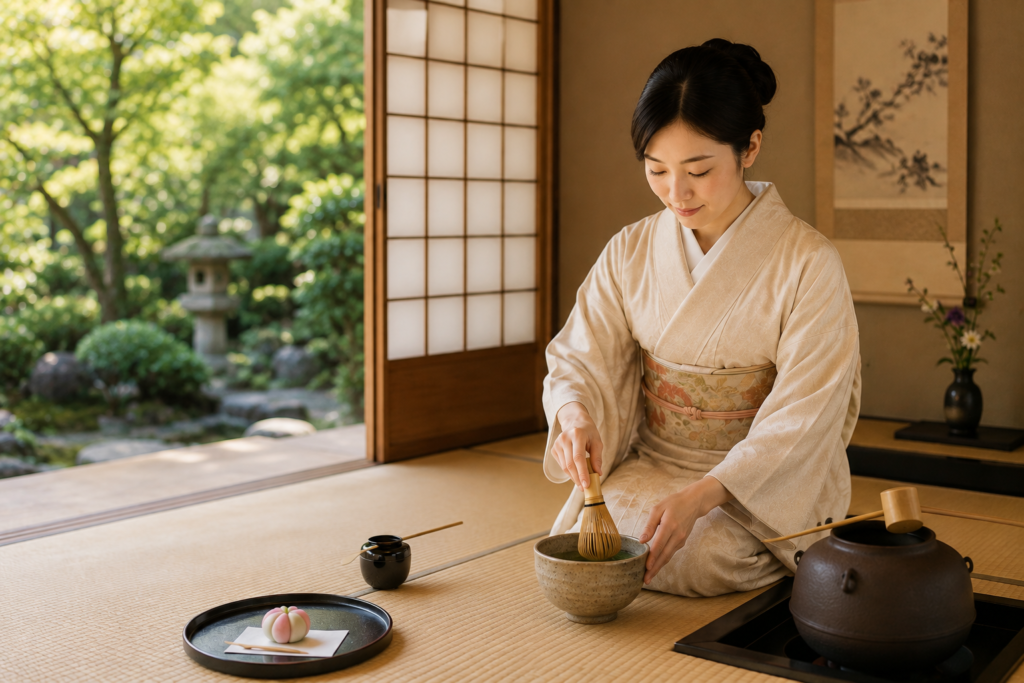
A tea ceremony in Kyoto is more than simply drinking matcha. It is a chance to slow down, step away from the rush of sightseeing, and experience one of Japan’s most refined cultural traditions.
Kyoto has long been at the heart of Japanese traditional culture, making it one of the best places to experience an authentic Japanese tea ceremony. From the quiet atmosphere of a tatami room to the careful preparation of matcha, every detail reflects centuries of history, hospitality, and aesthetics.
If you are visiting Japan for the first time, however, you may have a few questions.
What actually happens during a tea ceremony? Do you need to know the etiquette? What should you wear? And where should you experience a tea ceremony in Kyoto?
This guide covers everything you need to know before joining your first tea ceremony in Kyoto.
What Is a Japanese Tea Ceremony?
The Japanese tea ceremony is traditionally known as chanoyu (茶の湯) or sado / chado (茶道), meaning “the way of tea.”
At its simplest, it involves preparing and serving matcha, a finely powdered Japanese green tea.
But tea ceremony is about much more than the tea itself.
The host carefully considers the tea utensils, flowers, sweets, movements, and atmosphere to create a meaningful experience for the guests. Even the smallest gestures have a purpose.
At the heart of tea ceremony is the Japanese concept of omotenashi — wholehearted hospitality and consideration for others.
Rather than rushing from one activity to the next, tea ceremony invites you to pay attention to the present moment: the sound of hot water, the movement of the tea whisk, the aroma of matcha, and the beauty of the tea bowl in your hands.
For travelers, it offers a rare opportunity to experience Japanese culture from the inside rather than simply observing it.
Why Experience a Tea Ceremony in Kyoto?
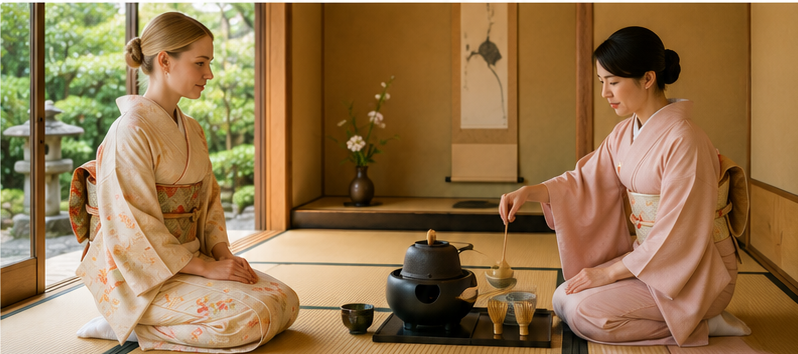
Tea ceremonies can be experienced throughout Japan, but Kyoto has a particularly deep connection with tea culture.
The city was Japan’s imperial capital for more than a thousand years and remains one of the country’s most important centers of traditional arts and culture.
Kyoto also played an important role in the development of Japanese tea culture. Tea became closely connected with Zen Buddhism, and by the 16th century, tea master Sen no Rikyu had profoundly influenced the philosophy and aesthetics of the tea ceremony that continue today.
For visitors, Kyoto offers something else that is difficult to recreate elsewhere: the setting.
Historic streets, machiya townhouses, temples, gardens, tatami rooms, kimono, traditional sweets, and matcha all come together naturally here.
Experiencing tea ceremony in Kyoto is therefore not simply another activity to add to your itinerary. It can become one of the moments that helps you understand why Kyoto feels so different from other destinations in Japan.
What Happens During a Tea Ceremony?
The exact procedure depends on the school of tea ceremony and the type of experience you join.
A traditional ceremony can be highly detailed and may last several hours. Experiences designed for international visitors are usually shorter and more accessible while still introducing the essential elements of the tradition.
Here is what you can generally expect.
1. Entering the Tea Room
The experience begins when you enter the tea room.
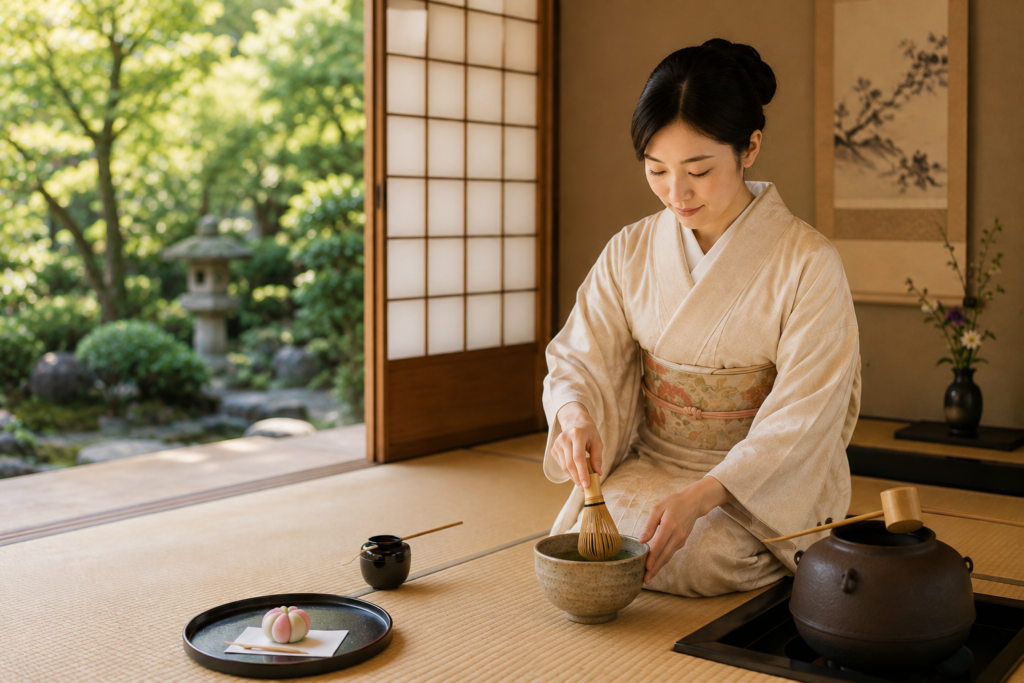
Traditional Japanese tea rooms are intentionally simple. Tatami flooring, seasonal flowers, calligraphy, and carefully selected utensils help create a calm atmosphere.
Take a moment to notice the room.
In tea ceremony, the surroundings are part of the experience.
2. Learning About Tea Ceremony
For first-time visitors, the host or instructor may explain the history, philosophy, utensils, and basic etiquette of tea ceremony.
You may be introduced to traditional tools such as:
- Chawan — tea bowl
- Chasen — bamboo tea whisk
- Chashaku — bamboo tea scoop
- Natsume — container used for matcha
Understanding how these objects are used makes it easier to appreciate the movements that follow.
3. Watching Matcha Being Prepared
One of the highlights is watching the host prepare matcha.
Each movement is deliberate.
The utensils are handled carefully, matcha is placed into the bowl, hot water is added, and the tea is whisked with a chasen.
To someone seeing it for the first time, the movements may appear simple. In reality, tea practitioners can spend years refining them.
That attention to detail is part of what makes the experience so captivating.
4. Enjoying Japanese Sweets
Traditional Japanese sweets, known as wagashi, are commonly served with matcha.
The sweetness of wagashi balances the pleasant bitterness of the tea.
Wagashi also reflects Japan’s appreciation for the seasons. Their colors, shapes, and ingredients may change throughout the year to represent flowers, plants, landscapes, or seasonal events.
Rather than treating the sweet as a separate snack, try experiencing it as part of the ceremony.
5. Drinking Matcha
When the tea is served, you will be shown how to receive and drink from the bowl.
Do not worry about memorizing every rule before you arrive.
Tea ceremony etiquette varies somewhat between schools, and experiences for international visitors are designed to guide beginners through the process.
The most important thing is to appreciate the tea and the hospitality behind it.
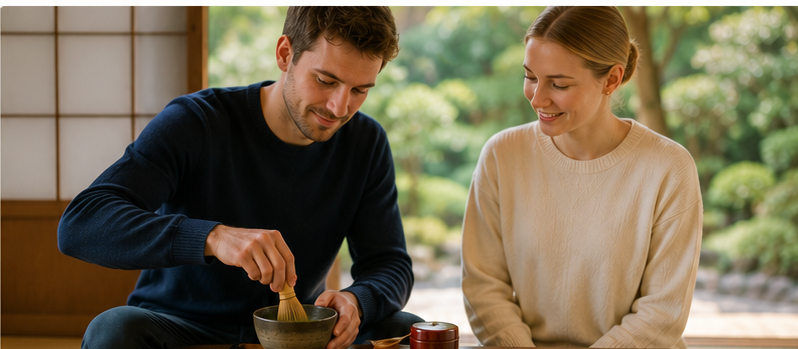
6. Making Matcha Yourself
Some tea ceremony experiences also give guests the opportunity to prepare their own bowl of matcha.
Using the bamboo chasen to whisk tea yourself creates a completely different connection with the tradition.
It also makes the experience more interactive — especially for travelers who want to do more than simply watch a demonstration.
Japanese Tea Ceremony Etiquette for Beginners
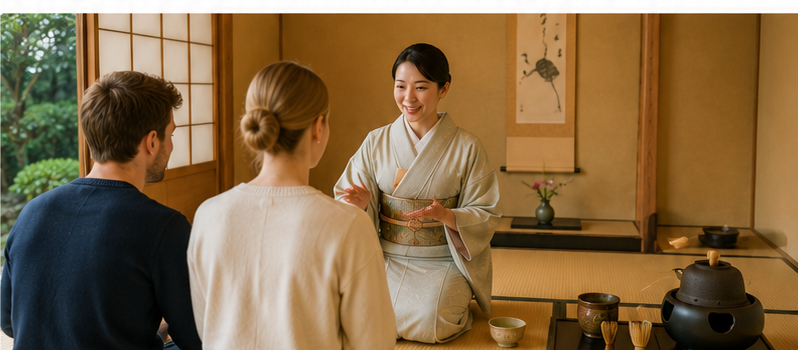
Many international visitors worry about making a mistake during their first tea ceremony.
Fortunately, you do not need to be an expert.
The detailed etiquette of tea ceremony takes years to master, and visitors are not expected to know everything in advance.
There are, however, a few simple principles worth remembering.
Show Respect
Tea ceremony is built around mutual respect between host and guest.
Listen to your instructor, observe what others are doing, and treat the tea room and utensils carefully.
That alone goes a long way.
Enjoy the Wagashi Before the Matcha
Japanese sweets are generally enjoyed before drinking matcha.
Their sweetness prepares your palate for the deeper, slightly bitter flavor of the tea.
Receive the Tea Bowl Carefully
When receiving your bowl, hold it carefully and follow your host’s instructions.
Depending on the tradition being demonstrated, you may be shown how to rotate the bowl slightly before drinking.
Do Not Worry About Being Perfect
Perhaps the most important advice for first-time visitors is simply this:
Relax and enjoy the experience.
Tea ceremony is not a test.
A good cultural experience will guide you through the basic etiquette, so there is no need to memorize complicated procedures before your visit.
What Should You Wear to a Tea Ceremony in Kyoto?
For most tea ceremony experiences aimed at travelers, you do not need to wear formal clothing.
Comfortable and respectful clothing is generally suitable.
If the experience takes place in a traditional tatami room, you may be asked to remove your shoes before entering.
A kimono can certainly make the experience feel even more special, but it is not normally necessary unless your chosen experience specifically requires one.
If you are already planning to rent a kimono while exploring Kyoto, combining it with a tea ceremony can be a memorable way to experience traditional Japanese culture.
Can You Join a Tea Ceremony If You Don’t Speak Japanese?
Yes.
Kyoto welcomes travelers from all over the world, and many tea ceremony experiences are designed specifically for international visitors.
Depending on the venue, explanations may be available in English or the ceremony may be structured so that visitors can easily follow the instructor.
This allows you to understand not only what is happening, but also why each movement and tradition matters.
When choosing a tea ceremony in Kyoto, check whether the experience is suitable for international visitors before booking.
How Long Does a Tea Ceremony Take?
The length varies considerably.
A full traditional tea gathering can last several hours and may include food, multiple types of tea, and highly formal procedures.
Tourist-friendly tea ceremony experiences are generally designed to introduce the essential aspects of tea culture in a more accessible format.
When planning your Kyoto itinerary, check the duration in advance and leave enough time to enjoy the experience without rushing to your next destination.
That is especially important in areas such as Gion, where you may want to explore the historic streets, temples, shrines, and traditional shops before or after your tea ceremony.
Where Is the Best Place for a Tea Ceremony in Kyoto?
There is no single answer, because Kyoto offers many different styles of tea ceremony experience.
However, there are several things worth considering when choosing one.
Location
If possible, choose a tea ceremony that fits naturally into your sightseeing itinerary.
Areas such as Gion and Higashiyama are particularly convenient because many of Kyoto’s famous cultural attractions are nearby.
Atmosphere
The surroundings can completely change the experience.
A quiet traditional Japanese space can make it easier to appreciate the philosophy behind tea ceremony than a simple demonstration in a modern tourist facility.
Hands-On Experience
Some experiences involve mainly watching the host, while others allow you to whisk and prepare your own matcha.
If you want a more memorable cultural activity, look for a hands-on experience.
Quality of Matcha and Wagashi
Tea ceremony is also an opportunity to experience traditional Japanese flavors.
High-quality matcha and authentic Kyoto wagashi can make a significant difference.
Beginner-Friendly Guidance
For your first tea ceremony, choose an experience that welcomes beginners and explains the tradition in an accessible way.
The goal should not simply be to watch a performance, but to understand and participate in Japanese tea culture.
Experience an Authentic Tea Ceremony in Gion, Kyoto
If you are looking for a tea ceremony in Kyoto, THE TEA CEREMONY GION Orizuruya offers a hands-on cultural experience in the heart of Gion.
Gion is one of Kyoto’s most historic districts, known for its traditional streets, tea houses, temples, and geiko and maiko culture.
At Orizuruya, guests can experience tea ceremony in a calm Japanese setting while learning about the traditions behind each step.
Rather than simply watching matcha being prepared, guests can also try using a chasen, the traditional bamboo tea whisk, to prepare tea themselves.
The experience is accompanied by traditional Japanese sweets from long-established Kyoto confectioners, allowing you to enjoy the relationship between matcha and wagashi as it has been appreciated in Japan for generations.
The standard Tea Ceremony Experience Course lasts approximately 90 minutes.
For travelers who want to explore Japanese culture more deeply, Orizuruya also offers a Calligraphy & Tea Ceremony Course, combining two traditional Japanese arts in one experience.
Why Gion Is the Perfect Setting for Your Tea Ceremony
Location is part of what makes the experience special.
THE TEA CEREMONY GION Orizuruya is located in Gion, one of Kyoto’s most atmospheric historic neighborhoods.
It is approximately a 4-minute walk from Gion-Shijo Station and a 7-minute walk from Kyoto-Kawaramachi Station, making it easy to include in a day of sightseeing.
Before or after your tea ceremony, you can explore some of Kyoto’s most iconic areas, including the historic streets of Gion and the surrounding Higashiyama district.
Instead of experiencing tea ceremony as an isolated tourist activity, you can make it part of a full day immersed in traditional Kyoto.
Tea Ceremony in Kyoto: Frequently Asked Questions
Do I need experience to join a Japanese tea ceremony?
No. Beginners can enjoy a tea ceremony, and experiences designed for international travelers will guide you through the basic steps and etiquette.
Do I need to wear a kimono?
Usually not. Regular respectful clothing is generally fine unless the venue states otherwise.
Can foreigners participate in a tea ceremony?
Absolutely. Tea ceremony is an excellent way for international visitors to learn about Japanese hospitality, aesthetics, history, and matcha culture.
Is tea ceremony suitable if I don’t like bitter tea?
Matcha has a distinctive flavor, but it is traditionally paired with sweet wagashi. Experiencing the contrast between the sweet confectionery and matcha is part of the tradition.
How long is the tea ceremony at GION Orizuruya?
The Tea Ceremony Experience Course at THE TEA CEREMONY GION Orizuruya is approximately 90 minutes.
Where is GION Orizuruya?
THE TEA CEREMONY GION Orizuruya is located at 572-7 Minamigawa, Gion-cho, Higashiyama-ku, Kyoto, approximately four minutes on foot from Gion-Shijo Station.
Discover the Spirit of Japanese Hospitality in Kyoto
Kyoto is filled with extraordinary temples, shrines, gardens, and historic streets.
But some of the most memorable experiences in Japan happen when you stop sightseeing for a moment and actually participate in the culture.
Tea ceremony offers exactly that opportunity.
You can sit on tatami, watch the careful preparation of matcha, taste traditional Kyoto wagashi, learn the meaning behind the rituals, and even prepare your own bowl of tea.
For a short time, there is nowhere else you need to be.
If you want to experience a different side of Kyoto, step inside the world of Japanese tea ceremony in the historic district of Gion.
Experience Japanese tea culture at THE TEA CEREMONY GION Orizuruya.